
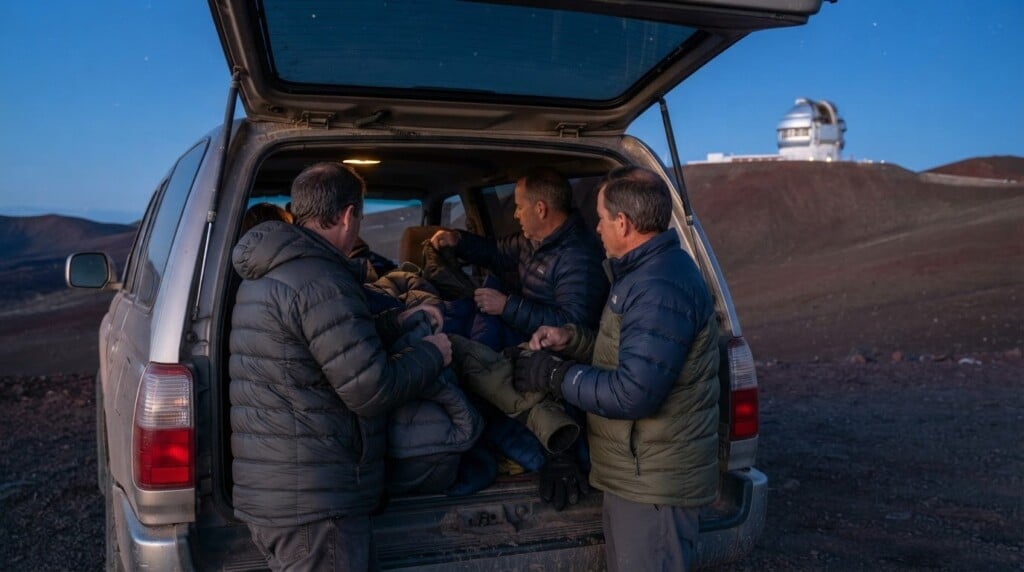

The summit isn’t the first stop for a stargazing visit. The Maunakea Visitor Information Station sits at 9,200 feet, making it an important point to factor into your plans. When visiting Mauna Kea for stargazing, the spelling, changing weather, road access, and high elevation all shape the experience.
You’ll see both “Mauna Kea” and “Maunakea” in English; this guide uses “Maunakea” consistently. The mountain’s expansive night sky is a remarkable draw, but a rewarding visit starts with practical preparation. Learn what to expect at the visitor station, how conditions and access shape your plans, and why altitude matters before you head higher. With those details in mind, you can plan a stargazing outing that feels considered from the drive up to the last look at the stars.
Key Takeaways
- Use “Maunakea” consistently, while recognizing that “Mauna Kea” is also commonly written.
- Plan around cold summit conditions and changing weather, which can affect both visibility and road access.
- Allow time to acclimatize at the visitor station before considering the higher summit drive.
- Know that the road beyond the station requires a four-wheel-drive vehicle, and summit access follows specific hours.
- Look into the visitor station’s reservation-based telescope events if you want a structured stargazing experience.
Weather, road closures, and visibility
Weather affects the drive, your comfort, and the night-sky views on Maunakea. Check current conditions, prepare for cold temperatures, and keep in mind that clouds may obscure the stars.
Weather and Emergency Contacts
After sunset, summit temperatures can fall to 30-40°F, so conditions feel very different from sea level. Check the automated weather hotline at (808) 935-6268 before setting out. For visitor station information, call (808) 934-4550 between 9 am and 9 pm HST.
Keep emergency numbers accessible while traveling on the island. Call the Maunakea ranger emergency line at (808) 960-2952 for minor emergencies on the mountain, and call 911 for major emergencies. Weather can affect visibility and road access, so review conditions before driving toward the visitor center or joining a stargazing tour.
Cold-Weather Preparation
Bring warm layers, including a wind-resistant outer layer, hat, and gloves. The summit can reach 30-40°F after sunset, even when lower elevations feel mild. Closed-toe shoes and spare layers help you stay comfortable while watching constellations outdoors.
Bring drinking water and plan a restroom stop at the visitor station. Bathroom hours may change with daily water use. Park in the visitor center parking area, and avoid open flames, which aren’t permitted on Maunakea because of fire risk. Preparing your car also makes the return drive more comfortable.
Stargazing Timing
For the best time of year, choose a clear night rather than relying on a particular season. Cloud cover directly affects whether stars and constellations are visible. For the best time of night, plan to observe after dark, when daylight no longer brightens the sky.
Maunakea averages 300 clear nights per year, but conditions vary on any given evening. Check the weather before leaving and keep your plans flexible if clouds build. The mountain’s observatories speak to its exceptional night skies, but visibility from your own viewing spot still depends on local conditions.
Visibility and Road Access
Before driving up, use the weather hotline for conditions and call the visitor station for current visitor information. If clouds or poor visibility affect the route, postpone the drive rather than pressing on. Clear skies where you’re staying don’t guarantee a clear view higher on the mountain.
Treat visiting the visitor station and continuing farther uphill as separate decisions. Weather, road conditions, and visibility can change along the route, so reassess before each leg. Conditions may also affect a stargazing tour, so keep your evening plans flexible.
For a simple check before departure:
- Call the automated weather line at (808) 935-6268.
- Call the visitor station at (808) 934-4550 during its listed phone hours.
- Pack warm clothing and water before leaving lower elevations.
- Choose the visitor center as a stopping point if conditions make the higher drive unsuitable.
Heading to the summit of Maunakea?
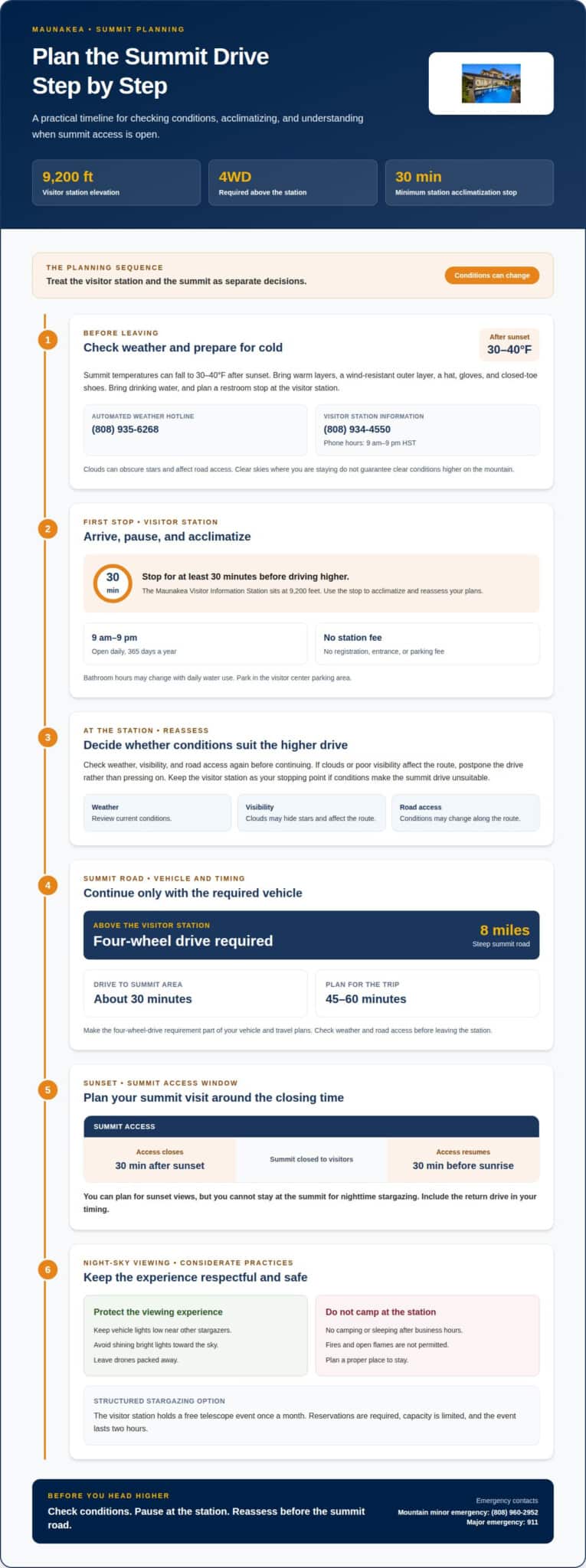
Visitors can drive toward the Mauna Kea summit, but nighttime stargazing there has a limit: the summit closes 30 minutes after sunset. The road above the visitor station requires four-wheel drive, and a stop to acclimatize is part of planning the ascent.
Summit Driving and Four-Wheel Drive
Hawaiʻi state law requires four-wheel drive above the Maunakea Visitor Information Station. The summit road continues for 8 miles, climbing steeply from the visitor station, so make the vehicle requirement part of your booking and vacation plans.
Plan a stop at the visitor station for at least 30 minutes before driving higher. The drive to the summit area takes about half an hour, but allow 45 minutes to an hour for the trip. Check weather and road access before leaving the station, then proceed only if conditions suit the drive.
Summit Access and Sunset Viewing
The summit closes to visitors 30 minutes after sunset and remains closed until 30 minutes before sunrise. That means you can plan for sunset views, but you can’t stay at the summit for nighttime stargazing. Arrange your evening around the closing time, including the return drive.
Observatories form part of Maunakea’s summit landscape, but keep your plans focused on permitted public access. Don’t assume an observatory is open for tours. If you’re aiming for sunset, leave enough time for the drive, parking, and viewing before the summit closes.
Protecting the Night Sky
Keep vehicle lights low when parked or driving near other people who are stargazing. Avoid shining bright lights toward the sky, and leave drones packed away so they don’t disturb the quiet or other visitors’ views. These are considerate viewing practices, not a substitute for posted rules.
After business hours, follow University of Hawaiʻi rules prohibiting camping, sleeping, and fires at the visitor station. Open flames aren’t permitted on Maunakea because of fire risk. Plan a proper place to stay instead of treating the summit or station as an overnight campsite.
Visitor Station Hours and Fees
The Maunakea Visitor Information Station is open from 9 am to 9 pm, 365 days a year. There’s no registration, entrance, or parking fee to visit the station. Its hours and access make it a practical stop before deciding whether to continue toward the summit.
For an evening built around both mountain time and a restful return, consider a Big Island vacation rental as your home base.
Can You Visit Mauna Kea on Your Own?
Yes, visitors can drive themselves to public viewing areas, including the Maunakea Visitor Information Station. It’s a useful public destination for independent stargazing, but telescope access depends on scheduled programs.
Visitor Center Telescope Events
The Maunakea Visitor Information Station holds a free telescope event once a month. Capacity is limited and reservations are required. The reservation-based stargazing experience lasts two hours, so it’s a scheduled visit, not nightly drop-in viewing.
A reservation covers up to two adults and three children aged 17 or younger. Check the event details before planning your drive, since the limited spaces make the reservation central to this experience. For guests traveling with family, this scheduled session can bring a telescope-led view of the night sky into an otherwise independent visit.
The station also offers daytime solar viewing. Through a telescope, visitors may see sunspots, solar flares, and prominences. This is separate from nighttime stargazing and gives daytime visitors a chance to observe features of the Sun safely.
Mid-Mountain Stargazing
For a self-guided outing, use the visitor station as your main public reference point rather than assuming every pull-off has a telescope or organized viewing. A roadside stop may provide a place to pause, but that doesn’t mean equipment or an event will be available.
Plan the drive around your chosen viewing location and that evening’s conditions. For a guided telescope experience, the station’s reservation-based event is the clearly defined option. To observe independently, bring suitable viewing equipment and choose a safe place to stop; don’t expect a public telescope at every point along the mountain road.
Public Telescope Availability
Don’t plan on a nightly public telescope program at the visitor station. The station halted that program in 2019 because of safety concerns and overcrowding that caused environmental damage. Its monthly reservation-based event is the scheduled nighttime telescope option described for visitors.
The distinction matters when arranging transportation and timing. A visit to the center doesn’t automatically include telescope access, while a reserved event has a set duration and limited capacity. Daytime solar viewing offers another telescope opportunity, with views that may include sunspots, flares, and prominences.
In short, independent visitors can enjoy the mountain, but telescope access follows specific formats: a monthly reserved nighttime event or daytime solar viewing. Choose between them before making plans, then build the rest of your visit around that choice.
Altitude acclimatization and altitude sickness
Altitude sickness is a serious consideration on Maunakea. The summit is 13,803 feet above sea level, with about 40 percent less oxygen than at sea level, so people who feel unwell should not continue higher.
Acclimatization Before Visiting
Build time at a lower elevation into your evening rather than driving straight to the summit. The Maunakea Visitor Information Station sits at 9,200 feet, providing a stop before the higher ascent. Some tours pause there for dinner before continuing uphill, giving guests time to adjust gradually.
Take it easy at the station. Avoid strenuous activity, and pay attention to how you feel before getting back in the vehicle for the next part of the climb. A stargazing reservation doesn’t change the effects of altitude, so put your health ahead of reaching a scheduled viewing point.
Plan your route with time to turn back. The summit is substantially higher than the visitor station, and continuing uphill means greater exposure to thinner air. If you feel unwell during your stop, remain at the lower elevation rather than treating the summit as a necessary part of the outing.
Altitude Sickness Risks
People respond differently to high altitude, and a comfortable drive to the station doesn’t mean the summit will feel the same. Reduced oxygen at the summit can make the final ascent physically demanding. Don’t continue higher if you feel unwell, and descend to a lower elevation if symptoms begin.
If you have a health concern that could be affected by altitude, consider the summit before departure rather than while already driving uphill. A clinician can help assess personal risks based on health history and planned elevation. Pay close attention to children and adults alike, since the mountain environment affects each visitor individually.
Keep the evening plan flexible. If you or someone traveling with you feels unwell, stop the ascent and return to a lower elevation. Don’t leave a person alone while others continue to the summit. For a major emergency on Maunakea, call 911; for a minor mountain emergency, call the ranger emergency line at (808) 960-2952.
The safest approach is to treat the summit as optional. A reservation, tour schedule, or clear view of the stars should never outweigh how someone feels at altitude. The visitor station offers a lower stopping point if continuing uphill isn’t right for your group.
Maunakea Visitor Information Station location and elevation
The Maunakea Visitor Information Station sits at 9,200 feet above sea level. That location makes it a distinct stop between lower island roads and the higher summit, not the summit itself.
Elevation changes the nature of the visit. At the station, you can pause before deciding whether to continue uphill; the summit offers a different setting at a greater altitude. For stargazing, knowing where the station is helps you set a sensible stopping point before focusing on the night sky.
Compare the station with the Mauna Kea Recreation Area, which is around 6,500 feet above sea level on Saddle Road. The two locations sit at different elevations, so don’t treat their names or map pins as interchangeable. Use the exact destination in your route plan, especially if someone in your group needs a lower stopping point.
The summit rises to 13,803 feet above sea level. The station is therefore a valuable reference point on the mountain, but it does not put visitors at summit elevation. That distinction matters for both driving decisions and acclimatization. A plan that ends at the station is different from one that continues toward the summit.
Use the station as a practical anchor for your itinerary. Plan a pause there, then decide whether the remaining ascent suits your group and the conditions. If the summit isn’t suitable, the station still offers a clear destination on Maunakea without requiring the higher drive.
The station’s elevation also helps explain why a short island drive can feel like a major change in environment. The route climbs from lower elevations to 9,200 feet, where the air and temperature differ from coastal areas. Pack for the mountain, not only for the weather near your lodging.
When searching maps, enter the full name, Maunakea Visitor Information Station. Searching only for “Mauna Kea” may bring up a broader area, including the volcano, summit, and recreation area. Using the station’s precise name keeps your driving plan focused on the intended stop.
The station is a useful place to pause, get oriented, and consider the next leg. Note its elevation before departure, treat the summit as a separate destination, and let your group decide based on how everyone feels. This simple distinction makes the mountain easier to navigate.
Use the station as a planning marker for your island itinerary, then plan a Big Island stay that leaves space for both mountain outings and quieter hours.
The Kanini Estate
After spending a day preparing for your experience visiting mauna kea for stargazing, The Kanini Estate offers a private, comfortable place to return to. This luxury vacation rental on the Big Island in a gated, oceanfront community provides space for friends and family to spend time together and enjoy an unhurried island escape.
For corporate groups, the estate also provides a high-quality, distraction-free setting for focused retreats. Whether your plans center on stargazing, time together, or focused work, a comfortable Big Island home base gives your group room to unwind between outings.
If a private Big Island stay suits your plans for visiting mauna kea for stargazing, contact The Kanini Estate to learn more.
Make Space for the Island Experience
Make your Maunakea evening part of a broader Big Island escape. Leave room in your itinerary for changing mountain conditions, a quiet morning, and the pleasure of returning to ocean views after a night beneath the stars. The island’s beauty can be enjoyed at every pace.
For a stay that brings friends and family together, The Kanini Estate pairs a private setting with ocean, sunrise, and sunset views. It’s a welcoming home base for visiting Maunakea for stargazing, then settling into your own island retreat.
Explore a Big Island stay at The Kanini Estate and begin shaping a trip that feels distinctly your own.
Frequently Asked Questions
Which spelling is correct: Mauna Kea or Maunakea?
Both “Mauna Kea” and “Maunakea” are used. This guide uses “Maunakea” consistently, while “Mauna Kea” remains familiar in many place names and visitor searches. When planning your route, search for the full destination name, such as Maunakea Visitor Information Station, rather than relying on the mountain name alone. This helps distinguish the station from the summit and other locations.
Is there food or drink at the VIS?
Bring your own food and drinks rather than relying on the visitor station for refreshments. Pack water and snacks before driving uphill, especially if your evening includes a long wait for darkness or a scheduled event. Restroom hours may change with daily water use, so factor that into your stop. Take your belongings and rubbish with you when you leave.
What are the Mauna Kea Observatories?
The Maunakea observatories are research facilities built to study the sky from the mountain. More than 11 countries have established 13 observatories on Maunakea. Their presence explains the mountain’s international importance for astronomy, but it doesn’t mean every facility offers public tours or telescope access. For a visitor experience, look to public viewing programs at the station instead of assuming an observatory is open to walk-in guests.
What is there to do at the VIS?
The Maunakea Visitor Information Station is a place to pause, learn about the mountain, and take part in scheduled viewing activities. Its reservation-based nighttime telescope experience runs once a month, and daytime solar viewing may reveal sunspots, flares, and prominences. Use the station as a decision point before continuing higher. A visit can still be worthwhile even if you don’t drive to the summit.
What are the access rules and road conditions for Mauna Kea?
Four-wheel drive is required on the road above the visitor station, and summit access follows set hours. The summit closes to visitors 30 minutes after sunset and reopens 30 minutes before sunrise. Conditions can affect the route, so make the station your pause before deciding whether to continue uphill. Don’t treat a vehicle’s ability to reach the station as proof it can safely manage the summit road.
How cold and windy does Mauna Kea get at night, and what clothing should visitors bring?
After sunset, summit temperatures can fall to 30-40°F. Wind conditions vary, so dress for exposure as well as cold. Bring warm layers, a wind-resistant outer layer, gloves, a hat, and closed-toe shoes. A visit to Maunakea for stargazing may involve standing outdoors while looking up, so keep an extra layer in the car for anyone who gets cold during viewing.
Are telescopes, tours, or ranger-led stargazing programs available on Mauna Kea?
The visitor station doesn’t offer a nightly drop-in public telescope program. Instead, it holds a free telescope event once a month, with limited capacity and reservations required. Daytime solar viewing is another option. Commercial summit tours are also available, but guests should account for the mountain’s access and altitude conditions rather than assume a tour includes public access to observatory facilities.
How do visitors check summit road closures and weather before going to Mauna Kea?
Call the automated Maunakea weather hotline at (808) 935-6268 before setting out. For visitor station information, call (808) 934-4550 between 9 am and 9 pm HST. Check again before leaving the station, since conditions may affect whether continuing uphill is sensible. Keep both numbers accessible during your drive, and make the summit a separate decision from reaching the visitor station.