

Private vacation homes on Hawaiʻi Island solve a real travel problem: paying luxury rates but still hearing neighbors, sharing sightlines, or dealing with steady foot traffic. On the Big Island, privacy is not just about comfort. It changes sleep quality, family dynamics, security, and whether a trip feels restorative or exposed. The strongest options pair true seclusion with the amenities people usually expect from a resort, which is exactly where many rentals fall short.
Why does privacy matter more on the Big Island than on many other Hawaii stays?
Privacy matters more on Hawaiʻi Island because Kona and Waikoloa compress resorts, public beaches, and residential pockets into a small coastal band. A rental near Aliʻi Drive can feel busy, while Kalaoa or Holualoa may feel dramatically quieter at a similar price point.
The Big Island serves several trip types at once: family reunions, corporate retreats, milestone birthdays, and multi-couple vacations. In those settings, privacy is part of the product, not a bonus. People want private pools, late dinners on the lanai, and room for kids or colleagues to spread out without disturbing everyone else.
This island also has sharper micro-location differences than many travelers expect. Two homes can both advertise “ocean view” and “luxury,” yet one may back up to a resort path and the other may sit behind lava-rock walls inside a low-density gated enclave.
A common misconception is that a higher nightly rate automatically buys seclusion. It often buys finishes, view, and proximity first. Privacy has to be checked separately.
What actually makes a Big Island vacation home private?
True privacy comes from controlled access, protected sightlines, and single-party occupancy. In Waikoloa and Kona, the strongest homes combine gated entry, setbacks, landscaping, and outdoor living areas that do not face neighboring lanais or public paths.
A private-feeling home usually solves four questions at once: Who can enter, who can see you, who can hear you, and how often do service staff appear? If one of those fails, the stay can still feel exposed.
After reviewing common Big Island layouts, these features matter most:
- Controlled access: gated community, coded entry, private driveway
- Sightline protection: lava walls, hedges, elevation, no direct pool-to-pool views
- Acoustic buffer: larger lots, setbacks, wind orientation, low road exposure
- Single-party use: no shared lobby, elevator, courtyard, or adjacent guest wing
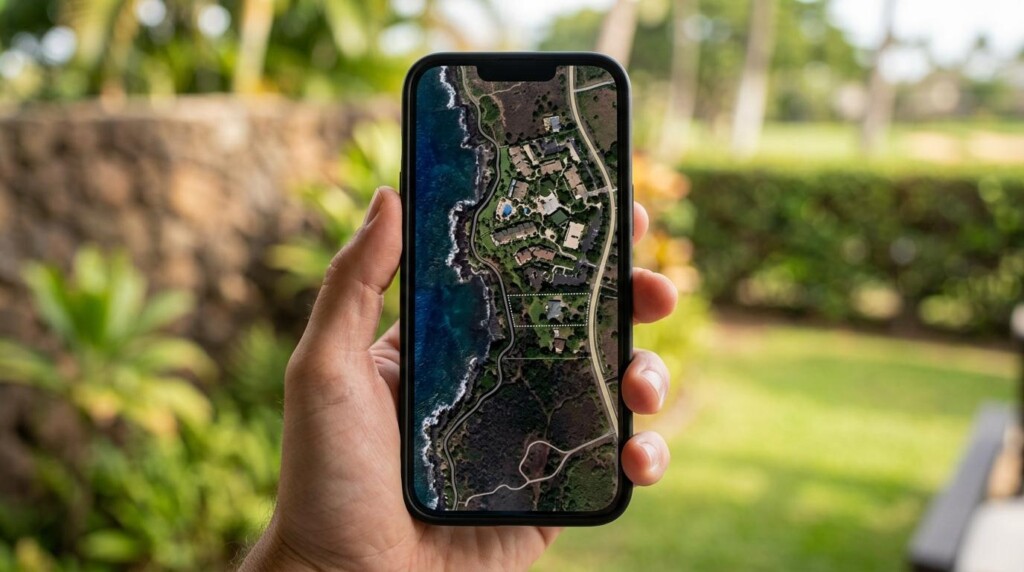
Pro tip: use satellite view before reading the marketing copy. If the pool sits next to a golf cart path or shoreline access, then the home is not private in the way most group travelers mean.
What are the top Big Island vacation homes for privacy-focused travelers?
Several Big Island homes stand out because their listings and guest feedback point to the same thing: controlled access, generous spacing, and outdoor areas that feel protected rather than staged. The right choice depends on whether you want walkable beach access, acreage, or a layout built for a larger group.
-
The Kanini Estate, Waikoloa: In the gated oceanfront Naupaka community, this roughly 5,200-square-foot villa sleeps up to 16 in eight king beds and combines a private pool, hot tub, gym, and multiple lanais with walkable access to beach, shops, and restaurants. For larger groups, it solves a hard problem: resort-caliber amenities without resort foot traffic.
-
Kalaoa redwood oceanview home, Kailua-Kona: Set on about 1.2 acres at the end of a long private drive, this home is a strong fit for travelers who want minimal visibility from neighbors or roads. Review language around “complete privacy” is notable.
-
Akoa Place, Holualoa: On roughly 1.09 acres inside a gated hillside community, this villa offers a quieter upland setting with expansive views. It trades immediate beach access for a more buffered, retreat-style atmosphere.
-
Hale Kai Olu, Kailua Village area: This oceanfront estate inside a gated community adds a separate ohana and 24-hour community security. It is compelling for travelers who want shoreline access plus a more protected setting than many oceanfront homes provide.
-
Organic farm cottage, Kona or Kealakekua area: On five private acres among banana and coffee groves, this is a different kind of privacy. It is less about luxury services and more about distance, quiet, and natural screening.
If your group is six to eight adults, several of these options work. If your group is 10 to 16 and still wants bedroom parity, private outdoor living, and close access to Waikoloa amenities, the field narrows fast.
How do gated community villas compare with large-lot rural estates?
Gated villas in Waikoloa and Mauna Lani usually win on convenience, while rural estates near Kalaoa or Kealakekua often win on raw separation. Neither model is better in every case; the right choice depends on what kind of privacy you value.
Gated coastal communities offer a strong privacy baseline: fewer random visitors, controlled entry, and better proximity to beaches, dining, and golf. That matters if your group wants to walk places or avoid long night drives.
Large-lot rural homes can feel more secluded because the land itself creates distance. Yet they may involve steeper roads, less lighting, longer grocery runs, and fewer nearby services.
Common misconception: acreage always means better privacy. A five-acre property on a visible slope can feel less private than a well-screened home in a gated 11-lot enclave if neighboring sightlines are poorly managed.
How can you verify privacy before you book?
You can verify privacy by checking maps, asking direct operational questions, and reading reviews for clues about noise and access. VRBO and Airbnb listings often show enough detail to confirm whether “private” means exclusive use or just a nice fence.
Step 1: inspect the map before the photos. Zoom out until you can see roads, beach access points, fairways, sidewalks, and nearby rooftops. If the house sits beside a public shoreline trail or busy resort route, then sunset hours may bring regular passersby.
Step 2: ask five direct questions in writing. Ask whether there are any shared driveways, on-site caretakers, daily housekeeping visits, neighboring homes with direct pool views, and exterior cameras near social areas. Clear operators answer these quickly.
Step 3: read reviews for indirect language. Guests rarely write “acoustic privacy was inadequate.” They write “great location, close to everything,” “easy walk past other villas,” or “we saw people along the shoreline every morning.” Those are clues.
Pro tip: check whether gate codes, arrival instructions, and staff visits are coordinated privately. That signals a tighter operating standard than generic self check-in.
How do oceanfront homes compare with hillside retreats for seclusion?
Hillside retreats in Holualoa or Kalaoa usually offer stronger sightline privacy, while oceanfront homes in Waikoloa or Kailua-Kona offer the stronger sense of place. The trade-off is exposure versus immediacy.
Oceanfront is emotionally powerful. You hear the surf, catch sunset from the pool, and skip the drive to the coast. Yet many shoreline homes face one of three privacy challenges: public lateral access, neighboring view corridors, or lower walls that preserve views but reduce screening.
Hillside homes often sit above the busiest visitor zones and use topography to block noise. They can feel quieter at night and more detached during the day. The cost is access time. A 15 to 25 minute drive to swimmable beaches changes how often you come and go.
Common misconception: oceanfront always means exclusive. On the Big Island, if public access or a shoreline path runs nearby, then the view may be world-class while the privacy is only moderate.
How should families and groups choose the right private layout?
The best layout starts with group dynamics, not bedroom count. A home in Waikoloa or Kona can have plenty of square footage and still feel crowded if circulation, bedroom placement, and outdoor zones force everyone into the same rhythm.
Step 1: map the quiet zones and social zones. Ask where early risers will sit with coffee, where kids will swim, and where night owls will talk after 10 p.m. If all of those functions happen in one great room, privacy drops fast.
Step 2: count bedroom equality, not just capacity. Eight king bedrooms, like at The Kanini Estate, solve a different problem than one primary suite plus several smaller rooms. For multigenerational groups or executive retreats, parity reduces friction.
Step 3: check for separation inside the house. Opposite-end bedrooms, a detached or semi-detached suite, separate lanais, and more than one living area matter more than total square footage once the group gets above eight people.
A pro tip here: if your group includes grandparents, teens, and one or two work-from-home guests, then a private gym, den, or office can function as a pressure-release valve for the whole house.
What privacy features matter most inside the home itself?
Indoor privacy depends most on bedroom separation, bathroom access, and sound control. In large homes across Kona and Waikoloa, en suite baths, split wings, and more than one gathering area create better day-to-day privacy than flashy finishes do.
Many travelers focus on exterior privacy and forget interior flow. That is a mistake on longer stays. If bedrooms line one hallway beside the kitchen, then early breakfasts and late-night arrivals affect everyone.
Look for en suite or nearby dedicated baths, solid-core doors, blackout shades, and at least one secondary lounge or lanai. If the home also has a gym, media room, or upper and lower outdoor zones, then different age groups can coexist without constant overlap.
Another misconception: more bedrooms always mean more privacy. A well-zoned five-bedroom home can feel calmer than an eight-bedroom home with poor circulation.
How do you plan a private stay with chefs, housekeeping, and activities?
A private stay works best when services are consolidated and timed, not scattered across the week. In Waikoloa and Mauna Lani, homes with concierge support and nearby amenities make it easier to keep the property feeling exclusive.
Step 1: bundle outside services. Grocery pre-stocking, one chef dinner, and one mid-stay clean create less traffic than multiple short visits. If you can solve meals and supplies in two service windows, then the house stays quieter.
Step 2: define access rules early. Confirm when staff may enter, which doors they use, and whether anyone will be on-site during pool or dinner hours. Professional operators usually have clear SOPs for this.
Step 3: keep activities close when privacy is the priority. A home with an in-house gym, pool, hot tub, and nearby club access reduces the number of times your group has to reset the day around logistics.
This is one area where resort-style amenities inside a private home matter a lot. They reduce movement without forcing a trade-down in experience.
When is the best time to book a private Big Island home?
The best booking windows are usually April to May and September to early December, while Christmas, New Year’s, spring break, and Ironman week bring the sharpest inventory pressure in Kona and Waikoloa.
Private inventory at the high end is limited by design. Homes with eight real bedrooms, heated pool options, and gated settings are a narrow slice of the market. If you need one of those for a holiday week, book 9 to 12 months ahead.
Rates vary widely by size and season. Smaller secluded cottages may land in the low hundreds per night, while larger estates commonly move from roughly $1,000 to $6,000 or more per night depending on dates, location, and service level.
If your dates are flexible, shoulder season often gives you better selection and a cleaner comparison set. You are less likely to compromise on privacy just to secure availability.
What booking mistakes reduce privacy even in luxury rentals?
Most privacy failures happen before arrival, not during the stay. Listings in Kona and Waikoloa often emphasize finishes and views, while the real weak points are access paths, neighbor sightlines, and service patterns.
Read the amenities page with the same attention you give the photos. “Near beach,” “resort access,” and “daily housekeeping” can all be good features, but they may also signal more movement around the property than your group wants.
Watch for these red flags:
- shared driveway
- pool visible from another lanai
- “steps to beach” beside public access
- daily staff visits built into rate
- exterior cameras near dining areas
- bedroom windows facing common arrival zones
If a home checks several of those boxes, then it may still be luxurious, but it is not a strong privacy-first choice.