
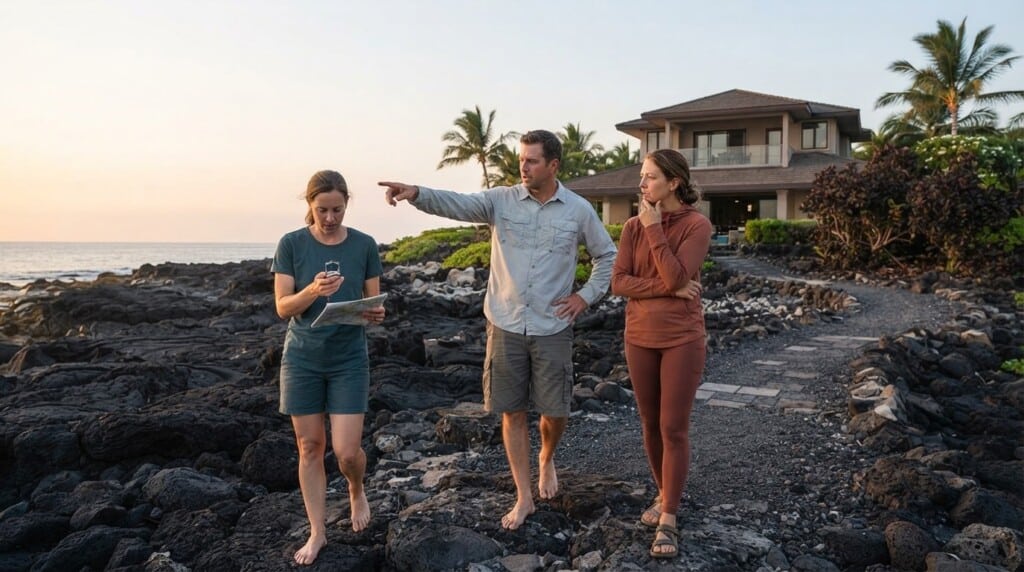

A destination retreat like Hawaii can work exceptionally well for remote teams when the schedule balances focused work with time together. For national organizations looking beyond the mainland, planning at least four days for most U.S. teams—and five days for East Coast attendees adjusting to the time difference—ensures a smooth transition. The best retreat ideas for remote teams in Hawaii pair purposeful collaboration with room to reconnect, whether you are hosting your gathering at a private corporate venue like The Kanini Estate on the Big Island or exploring other island settings nationwide.
It’s natural to wonder whether a far-flung island setting can support productive work, not just offer a change of scenery. The key is choosing a setting with reliable internet access and shaping each day around your team’s goals, energy, and working hours.
Here, you’ll learn how to choose an island setting, plan outdoor activities that encourage collaboration, and create a retreat rhythm that feels productive and restorative. The result can be a more thoughtful way to bring a remote team together, with time to focus and time to enjoy Hawaii.
Key Takeaways
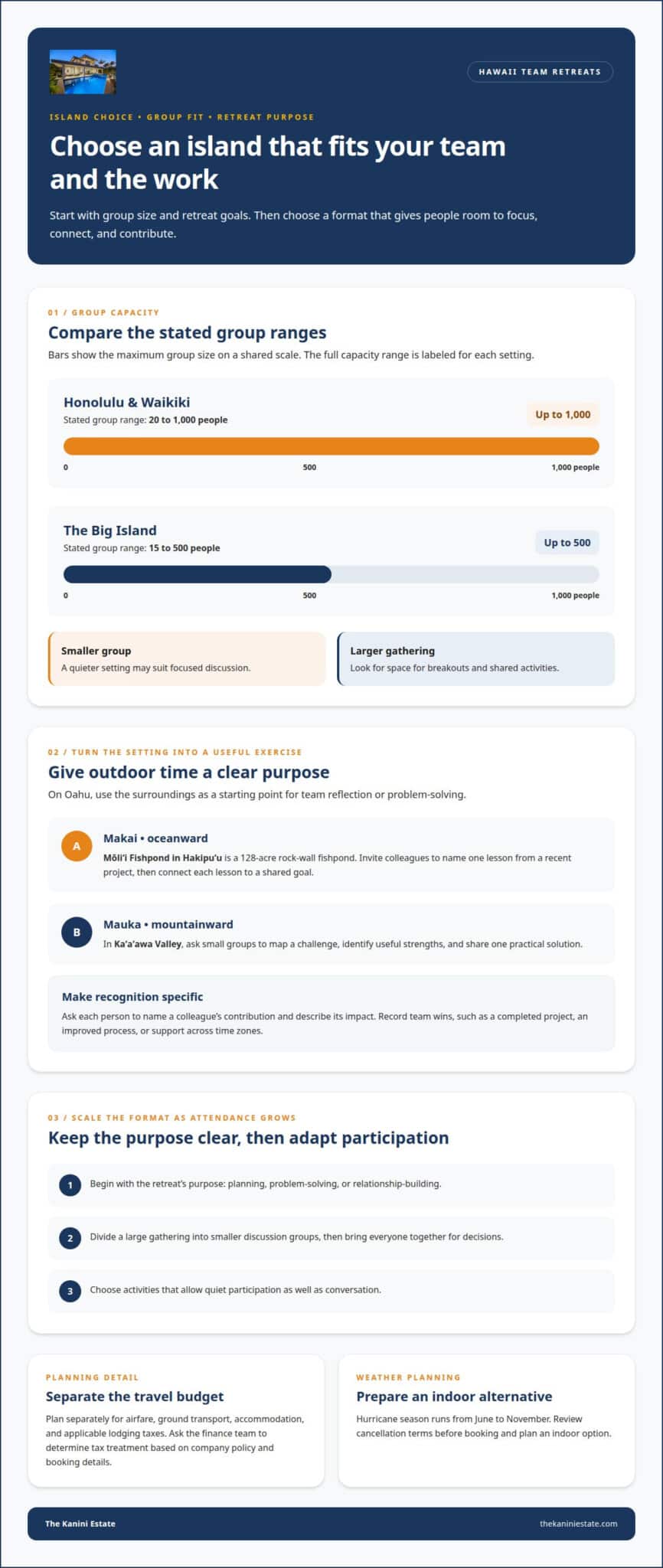
- Choose an island by your group’s size and retreat goals. Honolulu and Waikiki suit groups of 20 to 1,000, while the Big Island can accommodate groups of 15 to 500.
- Give outdoor activities a clear purpose, such as surfacing team challenges or helping colleagues solve a shared problem.
- Shape the schedule around focused work and informal conversation, with clear owners and target dates for follow-up actions.
- Prioritize a setting with reliable internet, a comfortable work area, and surroundings that support both safety and time to unwind.
- Build in enough time for travel, adjustment, and meaningful connection, especially when teammates are coming from different time zones.
Choosing a Hawaiian island by team size and retreat goals
Choose an island by matching group size, travel logistics, and the kind of work your team needs to do. Honolulu and Waikiki can accommodate corporate retreat groups of 20 to 1,000 people. The Big Island can accommodate groups of 15 to 500. A smaller group may prefer a quieter setting for focused discussion, while a larger gathering needs space for breakouts and shared activities.
On Oahu, shape a makai, or oceanward, activity around Mōliʻi Fishpond in Hakipuʻu. The 128-acre rock-wall fishpond offers a distinctive setting for a team reflection. For example, invite colleagues to name one lesson from a recent project, then connect each lesson to a shared goal. A mauka, or mountainward, activity in Kaʻaʻawa Valley can take a different form: ask small groups to map a challenge, identify useful strengths, and share one practical solution.
Make recognition part of the retreat, not an afterthought. Ask each person to name a colleague’s contribution and describe its impact. Then record team wins on a shared board, such as a completed project, an improved process, or support across time zones. Specific examples help remote colleagues see how individual work contributes to shared success.
For a growing remote team, keep the retreat format consistent while adapting the island and activities to the group. Start with the purpose: planning, problem-solving, or relationship-building. Then divide a large gathering into smaller discussion groups, and bring everyone together for decisions. As attendance grows, choose activities that allow quiet participation as well as conversation.
For travel, lodging, and tax planning, budget separately for airfare, ground transport, accommodation, and applicable lodging taxes. U.S. citizens can travel to Hawaii without a passport and fly domestically with a REAL ID-compliant license or other accepted identification. Ask your finance team to determine tax treatment under company policy and based on the booking details.
Affordable Hawaii retreat ideas include a beach walk, a peer-led project retrospective, or a shared appreciation circle. Choose activities that use the setting without adding complex transport or paid programming. For weather and cancellation risks, note that hurricane season runs from June to November; build an indoor alternative and review cancellation terms before booking.
- Choose Honolulu and Waikiki or the Big Island based on group size and retreat purpose.
- Use Mōliʻi Fishpond or Kaʻaʻawa Valley as inspiration for purposeful team exercises.
- Recognize contributions with specific examples, then adapt the format as attendance grows.
Outdoor collaboration and problem-solving activities
Thoughtful retreat ideas for remote teams in Hawaii pair movement with a shared purpose. Activities can help colleagues practice listening, explore a team challenge, or build trust through conversation. The setting can be inspiring, but a clear task gives the experience meaning. Encourage connection without turning every moment into another work session.
For an outdoor problem-solving exercise, give each group a simple scenario drawn from work. Ask them to identify the challenge, agree on a response, and explain their reasoning. A coastal walk offers a quieter format: pair colleagues who rarely work together and invite them to discuss a current project. Include a seated option so everyone can participate comfortably.
Make activities involving exertion or extended time outdoors optional. A guided walk, casual swim, or beachside conversation may suit different energy levels, while a shaded gathering offers another way to join. Explain the purpose before people choose. For example, frame a walk as informal conversation, not a fitness challenge.
Creative activities can open conversation without making the evening feel like another meeting. Invite each person to share a favorite place, sketch an idea for the team’s next chapter, or bring a song that reminds them of home. Keep the format simple, with one prompt and the option to pass. A relaxed dinner conversation can be as meaningful as a planned exercise.
For a structured reflection, use the Hawaiian Island Retreat retrospective. Give the team four columns: what went well, what could improve, questions, and actions. Allow about 10-15 minutes for each column in a 60-90-minute session. Reserve the final 15 minutes for agreeing on actions, each with an owner and target date.
A brief introduction can explain mahalo, which means “thank you” in Hawaiian. Then invite each person to recognize a colleague’s contribution with a specific example. Keep feedback honest and blameless when discussing blockers. This combines appreciation with practical reflection, helping the group leave with connection and direction.
Balance active time with open space. A morning walk, afternoon work session, and unstructured evening offer different ways to connect. Let people rest, read, or enjoy the surroundings without joining every activity. Giving colleagues a choice in how they participate makes the gathering feel considered while creating shared moments beyond the usual workday.
Balancing work sessions with in-person conversations
A useful retreat agenda gives each meeting a clear purpose and leaves room for conversations between sessions. Start by listing the decisions the team needs to make, then assign each one a focused block. For example, use a planning meeting to agree on priorities, not to read updates everyone could review beforehand.
Hawaii is five or six hours behind the East Coast and does not observe daylight saving time. This can make early local meetings difficult for colleagues traveling from the East. Schedule shared work sessions around a suitable overlap, then leave independent time for tasks that need quiet focus. Avoid filling every morning with calls.
Before arrival, send a short brief with the retreat’s goals, key questions, and decisions already made. This lets colleagues prepare without spending the first session recapping background. For each meeting, name a facilitator and note-taker. Close by capturing decisions, open questions, and owners so the group can resume work without relying on memory.
Protect informal time as deliberately as agenda time. A shared dinner can create space for stories and conversations that rarely surface on video calls. Keep the evening free of presentations. Instead, offer a simple prompt, such as asking each person what they learned from a teammate this year, and let the discussion move naturally.
Use transitions to help colleagues shift between concentration and connection. After a work block, allow time to step outside, get water, or talk in pairs before the next session. A walk after lunch can offer a gentle reset, while an open hour gives people room to rest or catch up. These pauses keep the retreat from feeling like back-to-back video meetings in a new place.
Build a day around a few distinct modes rather than a packed itinerary:
- Focused work: Review a shared brief and make one defined decision.
- Small-group exchange: Pair colleagues from different functions to explore a challenge.
- Unstructured connection: Leave time for coffee, a walk, or a relaxed dinner.
- Closing reflection: Record the next steps and the people responsible.
For East Coast colleagues, a later local start can support rest after travel, while colleagues in other time zones use the morning for individual work. Keep the schedule visible and explain why each session matters. When people understand a meeting’s purpose and have room to speak freely, shared time can lead to clearer decisions and stronger working relationships.
Choosing a safe location with reliable internet
A productive retreat needs a work area where colleagues can connect and focus. Treat internet access and safety as planning criteria, not assumptions. Before choosing a setting, list essential tasks, such as video meetings, shared document work, and private conversations. Then match those needs to the spaces the team will use. A Hawaii retreat works best when the location supports focused sessions and time outdoors.
Test internet access in the actual work areas. Join a video call, open shared files, and try these tasks from more than one room. If several people need to connect at once, test that situation together. Note weak spots and schedule important online sessions in the strongest work area. This helps you plan around real-world use, not assumptions about the signal.
Prepare a continuity plan before the first work session. Save key documents for offline access, agree where to post meeting notes, and decide who will update the group if a call drops. Mobile data can be another option for team members who have it, but test it at the location before relying on it. These preparations can keep one interruption from derailing a discussion.
Review how people will enter, gather, and move around the property. Share arrival instructions and the property address before travel. Identify the route between the work area and shared spaces, along with a meeting point everyone can recognize. Explain the route to evening gatherings in advance. Clear directions help colleagues feel oriented in a new place.
Hawaii’s coastline and terrain can make an appealing setting for an outdoor activity, but the group needs a simple plan. Set the route, meeting point, and return time before a beach walk. Explain which areas are part of the activity and where people should take care. Keep an indoor option ready if weather or conditions change, so the team can continue its conversation elsewhere.
Use this short review to compare locations against the retreat’s needs:
- Work setup: Test video calls and shared files in planned meeting spaces.
- Access: Share entry details and routes to gathering areas.
- Movement: Identify paths, lighting, and a meeting point.
- Outdoor plans: Set a route, return plan, and indoor alternative.
- Continuity: Keep key materials available offline.
Finally, match the location to the work. A strategy retreat needs quiet space for discussion, while a connection-focused gathering benefits from shared areas for informal conversation. Put work locations, access directions, and the internet plan in one itinerary. These details help the team stay oriented and keep the gathering running smoothly, even when plans shift.
Retreat structure and duration for remote teams
Plan a Hawaii retreat by setting its goal, choosing a workable duration, and building an agenda around focused work and connection. Gatheround recommends two or three nights for most remote-team retreats, while a Hawaii offsite needs at least four days for most U.S. teams.
Start with the outcome. An executive group might need to agree on a strategy, while a cross-functional team may need clearer handoffs. Write down the intended decisions before selecting sessions. This keeps the schedule anchored to what colleagues should accomplish, rather than filling time simply because everyone traveled.
Travel time matters. Allow five days for East Coast attendees to adjust to the time difference. Use arrival day to settle in and talk informally, not to make demanding decisions. Schedule the most important work after colleagues have had time to rest. Close the retreat with clear owners and next steps, so momentum continues after everyone returns home.
A step-by-step plan can keep the experience useful and unhurried:
- Set the purpose: Choose a central outcome, such as agreeing on priorities or resolving a recurring process issue.
- Choose the duration: Use the team’s travel origins and working goals to shape the stay.
- Arrange the agenda: Place decision-making sessions in the strongest shared work periods.
- Leave breathing room: Protect time for meals, rest, and conversation between work blocks.
- Close with follow-through: Record decisions, owners, and the next review point before departure.
For a four-day plan, use the arrival day for orientation and shared context. The next day can hold the main planning sessions, with protected time for individual thinking between discussions. Use another day to test options, resolve open questions, and make decisions. On departure day, keep the agenda light and capture outstanding work rather than starting a major topic.
Do not treat every hour as meeting time. Remote teams already spend much of their working lives on screens. In Hawaii, a quiet morning for individual preparation can make the later group discussion more precise. A shared meal can give colleagues room to talk beyond their roles. Keep the evening open rather than extending the workday.
End with a concise record that names each decision, its owner, and its next step. This gives an executive team a clear way to share outcomes with colleagues who did not attend. For a focused Big Island setting, explore a private retreat stay as you shape the schedule around meaningful work and time together.
The Kanini Estate: Luxury vacation rental on the big island of Hawaii
The Kanini Estate is a luxury vacation rental on the Big Island for teams seeking a calm place to think and reconnect. Its private setting supports corporate retreats, giving colleagues room to focus on shared priorities and enjoy time together away from daily routines.
Ocean views, sunrise, and sunset bring a restorative rhythm to work sessions and quieter moments. The estate also offers a private escape for friends and family, making it a fitting choice when your gathering calls for meaningful conversation as well as time to unwind.
Consider The Kanini Estate when your retreat plan centers on focused thinking in a private Big Island setting. Contact The Kanini Estate to discuss your retreat.
Give your team’s next chapter room to begin
Before the retreat, decide what you want colleagues to take home: clearer direction, renewed trust, or a stronger sense of belonging. That intention can guide the conversations you make space for and help the experience continue long after everyone returns to work.
The most meaningful retreat ideas for remote teams in Hawaii make room for shared purpose and personal connection. The Kanini Estate offers a private Big Island escape for teams seeking focused time together, as well as a place to enjoy time with friends and family. Let the setting support the gathering while your team shapes what comes next.
When you’re ready to explore a stay for your team, start a conversation with The Kanini Estate. A thoughtful retreat can become the beginning of a more connected way of working.
Frequently Asked Questions
Does it work for remote teams?
Yes, a Hawaii retreat can help remote colleagues build trust and make decisions together in person. It works best when the team arrives with a shared purpose, such as resolving a handoff issue or setting priorities for an upcoming project. Send background materials before travel, then use in-person time for discussion and connection. Afterward, share decisions with colleagues who could not attend.
How long should a Hawaii offsite be?
Plan at least four days for most U.S. teams taking a Hawaii offsite, and five days for East Coast attendees adjusting to the time difference. Use arrival time for rest and orientation, then reserve the clearest shared work periods for important decisions. Before departure, leave space to record next steps and assign owners. That final pause helps the team return with a practical path forward.
What makes a good retreat for a remote team?
A good retreat has a clear purpose, a comfortable place to work, and an agenda that respects different needs. Combine a decision-making session with time for quiet thought, informal conversation, and rest. Make activities welcoming to colleagues with different energy levels. Before everyone leaves, record what the team agreed to and how absent colleagues will hear about it.
When is the cheapest time to hold a retreat in Hawaii?
Use shoulder-season dates as planning windows: April to early June and September to early November. Compare the full trip cost across possible dates, including travel, lodging, and transportation, rather than focusing on one expense. Flexible arrival and departure days can make it easier to weigh options. Set dates around the team’s work needs and travel origins before building the agenda.
Which Hawaiian island is best for a remote team retreat?
The best island depends on group size, travel plans, and the retreat’s purpose. Honolulu and Waikiki can accommodate corporate groups of 20 to 1,000 people; the Big Island can accommodate groups of 15 to 500. For a strategy-focused gathering, prioritize a setting that supports quiet discussion. For a larger program, consider how the group will gather, break into smaller discussions, and move between activities.
What are the best venues and resorts in Hawaii for corporate retreats?
Choose a setting based on how your team will work and spend time together. Consider whether it offers space for focused thinking, privacy, and shared downtime. The Kanini Estate is a luxury vacation rental on the Big Island, with a private setting for corporate retreats. It suits groups seeking a private stay rather than a conventional hotel or resort experience.
What team-building activities are unique to Hawaii?
Use the island’s landscape as a setting for activities that invite observation and conversation. For example, take a sunrise walk, then ask colleagues to share one detail they noticed and connect it to a team value. A photo prompt can encourage small groups to capture what “working well together” means to them. Keep the activity reflective and offer a quieter way to participate.
What is the best time of year for a team retreat in Hawaii?
Shoulder-season planning windows are April to early June and September to early November. Hawaii’s hurricane season runs from June to November, so build flexibility into outdoor plans and the itinerary. Choose dates by weighing the team’s work calendar, travel origins, and preferred activities. For an outdoor session, plan an indoor alternative so changing conditions do not disrupt key discussions.