


What if your first vacation meal were already taking shape before you arrived? Pre-stocking groceries in a vacation rental means arranging for groceries to be delivered before check-in, so selected items are waiting in the kitchen. It can make the first evening feel less like a shopping trip and more like the start of your stay.
It’s natural to want familiar favorites on hand, especially after a day of travel. A simple plan helps: choose ingredients for your first meals, note dietary needs and preferences, and explain what substitutions are acceptable if an item is unavailable. You can also bring a few pantry staples or snacks from home.
This guide explains how pre-arrival grocery delivery works and how to prepare a useful list without over-ordering. You’ll find ways to plan easy breakfasts and first-night meals, communicate preferences clearly, and make room to discover local produce and seafood. A little planning leaves more time for ocean views, unhurried meals, and settling into your stay.
Key Takeaways
- Understand how groceries can be arranged before check-in and what happens to chilled and frozen items.
- Plan simple first meals and pack favorite snacks or pantry staples for an easier arrival.
- Share clear substitution preferences so grocery choices better match your needs.
- Build a custom list that notes preferred brands, dietary needs, and essentials.
- Explore what can affect pre-stocking costs and how local produce and seafood can bring island flavors to your stay.
How does vacation rental grocery delivery work before check-in?
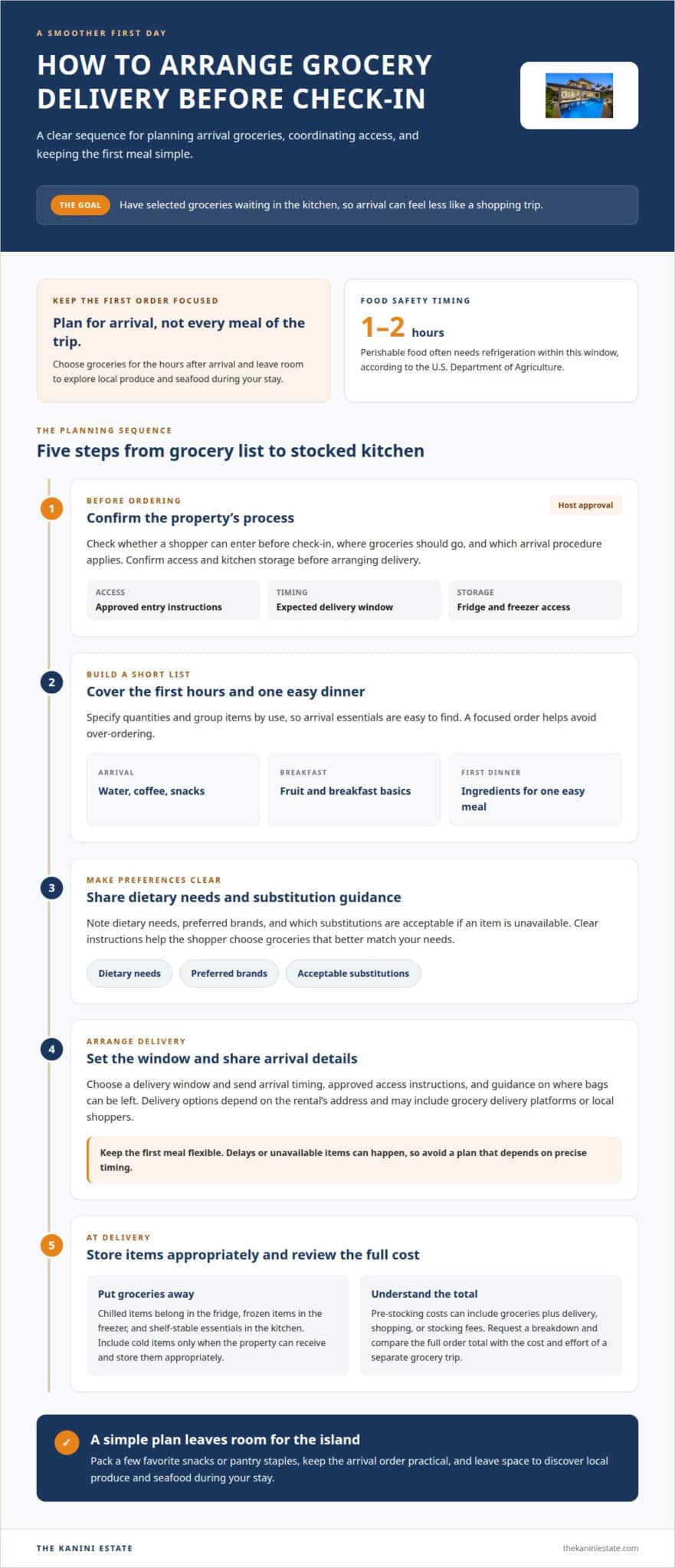
Guests arrange groceries before arrival, then have them delivered to the rental for their stay. The process works best when the host approves access, delivery timing, and kitchen storage in advance.
Pre-Arrival Ordering and Stocking
Choose groceries from a list, set a delivery window, and share the arrival details through the approved process. The shopper or delivery service brings the order before check-in; stocking may also include putting groceries away in the kitchen. For a smooth handoff, provide arrival timing, access instructions, and guidance on where bags can be left. Arrange the order once your plans and the property’s process allow, keeping delivery windows and item availability in mind.
Delivery options depend on the rental’s address. They may include grocery delivery platforms or local shoppers, so follow the arrangement approved for the property.
First-Day Groceries and Arrival Essentials
Plan the first order around the hours after arrival, not every meal of the trip. Water, coffee, breakfast basics, fruit, and ingredients for one easy dinner can simplify the first evening. Add everyday essentials your group uses, such as milk or snacks, and specify quantities. A short, focused list also leaves room to discover island produce and seafood during your stay.
Group items by use, such as arrival drinks, breakfast, and dinner. This helps the shopper place essentials where they’re easy to find in the kitchen.
Host Approval for Grocery Stocking
Confirming access and storage arrangements in advance clarifies whether a shopper can enter before check-in, where groceries should go, and how delivery works. Share your expected delivery window and ask which arrival procedure applies. Include chilled and frozen items only when the property can receive and store them appropriately. Clear instructions help prevent bags being left outside or put in the wrong place.
Perishable food often needs refrigeration within 1-2 hours, according to the U.S. Department of Agriculture. Hosts should plan for prompt delivery and refrigerator access, especially for dairy, meat, and seafood.
Pre-Stocking Costs and Service Fees
Pre-stocking costs include the groceries and any delivery, shopping, or stocking fees charged by the service. Whether it costs less than shopping after arrival depends on the order, service charges, transportation, and how much you value the time saved. Compare the full order total with the cost and effort of a separate grocery trip. Request a breakdown before placing your order.
Delivery can bring practical risks, including delays, unavailable items, or perishables arriving before guests. Reduce confusion with a realistic delivery window, clear substitution instructions, and approved access arrangements. Plan for chilled items to be refrigerated promptly, and keep the first meal flexible in case something is missing.
Vacation rental grocery delivery means ordering groceries before your stay and having them delivered to the rental. A grocery list can simplify shopping and help you plan several meals in advance. Where the rental allows stocking, cold items go in the fridge, frozen items in the freezer, and shelf-stable essentials in the kitchen.
Packing snacks and ingredients for the first meals
A small, thoughtful food kit can make the first hours in a rental feel calmer. Pack familiar snacks and ingredients for one or two simple meals, then shop locally for the rest. This keeps luggage manageable while giving everyone something to enjoy before unpacking or exploring. When pre-stocking groceries in a vacation rental, a small kit can complement the items waiting in the kitchen.
Choose food for the journey and arrival
Start with snacks that travel well and suit your group. Crackers, nuts, dried fruit, and sealed snack bars are easy to portion. If children are traveling, include a familiar favorite for the journey. Keep food in a separate, easy-to-reach bag rather than burying it beneath clothing or other luggage.
For the first breakfast, bring a favorite tea or coffee, or choose ingredients for pancakes. Pancake mix and a little of your preferred topping can make an easy first meal. Pastries are another good option when you want breakfast with little preparation. Keep the plan simple, especially if arrival times may vary.
Bring pantry staples in practical amounts
Bringing small portions of staples from home can prevent waste when a recipe calls for only a little. Pack salt, pepper, cooking oil, or a frequently used seasoning instead of large bottles or containers. Seal each item well and group them in a reusable pouch. That way, familiar ingredients are ready without filling the kitchen with excess.
Before packing, sort ingredients by meal. A breakfast pouch might hold pancake mix and tea; a dinner pouch might hold seasoning and pasta. This makes it easier to see what you have and avoid duplicate purchases at the rental. Planning pre-stocking groceries in a vacation rental can also help you decide which staples to pack and which to order.
Plan a relaxed first evening
For a simple arrival meal, pack ingredients that need little preparation, such as pasta and shelf-stable sauce. Or bring chips and salsa for an easy happy hour, with ingredients for margaritas if they suit your group. Keep the menu flexible so a delayed arrival doesn’t leave you with a meal that requires precise timing.
Airbnb kitchens and other vacation-rental kitchens can differ in their cookware and pantry basics. Choose meals that need only a few common tools, such as a pot, bowl, or serving plate. Pack a favorite knife securely in checked luggage if you rely on one, and keep the rest of the cooking plan adaptable.
For a peaceful base between meals and island outings, consider a private Big Island vacation stay. A compact food kit can make the first breakfast or evening feel familiar, while leaving room to discover local flavors during your visit.
Pastries or pancake mix can simplify breakfast, while pantry staples from home help avoid wasting large bottles and keep favorite ingredients on hand for the first meals.
Shopper communication about substitutions
A clear substitution plan helps a shopper make sensible choices when an item is unavailable. For each important grocery, say whether to choose an alternative, skip it, or contact you first. For example, you might accept any plain yogurt but require a specific type of milk. These instructions keep choices aligned with your meals, preferences, and dietary needs.
Set a clear rule for each item
Add a short instruction beside each item on your grocery list. Use “any brand” for flexible staples, “same type only” for items such as bread, and “skip if unavailable” for optional treats. For a key ingredient, name an acceptable substitute. If a recipe needs fresh basil, for example, say whether parsley will work or the shopper should leave it out.
Separate essential items from flexible choices. Coffee, preferred milk, or an allergy-safe snack may matter more than a particular brand of crackers. Clear priorities help the shopper focus on the items that shape your first meals instead of guessing which details matter.
Explain dietary and brand preferences
Explain the reason behind a restriction when it affects substitutions. “Dairy-free” gives more useful guidance than “different milk,” while “unsweetened almond milk” names a specific choice. Put relevant allergy information beside the item. For brand preferences, say whether the brand is essential or simply your first choice. That distinction helps prevent unwanted replacements.
For produce, specify the quality or form you prefer. Your list might request ripe avocados for tonight’s meal, firm fruit for later, or whole fruit rather than pre-cut pieces. For seafood or meat, describe the type and cut you need. Don’t expect a shopper to infer those details from a broad recipe name.
Choose how the shopper should handle questions
Provide one clear contact method and explain when you need a response before a purchase. For example, a shopper could proceed with an approved pasta brand but pause before replacing a gluten-free item. If you may be traveling or unable to reply, include a backup choice for each essential grocery. This prevents one unanswered question from holding up the rest of the order.
Keep instructions together in the order notes or grocery list instead of spreading them across messages. A concise note could say: “Choose another unsweetened brand if needed; skip sweetened versions.” This is easier to follow while shopping and reduces ambiguity at checkout.
Before unpacking, compare the delivered bags with your list and note any substitutions. Check chilled replacements and keep the meal plan flexible if a key ingredient has changed. A quick review helps you adjust dinner, such as serving pasta with the available sauce instead of making a recipe that depends on a missing item.
Custom grocery lists and brand preferences
A custom grocery list turns a meal plan into clear shopping instructions. Include each item, preferred size or type, quantity, and any brand requirement. For example, “plain Greek yogurt, preferred brand, large tub” gives more direction than “yogurt.” Grouping items by meal or pantry category also makes the list easier to shop and review.
A grocery service needs the rental address, delivery date and window, guest or host contact details, and approved access instructions. It also needs the item list, quantities, dietary needs, brand choices, and guidance for unavailable products. Keep the information together so the shopper can follow one clear set of directions.
You can request specific brands, substitutions, and dietary preferences. State which details are essential, such as a particular allergy-safe product, and which allow alternatives, such as a preferred cereal brand. Clear notes help the shopper distinguish a firm requirement from a general preference.
Before sending the list, match groceries to the meals you plan to make. Pancakes might require mix, preferred milk, and fruit. A pasta dinner could call for a particular noodle shape, sauce, and seasoning. This meal-based approach helps prevent missing ingredients and makes it easier to adjust quantities for your group.
- Item: Name the food clearly, such as unsweetened oat milk or whole-grain bread.
- Quantity: Estimate what your group will use, based on planned meals and package sizes.
- Preference: Mark a brand as required or preferred, and name acceptable alternatives.
- Dietary need: Note restrictions beside the affected item, not only in a general message.
- Storage: Identify chilled or frozen groceries so the host can plan fridge and freezer space.
Brand guidance works best when it’s specific but practical. If you prefer a certain coffee, name the brand and format, such as ground or whole bean. If it’s unavailable, say whether another roast is acceptable or the shopper should skip it. For pantry staples, list only what you’ll use rather than assuming the kitchen has oil, spices, or condiments.
Finally, review the list against the kitchen setup and your arrival plans. Remove items the host has said are supplied, clarify which groceries need cold storage, and separate optional treats from meal essentials. A tidy, prioritized list gives the shopper a useful guide and leaves less guesswork when your group settles in.
How much does vacation rental grocery pre-stocking cost?
The total for a pre-arrival grocery order usually includes the groceries and charges for shopping, delivery, or stocking. The final amount depends on what’s in the basket and how the order is handled. A simple breakfast order differs from a full set of meals with specialty products, chilled foods, and household essentials.
To understand the estimate, separate the food cost from service charges. Brand preferences, package sizes, fresh seafood, and the amount of produce can all affect the grocery total. The service portion may include shopping and delivery, while stocking charges may apply when someone puts items away inside the rental. Ask for these components to be shown separately.
A quote reflects the price of the specific order, based on the grocery list, delivery arrangements, and stocking tasks. Review the estimate alongside your list, then remove items that aren’t essential for the first meals. For example, a smaller breakfast order may suit your plans better than buying ingredients for every day before you arrive.
- Grocery basket: Review brands, package sizes, quantities, and specialty items.
- Shopping and delivery: Identify charges tied to preparing and bringing the order.
- Stocking: Check whether the estimate includes placing groceries in the kitchen.
- Substitutions: Note how replacements affect the final basket and whether optional items can be skipped.
Compare the full estimate with your arrival plans, not just the grocery subtotal. Shopping after arrival may mean a separate trip, time spent finding familiar products, and carrying bags back to the rental. Pre-arrival ordering trades that errand for a prepared kitchen. The better fit depends on your group’s schedule, meal plan, and preference for convenience.
Keep the order focused. List ingredients for planned meals, essential drinks, and items that are difficult to replace. Skip pantry products already available at the rental, if the host has identified them. For a longer stay, consider buying fresh items during the trip rather than stocking everything before arrival. This can limit unused food and keep unnecessary supplies out of the kitchen.
Before approving the order, check the delivery window, access plan, and any service charges listed in the estimate. If a fee or task is unclear, ask for an explanation before purchase. A clear breakdown lets you decide what belongs in the basket and what convenience is worth paying for. For a stay on Hawaii’s Big Island, explore a private vacation rental as the setting for meals shared at an unhurried pace.
The Kanini Estate: Luxury vacation rental on the big island of Hawaii
The Kanini Estate is a premier luxury vacation rental property offering an exceptional setting for time with friends and family. After planning your meals and arrival groceries, settle into a private escape and enjoy your getaway at an unhurried pace.
For corporate retreats, The Kanini Estate offers a high-quality, distraction-free environment for focused thinking. It suits groups seeking space to work together away from everyday routines. Whether you are gathering with family or planning a retreat, the setting can make shared time feel more intentional.
If a private luxury stay fits your plans, contact The Kanini Estate to discuss your visit.
Make room for a more welcoming arrival
Let your grocery plan support the stay you want, rather than shaping every moment around errands. A few familiar ingredients can ease the first evening, while leaving the rest of your visit open to discovery, shared meals, and the island’s changing flavors. With pre-stocking groceries in a vacation rental, thoughtful choices matter more than a packed kitchen: focus on what will help your group settle in and enjoy being together.
For a private escape on Hawaii’s Big Island, The Kanini Estate offers a setting for time with friends and family. Let the ocean views and island calm set the pace, whether you’re gathering for meaningful conversation or making space to reconnect. The right setting can turn a stay into a lasting memory.
Contact The Kanini Estate to begin planning your island stay. May your arrival feel easy, and your time together unfold beautifully.
Frequently Asked Questions
What is pre-arrival fridge stocking?
Pre-arrival fridge stocking means arranging for selected chilled groceries to be placed in a rental’s refrigerator before check-in. It can help with items you’ll need soon after arrival, such as milk for breakfast or ingredients for dinner. Keep the list focused on food you’ll use promptly, and distinguish chilled items from pantry goods so each can be stored appropriately.
How does grocery pre-stocking work for vacation rentals?
Guests submit a grocery list and coordinate delivery timing and property access through an arrangement approved for the rental. Someone arriving late, for example, might prioritize breakfast basics and a ready-to-heat meal. The property’s instructions help determine where groceries can be left or stored. Keep a copy of the final list to see quickly which items were requested.
What are the rules for leaving groceries in a rental before guest check-in?
Follow the property’s instructions for delivery access, storage, and any food already in the kitchen. Don’t assume a shopper can enter or leave bags unattended. Before arranging delivery, establish who will receive the order and where groceries should go. Identify chilled items separately from shelf-stable products, and don’t leave perishables without a plan for prompt refrigeration.