
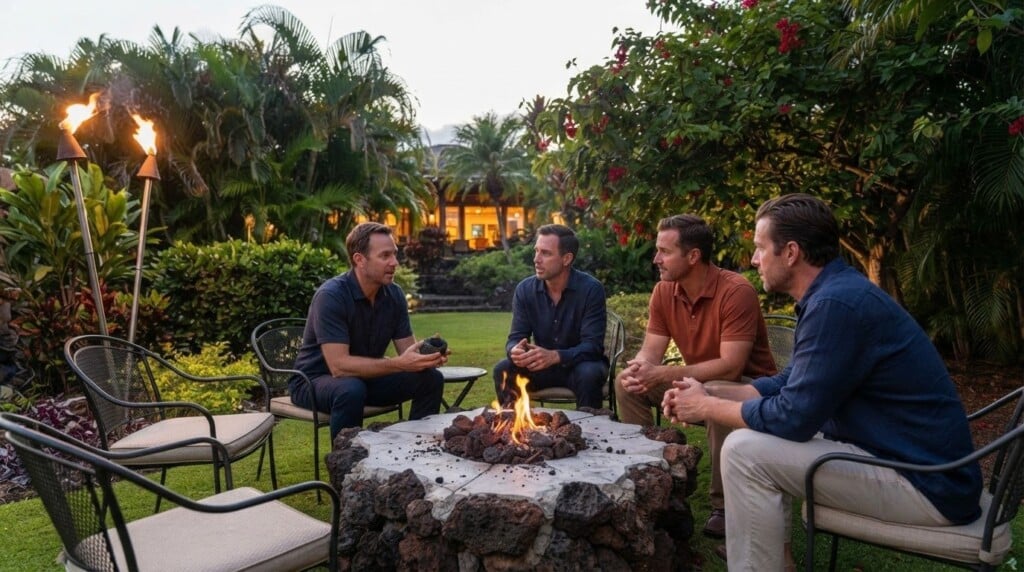

A mastermind retreat is more than a change of scenery: its value comes from pairing focused business conversations with room to think between sessions. When comparing mastermind group retreat venues in Hawaii, weigh privacy, comfortable spaces for discussion, and whether the setting helps your group step away from daily distractions.
A successful retreat can make room for both meaningful progress and time to enjoy the island. Participants share challenges, offer perspective, and clarify priorities, while breaks and shared activities keep the days from feeling like one long meeting.
This guide explains what a mastermind retreat involves, who it suits, and what to look for in a Hawaii setting. It also covers retreat length, a balanced schedule, and ways to make space for rest and connection, so the experience feels purposeful without losing its ease.
Key Takeaways
- A mastermind retreat gives business owners dedicated time to share challenges, exchange perspective, and focus on priorities away from everyday demands.
- Match the destination to where participants are traveling from, the group’s goals, and the dates that work for everyone.
- Choose a retreat length that leaves enough time for focused sessions as well as rest; a three-day weekend or a shorter gathering can both work.
- Build in breaks and shared activities so participants can recharge and connect between conversations.
- Look for a setting that supports privacy and distraction-free thinking while offering a restorative sense of place.
How a Hawaii retreat venue can support breaks and group activities
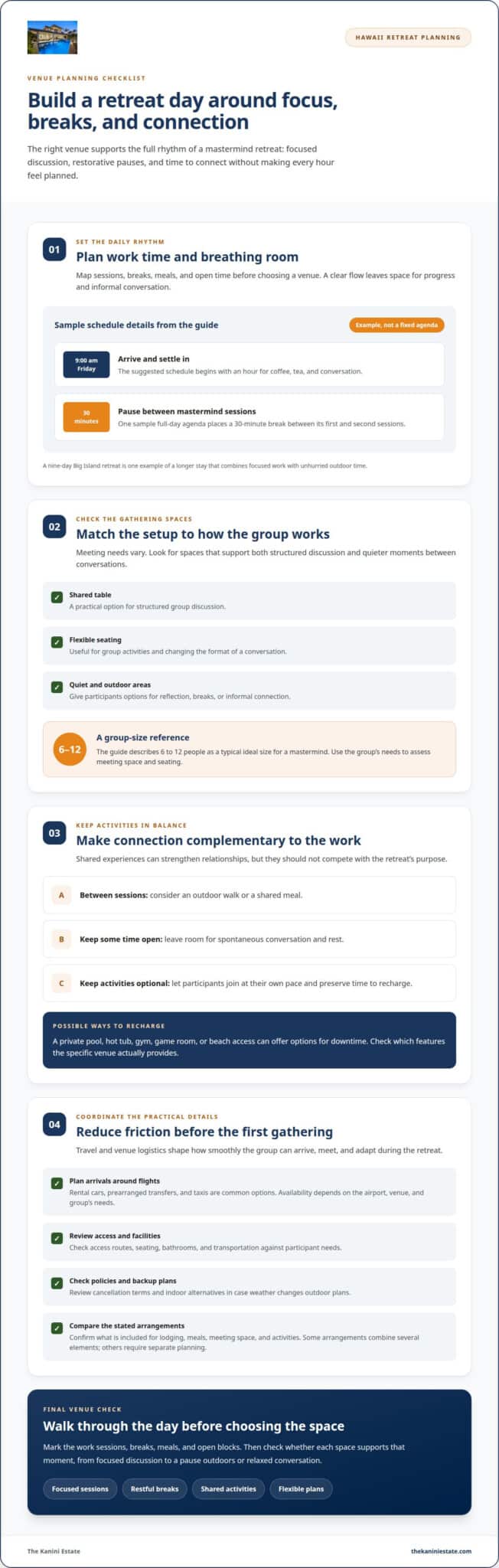
A venue shapes the rhythm of a mastermind retreat as much as its meeting room. On the Big Island, a nine-day retreat experience shows how a longer stay can combine focused work with unhurried time outdoors. Build the day around clear transitions: schedule a session, step away for a break, then return for shared activities or relaxed conversation. That structure protects energy without making every hour feel planned.
A sample full-day agenda places a 30-minute break between its first and second mastermind sessions. Another suggested schedule has participants arrive at 9:00 am on Friday, then spend an hour over coffee, tea, and conversation. These details give the group time to settle in before the work begins. A venue with a comfortable gathering area and outdoor space can support both moments, whether people want quiet reflection or informal connection.
What are the group size and meeting space options at Hawaii retreat venues? A group of 6 to 12 people is described as a typical ideal size for a mastermind. Meeting needs vary, so consider a shared table for structured discussion, flexible seating for group activities, and quieter areas for breaks or smaller conversations.
What transportation options are available from Hawaiian airports to retreat venues? Common choices include rental cars, prearranged transfers, and taxis, depending on the airport, venue, and group’s needs. Coordinate arrivals around flight times so participants can travel together when practical and avoid spending the first gathering on scattered pickups.
Activities work best when they strengthen relationships rather than compete with the retreat’s purpose. A group might take an outdoor walk between sessions, share a meal, or leave an open block for spontaneous conversation. Keep optional activities separate from core sessions so participants can join at their own pace and preserve time to rest.
What accessibility, cancellation, and weather risks should groups consider when booking a Hawaii retreat? Review access routes, seating, bathrooms, transportation, cancellation terms, and indoor alternatives to outdoor plans. A flexible Big Island schedule helps the group adapt if weather changes an activity.
Map the group’s daily flow before choosing a venue. Mark work sessions, breaks, meals, and open time, then consider how each space supports those moments. A private pool, hot tub, gym, game room, or beach access can offer ways to recharge, while a quiet gathering area helps keep business conversations focused. Leave an open block in the schedule for spontaneous ideas and stronger connections.
What Is a Mastermind Retreat for Business Owners?
A mastermind retreat brings business owners together to examine challenges, share experience, and shape next steps. Unlike a standard meeting, it sets aside extended time for focused conversations and informal connection. The venue matters because travel, sleeping arrangements, and gathering spaces shape how the group spends each day.
For a first retreat, a location within a couple of hours of the group’s hometown can simplify travel. A Hawaii destination retreat requires more planning, so align dates with everyone’s work and arrival needs. Choose an island after weighing flight plans, the retreat’s purpose, and the setting the group wants.
Which Hawaiian islands are best for a mastermind retreat? There’s no single best island for every group. The Big Island may suit owners seeking a quieter setting, but the right choice depends on participants’ travel plans and the experience they want.
How do Hawaii retreat venues compare with hotels, resorts, and private vacation rentals? Hotels and resorts typically center on guest stays and shared facilities; private rentals can offer a more private base and informal gathering spaces. Compare the actual meeting setup, lodging arrangement, and activity options instead of assuming every venue includes the same features.
Which Hawaii venues offer lodging, meals, meeting rooms, and activities together? Some arrangements may combine several elements, while others require separate planning for meals, meeting space, or activities. List the group’s needs, then compare each venue’s stated arrangements against them.
What permits, taxes, or other rules apply to hosting a business retreat in Hawaii? Requirements can depend on the venue, lodging arrangement, and whether plans include a public event or special activities. Consider lodging, food service, and organized activities separately, since each may involve different rules or charges.
Set the retreat dates with the group’s calendar in mind. A Hawaii destination retreat listed for August 2027 shows how far ahead some groups plan. A leader can first gather date preferences, then match them against travel logistics and the venue’s available schedule. Keep arrival and departure days in the plan, not just meeting days.
Next, match the venue to the group’s working rhythm. If members value quiet mornings, choose a setting that supports focused discussion before outdoor activities. If meditation or running matters to participants, make sure the schedule and surroundings leave room for those practices. These choices shape the retreat’s energy without taking its focus away from business.
Compare destinations by what works for your group. A shared rental may suit a close-knit team that wants informal conversations after sessions. A hotel or resort may fit participants who prefer separate accommodations and shared facilities. When comparing mastermind group retreat venues in Hawaii, first decide whether privacy, convenience, or a particular island experience matters most.
Eligibility and suitability for participants
A mastermind retreat suits business owners seeking focused peer input, not a general networking break. Participants should bring a real decision, challenge, or goal to discuss. One owner might need to weigh a new offer, while another seeks perspective on team priorities. Shared commitment matters more than matching industries or business models.
Readiness can grow through regular meetings before travel. One group met weekly or every other week for over 2½ years before its first retreat in March 2015. That history gave members time to learn how each person thinks and responds. A retreat can deepen an existing connection, but it shouldn’t be treated as a substitute for shared purpose.
Groups that meet online can build continuity before gathering in person. One mastermind met monthly by video conference for four years before its first retreat. The example shows how online conversations can help members learn one another’s strengths, working styles, and goals. For a Hawaii retreat, that foundation can help participants arrive ready to contribute rather than spend the gathering getting acquainted.
Before choosing participants, define the kind of exchange the group wants. A useful fit check can ask whether each person can:
- Bring a current business question that benefits from thoughtful discussion.
- Listen closely and offer specific, respectful feedback to peers.
- Protect private conversations and respect different perspectives.
- Set aside time for both structured sessions and informal connection.
These are practical expectations, not formal credentials. A founder seeking candid feedback, for example, may thrive in a small peer group, while someone expecting a sales showcase may prefer a different format. Clear expectations help the group choose a setting that supports focused work and honest conversation.
Consider how participants prefer to recharge in Hawaii. Some may value quiet time between sessions; others may enjoy outdoor activities or shared recreation. A private pool, hot tub, gym, game room, or beach access can support different ways to unwind. Keep activities optional, so a morning walk or swim encourages connection without requiring everyone to join.
Success also depends on matching the retreat’s pace to the group’s needs. A team facing a major decision may want longer working blocks and quiet reflection. A newer group may benefit from more time for introductions and relationship-building. Ask each participant to name one hoped-for outcome, then use those answers to shape the agenda and choose a private, calm venue suited to the work.
Regions and destinations for retreats
Hawaii offers distinct island settings, so begin with the group’s purpose rather than the scenery alone. The Big Island, Oahu, Maui, and Kauai are possible destinations to compare. Members’ travel routes, preferred pace, and plans between sessions can shape the choice. The destination should make the retreat practical, not simply look appealing in photographs.
For a Big Island retreat, consider how the venue supports the agenda. Properties like The Kanini Estate offer quiet settings that help members focus during working sessions, while providing outdoor space for them to pause between discussions. If the group wants shared time outside the meeting schedule, include that in the destination brief. The right location balances business focus with the experience participants want.
Dates matter as much as island choice. A Hawaii mastermind retreat is scheduled for March 6-15, 2027, showing one example of a longer destination gathering. Use a simple sequence: collect each member’s available dates, agree on the retreat’s purpose, then compare suitable venues. Confirming the group’s preferred travel window first helps narrow the search without letting scenery decide everything.
Compare destinations against the same needs instead of relying on broad labels such as “amazing” or “remote.” For example, ask how each candidate supports:
- Travel arrangements that work for the members attending.
- Quiet space for private sessions and focused discussion.
- Shared areas where conversation can continue informally.
- Activities that fit the group’s interests and daily schedule.
- Time for coffee, meals, and rest between planned sessions.
These criteria help distinguish a retreat location from a vacation destination. A member seeking uninterrupted work may value privacy and a calm setting. Someone hoping to pair business with outdoor activities may prefer a location that makes those plans practical. Discuss priorities before selecting an island, so the venue supports the group instead of forcing an agenda onto it.
For groups considering mastermind group retreat venues in Hawaii, properties such as The Kanini Estate can be a strong fit when participants want a focused setting and space to step away from daily routines. The location should still suit the group’s travel plans and working style. A venue that supports private discussions, shared downtime, and flexible activities can make the destination purposeful, not merely picturesque.
Finally, let the retreat leader turn the destination choice into a workable plan. Set the dates, identify each member’s needs, then compare venues against the group’s priorities. Keep some time open for spontaneous conversations or a change of pace. That small planning choice leaves room for connection while keeping the purpose of the retreat in view.
How venue policies and features affect retreat duration and scheduling
Start with the retreat’s purpose, then let the venue’s booking terms shape its dates. A short planning session needs a different stay from an annual gathering focused on the coming year. Minimum-stay and booking policies vary by property and dates; they affect arrival and departure windows, length of stay, and time for setup or reflection.
For duration, a three-day retreat weekend is one option; two and a half days can also work. A shorter gathering might last one day or one and a half days. The right format depends on how much time members need, the group’s travel plans, and whether the agenda includes planning, peer sessions, or time in nature.
One planning guideline allows one day for every two group members, with at least two full days on location for a four-member group. Treat this as a scheduling approach, not a fixed rule. A group with several topics may need more discussion time; a compact group focused on one shared purpose may need less.
Booking early gives the group more room to align calendars and dates. Mastermind members should schedule a retreat 3-4 months in advance. Once dates are settled, the venue’s arrival and departure terms can help the leader place sessions, meals, and personal time in a practical order.
A sample schedule sets breakfast at 9am and the first mastermind session at 10am. Each member can have one 90-minute session, with two sessions scheduled per day. Another retreat plan allowed about three hours of mastermind time each morning. These examples leave afternoons open for rest, nature, or conversation with friends.
- For a one-day retreat, choose one main purpose and protect time for focused discussion.
- For a weekend, allow space for sessions, arrival, and informal connection.
- For a longer stay, balance work blocks with open time and activities.
Before finalizing the agenda, compare planned hours with the venue’s check-in, check-out, and space-use terms. If the first session begins after breakfast, participants need time to arrive and settle. If the final conversation matters, schedule it before departure rather than assuming the group can extend its stay.
A clear schedule still needs breathing room. Leave open periods between demanding sessions, especially when the retreat includes travel or outdoor activities. For a focused Big Island gathering, explore a Kohala Coast retreat setting as one possibility for pairing dedicated thinking time with a restorative stay.
Minimum stays and booking terms vary by property and date, so check how they affect arrival, departure, and the time available for the retreat. Booking early helps align calendars; mastermind members should schedule their retreat 3-4 months in advance.
The Kanini Estate: Luxury vacation rental on the big island of Hawaii
The Kanini Estate offers a luxury vacation rental on the Big Island of Hawaii for business owners seeking a quieter setting for a corporate retreat. Its high-quality, distraction-free thinking environment supports focused conversations, while the island surroundings offer a welcome change from the usual workday. It can also suit a gathering that brings business owners together with friends or family for time in paradise.
Consider The Kanini Estate when your group wants privacy, focused thinking, and a restorative retreat with a clear purpose. It offers a natural setting for teams looking to step away from daily routines and make room for meaningful discussion.
Contact The Kanini Estate to discuss your retreat plans.
Take the next step toward a focused retreat
Your setting can shape how the group thinks together. Before settling on dates, give the retreat a clear intention: the decision to move forward, the conversations worth making room for, and the shared time that will help everyone return refreshed. Choosing a Hawaii retreat venue means finding a place that supports purposeful work and a fuller sense of being away.
The Kanini Estate is a luxury vacation rental in the gated, oceanfront community of Naupaka at Waikoloa on the Big Island of Hawaii. It offers a private, distraction-free setting for corporate retreats, as well as time with friends and family. For business owners seeking a gathering distinct from the working week, it brings those priorities together.
Explore The Kanini Estate as a setting for your retreat, and begin shaping a gathering that reflects how your group wants to work and reconnect.
Frequently Asked Questions
What is the best time of year to hold a mastermind retreat?
The best time depends on participant availability, travel plans, and the retreat’s purpose. A group planning its next business year, for example, may choose dates that leave time to reflect before setting priorities. First find a window that works for members, then shape the activities around it. Include arrival and rest time so the first session doesn’t begin immediately after a long journey.
What is the typical budget for a mastermind retreat?
There isn’t one budget that fits every retreat. Consider the stay’s length, group size, travel, lodging, meals, meeting needs, and planned activities. A group focused on peer sessions may plan differently from one adding organized outings. Decide which expenses the group shares and which participants handle individually. These choices clarify the retreat’s scope and help you compare formats.
Why choose an all-mastermind venue for a corporate retreat?
A venue suited to mastermind work can keep the gathering centered on peer discussion and shared goals. Dedicated meeting areas may support structured sessions, while a private rental can create a relaxed setting for informal conversations. The right fit depends on whether the group values formal meeting arrangements, privacy, or flexibility between discussions. Consider how participants will use the space throughout the day.
What venues in Hawaii host mastermind group retreats?
The Kanini Estate is a luxury vacation rental in Hawaii that offers a high-quality, distraction-free environment for corporate retreats. It can suit business owners seeking a private place to stay and think together, with the option to enjoy time with friends and family. Its focus is a private group stay, rather than a hotel stay or a dedicated event venue.
How much do mastermind retreat venues in Hawaii cost per night or per person?
The total cost depends on the venue, season, length of stay, group size, and arrangements for meals, travel, and activities. For a useful estimate, separate lodging from shared retreat expenses, then decide how the group will divide them. A longer stay or larger group can change planning needs, so compare options using the same dates, group details, and expected activities.
When is the best season to book a group retreat in Hawaii?
Choose dates that suit the group’s work calendar, travel needs, and preferred retreat experience. Plan well ahead: mastermind group members should schedule a retreat 3-4 months in advance. This gives participants time to coordinate travel and agree on dates. Once the group has chosen a window, the leader can shape the agenda around arrival times, focused sessions, and the activities participants want to share.
What are the minimum-stay and booking policies for Hawaii retreat venues?
Schedule the retreat 3-4 months in advance and check the venue’s available dates. Include arrival and departure days when planning the stay.