


What if the most relaxing part of a group getaway begins before anyone packs a bag? A clear rental agreement can help set expectations for the stay, from who’s included in the booking to how changes and damage are handled. Yet unfamiliar wording can make key details easy to miss. A little time spent understanding luxury rental agreements can bring more ease to the planning.
It’s natural to focus on the setting, the views, and the moments you’ll share. The agreement matters, too. It’s a shared understanding of the stay, not just booking paperwork, especially when friends or family are sharing costs and responsibilities.
This guide explains common vacation rental clauses and offers a practical way to compare terms across potential stays. We’ll cover occupancy, payments, cancellations, deposits, damage, amenities, and house rules in plain language, so your group can make decisions with greater confidence and settle into the experience with fewer unanswered questions.
Key Takeaways
- Understanding luxury rental agreements starts with knowing what the written terms cover and how a vacation stay differs in purpose from a residential lease.
- Review payment timing, cancellation and change terms, occupancy, property care, and which amenities the agreement describes.
- Compare potential stays using the same details, including access, guest responsibilities, and stated charges.
- Before booking, check that your dates, guest count, and expectations for using the property match the agreement.
- Clear terms can help a group plan a private stay with greater confidence and fewer unanswered questions.
Understanding Luxury Rental Agreements: What Does the Contract Actually Cover?
Before a group settles into a private home, it helps to know what the booking asks of everyone. A vacation rental agreement is the written set of terms for a booked vacation stay. It records expectations shared by the guest and property owner, giving the booking a reference beyond listing photos and initial conversations.
A luxury vacation rental agreement is the written guide to the dates, expectations, and terms of a guest’s stay in a private rental property. The word “luxury” describes the experience, not a universal contract format. Details vary, so understanding luxury rental agreements means reading the terms for the specific stay rather than assuming a high-end booking includes particular conditions.
A general overview of vacation rentals can help explain how these stays differ from other types of accommodation. The agreement is more specific: it connects the particular booking with the property and the expectations for that visit.
What makes a vacation rental agreement different from a residential lease?
The central difference is purpose. A vacation rental agreement concerns a temporary stay, while a residential lease is generally used for ongoing housing. This distinction helps frame what to look for, but it doesn’t mean every vacation agreement follows the same pattern. Terms and requirements can vary by property and location.
For a short stay, the written terms may address booking dates, the people included in the reservation, payment arrangements, and how guests may use the property. They can also explain expectations for caring for the home and its amenities. These details affect group plans: arrival timing, guest count, and what the property offers should align with the written booking.
The agreement works as a point of reference for both sides. It helps guests understand what has been arranged and gives the property owner a way to state expectations for the stay. Read it as a whole, not as paperwork to skim after the booking is complete.
Who is responsible for understanding the agreement?
The person making the booking is often the one who receives or reviews the agreement. But the stay may involve friends, relatives, or colleagues who haven’t seen it. Share the terms that affect the group, such as guest numbers, property use, payment arrangements, and included amenities. That way, everyone can plan around the same details.
Not every guest has the same role as the booking contact. Still, everyone can feel more prepared when they understand the arrangements that affect their visit. If the agreement describes which amenities are included or sets expectations for using the property, sharing that information helps the group plan realistically.
Read the agreement before making payment or another booking commitment. If a conversation suggested something different from the written terms, don’t rely on the verbal assumption. Get clear written wording before proceeding. A careful review at the outset can make the stay feel more settled long before the first arrival.
Which Luxury Rental Agreement Clauses Deserve a Careful Read?
A polished listing can make a stay feel effortless. The agreement shows what the booking actually sets out. As you practice understanding luxury rental agreements, read each clause as an instruction or expectation: what must you pay, who may stay, and how should the property be used?
How do payment, cancellation, and changes work in the agreement?
Start with the payment schedule. Identify each due date, the amount or portion due at each stage, and any stated conditions tied to payment. Compare those details with the booking information. You should be able to tell what is due and when, and how the agreement describes the total charges.
Next, read the cancellation wording in full. Look for the conditions that apply if you cancel, and note how the agreement describes any refund or other outcome. Don’t assume a platform’s general description answers every question about the specific booking.
Changes deserve their own careful read. If your group may need different dates or booking details, find the wording that explains how requested changes are handled. It may describe a process, conditions, or limits. Understand what the text says before relying on an informal expectation.
What should groups look for in occupancy and property-use terms?
Check how the agreement describes the guest count. Then look for wording about visitors, shared spaces, and how guests may use the property. These details can shape group plans, especially if people expect to gather in areas beyond their sleeping arrangements.
Property-care clauses explain what guests are expected to do during the stay. Look for instructions on protecting the home, addressing damage, and reporting an issue. If the wording describes a reporting process, note what the guest is asked to do and when. Avoid filling gaps with assumptions about responsibility.
Finally, compare amenities named in the written terms with the listing’s descriptions and photos. A pool or game room may catch the eye, but images alone don’t explain the terms of use or what the booking includes. Confirm that the written description matches the amenities your group plans around.
Clear clauses help guests plan with fewer surprises and give a group a common understanding of its stay. For a private full-property experience, view The Kanini Estate’s private estate stay, with ocean views, direct beach access, a pool, hot tub, gym, and game room.
How Do Luxury Vacation Rental Agreements Compare With Standard Stays?
Beautiful surroundings may shape the feeling of a stay, but they don’t set a universal contract format. A luxury rental agreement may cover the same basic booking questions as an agreement for a more standard stay. Its scope and clarity depend on the written terms, not on the property’s label or appearance.
Agreement quality depends on how clearly and understandably the written terms explain the stay. Premium surroundings don’t guarantee identical rules between properties. One agreement may describe access to a private pool in detail, while another may focus on different amenities or property-use expectations. Compare the actual wording, not what you assume the word “luxury” promises.
Does a luxury rental agreement change the basic booking questions?
No matter the setting, guests still need to understand the dates, payment schedule, cancellation terms, and occupancy wording. Luxury status doesn’t create one shared legal standard or replace the need to review those details. For groups, a private full-property stay makes shared expectations especially useful. Everyone benefits from knowing what the booking covers and how the home may be used.
How can readers compare agreements without focusing only on amenities?
Use the same questions for each prospective stay, then record what the agreement says. Read it alongside the property description. This helps separate written terms from assumptions drawn from photos, broad listing language, or an amenity that appears in an image.
The comparison below is a simple framework. Fill each column with the relevant wording, or note where a detail is unclear. It doesn’t rank properties. It helps you compare their terms consistently.
| Topic | Stay A | Stay B |
|---|---|---|
| Payment | Due dates and payment stages | Due dates and payment stages |
| Cancellation | Stated conditions and outcomes | Stated conditions and outcomes |
| Occupancy | Guest count and visitor wording | Guest count and visitor wording |
| Property access | Areas or spaces described | Areas or spaces described |
| Amenities | Features named in the written terms | Features named in the written terms |
| Guest responsibilities | Care and use expectations | Care and use expectations |
For example, a listing photo may show a pool, while the written description names the pool as an amenity. Those are useful details, but don’t assume they explain access, use, or related expectations. Record what the agreement actually says, and keep unanswered questions visible as you compare.
This approach keeps the focus on fit: the stay’s setting, the written scope, and the group’s expectations. Understanding luxury rental agreements is less about searching for special wording and more about deciding whether the terms are clear enough for everyone to plan with confidence.
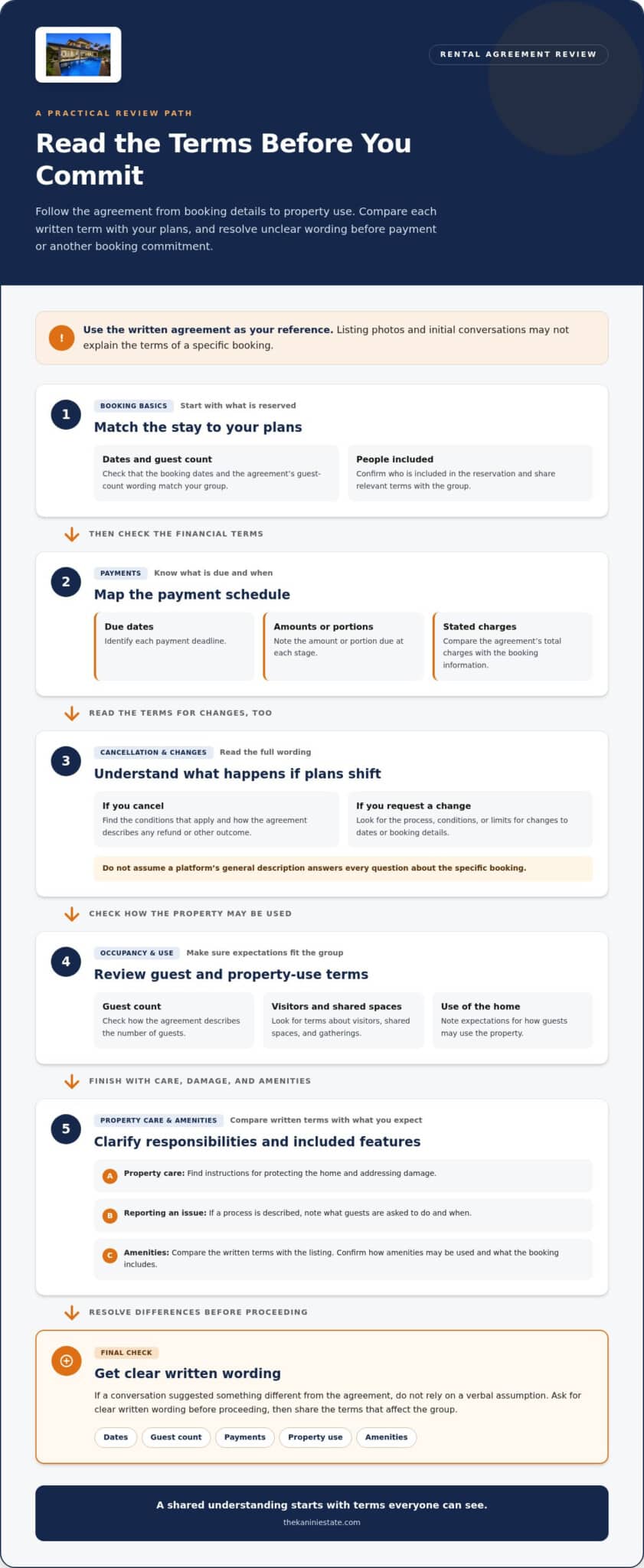
How Can You Review a Luxury Rental Agreement Before Booking?
A calm pre-booking review can help your group begin the stay with shared expectations. Read the agreement beside the listing and compare each important detail rather than relying on memory or a quick scan. Check the dates, guest count, charges, cancellation terms, amenities, and property-use expectations in that order, then resolve unclear wording in writing before committing.
What should you check before accepting the agreement?
Use this sequence to keep the review focused:
- Match the dates. Compare the arrival and departure dates in the agreement with the dates selected for the booking. Check the year and any stated arrival or departure times.
- Confirm the guest count. Check that the number of guests in the agreement matches your group and the booking details. If the listing and contract differ, pause before proceeding.
- Review stated charges. Read the total and any itemized amounts shown in the booking documents. Make sure you understand which charges are described and when payments are due.
- Read cancellation and change terms. Look for the conditions that apply if plans shift. Note how the agreement describes cancellations and requested changes rather than assuming flexibility.
- Compare amenities and access. Match the written description against the listing. Distinguish features named as part of the stay from details suggested only by photos or general wording.
- Understand property-use expectations. Read the arrival, departure, visitor, shared-space, and property-care language. Consider whether everyone in the group understands what the terms ask of them.
For a broader perspective on choosing a private retreat, the companion guide Luxury Vacation Homes: The 2026 Guide to Selecting a Private Sanctuary can sit alongside this agreement review.
What are common agreement red flags for a group stay?
Some details call for a pause, not a guess. Examples include different guest counts across the listing and agreement, charges that lack a clear description, or arrival instructions that conflict with other booking information. These mismatches may be simple oversights, but they can leave the group planning around different expectations.
Pay close attention to amenity access and responsibility wording. If a pool appears in photos but the agreement doesn’t explain access or use, don’t treat the image as a complete description. Unclear language about care or reporting damage can also leave guests unsure what to do if an issue arises. Mark the exact wording and get a written explanation through the booking process before committing. This is a practical clarity step, not a judgment about legality.
Understanding luxury rental agreements is easier when you review specific details in a steady order and keep written answers with the booking records. Once the terms are clear, you can turn your attention to the atmosphere and shared moments ahead. See the details of The Kanini Estate’s private full-property stay as you plan a considered group escape.
How Does a Clear Agreement Support a More Restful Private Stay?
A private group stay feels more settled when everyone knows what to expect. Clear written terms give the booking contact a shared reference for planning, while each guest can arrive with a better sense of the home and the arrangements for the visit. That clarity leaves more room for the moments that matter, from a quiet morning together to an unhurried evening by the water.
Why do clear expectations matter when a group shares a private estate?
Groups often bring different routines and ideas of what a getaway should feel like. One person may picture a morning swim, while another hopes to relax indoors or make time for a game. Aligning plans around the property and the stay can help everyone share spaces with care and avoid preventable confusion.
The Kanini Estate offers a private full-property stay for families, friends, and professional groups. Its features include a private pool, hot tub, gym, and game room, as well as ocean views and direct beach access. Knowing which features matter most to your group can help guide planning. Use the agreement and listing as the reference for the specific booking; the amenities alone don’t establish how a particular term applies.
Thoughtful planning also extends to property care. A group can agree on simple habits, such as keeping shared areas comfortable for everyone and making sure the booking contact can refer to written instructions. These small steps can support a considerate stay without turning the visit into a checklist.
What is a thoughtful next step after reviewing the agreement?
Compare the written terms with the experience you hope to have. Consider whether the property, amenities, and stated expectations suit your group’s plans. For families and friends, that may mean a setting where time together feels natural. For a professional group, it may mean weighing privacy and a calm environment for focused conversation.
For more inspiration as you shape your plans, Planning Your 2026 Rental Vacation: The Private Estate Guide offers a related perspective on choosing a private stay. Keep the agreement close as you make decisions, and share relevant details with the people traveling with you.
Understanding luxury rental agreements is ultimately about more than reading clauses. It’s a way to bring your group’s expectations into alignment before arrival, so the stay can unfold with greater ease. The Kanini Estate’s full-property setting, ocean views, and private amenities offer a setting for time together in a secluded retreat.
Explore The Kanini Estate’s private full-property rental for a stay with family, friends, or colleagues.
Choose a Stay That Matches Your Group’s Vision
Before you commit, invite each traveler to share what they hope to take away from the time together. Their answers can help shape a trip with room for shared plans and quieter moments, making the experience feel considered from the beginning.
Then compare those hopes with the written terms and the stay you’re considering. Understanding luxury rental agreements helps you make a deliberate choice, but your group’s priorities should guide the final decision. Choose a setting that supports the kind of time you want to create, whether that means reconnecting, focusing, or stepping away from familiar routines.
A thoughtful choice gives your group a calm starting point for planning the details together. Picture the pace of your stay, then consider a private retreat that suits the way you want to spend your time.
Explore The Kanini Estate and imagine a more considered escape. Your next shared experience can begin with a clear choice and a sense of possibility.
Frequently Asked Questions
Is a luxury rental agreement different from a standard vacation rental agreement?
Not by label alone. Calling a property “luxury” doesn’t establish different legal rules or guarantee particular terms. Compare the actual agreement with the booking details, especially payment, cancellation, occupancy, and property use. Two homes described as luxury may set out different arrival instructions or amenity details. Focus on the documents for your specific stay, and don’t assume one property’s wording applies to another.
What should I look for in a luxury rental agreement before booking?
Check that the dates and guest count match across the agreement and listing, then review payment terms, cancellation wording, amenities, property rules, and damage responsibilities. Understanding luxury rental agreements also means checking how the details fit together. Compare amenities named in the booking documents with the property description, and look for clear descriptions of stated charges. If wording conflicts or leaves a key point open, get written clarification before committing.
Can a vacation rental agreement include rules for visitors and shared spaces?
Yes. An agreement may describe occupancy, visitors, and how guests can use shared spaces, but the wording varies by stay. Read the specific terms rather than assuming a rule applies everywhere. Your group may have different expectations about inviting a visitor or gathering in a common area. Sharing the relevant wording with everyone can help align plans before arrival and prevent surprises during the stay.
What happens if I need to cancel a luxury vacation rental?
The outcome depends on the cancellation terms in the specific agreement and booking. Before committing, find the wording that applies if you cancel and save a copy with your booking records. If your plans change, refer to those written terms rather than relying on a general assumption about refunds or timing. This article offers general information, not legal advice. For guidance on a specific dispute, consult a qualified legal professional.
Are amenities automatically included in a luxury rental agreement?
Don’t assume that every feature shown in a photo has the same access conditions or is described as part of your booking. Compare the amenities named in the agreement with the property description and booking details. If a feature matters to your group, look for clear written information about it rather than relying on an image alone. This helps distinguish a visual impression from the details stated for your stay.
Should every guest in a group read the rental agreement?
It’s helpful for the booking organizer to share the terms that affect the group’s plans. Guests don’t all need to study every line, but they should understand relevant expectations about guest count, payment arrangements, cancellations, property use, and shared care. A brief group message can highlight arrival details and instructions that shape how everyone uses the home. This encourages a smoother arrival without making assumptions about anyone’s legal role.