
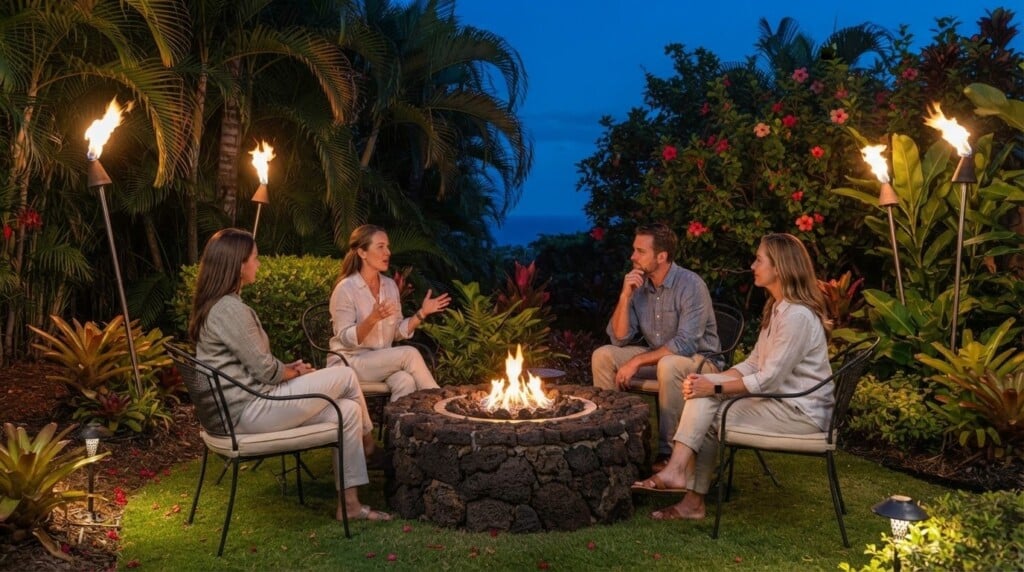

Improving team morale with a retreat starts with shared activities that help people collaborate, followed by focused time to set clear goals and relaxed moments to connect. Choose experiences that suit different personalities, and balance workshops or brainstorming with unstructured downtime. The aim is to help colleagues feel heard, valued, and aligned around work they can shape together.
A change of setting can create room for conversations that rarely happen amid routine tasks. A thoughtful retreat has a clear purpose without filling every moment, leaving space for fresh ideas, genuine connection, and rest. This guide explains how to choose activities around your team’s interests, set shared goals, and balance work, play, relaxation, and wellness.
Key Takeaways
- Choose activities that help colleagues practice collaboration and suit different interests.
- Set a clear shared purpose so the team can connect retreat conversations to its priorities.
- Look for a setting that supports focused work as well as time to unwind together.
- Leave breathing room in the agenda for rest and informal conversations, not only planned sessions.
- Use shared experiences to help people feel heard, recognize one another’s strengths, and build stronger connections.
1. What activities should you do on a corporate retreat?
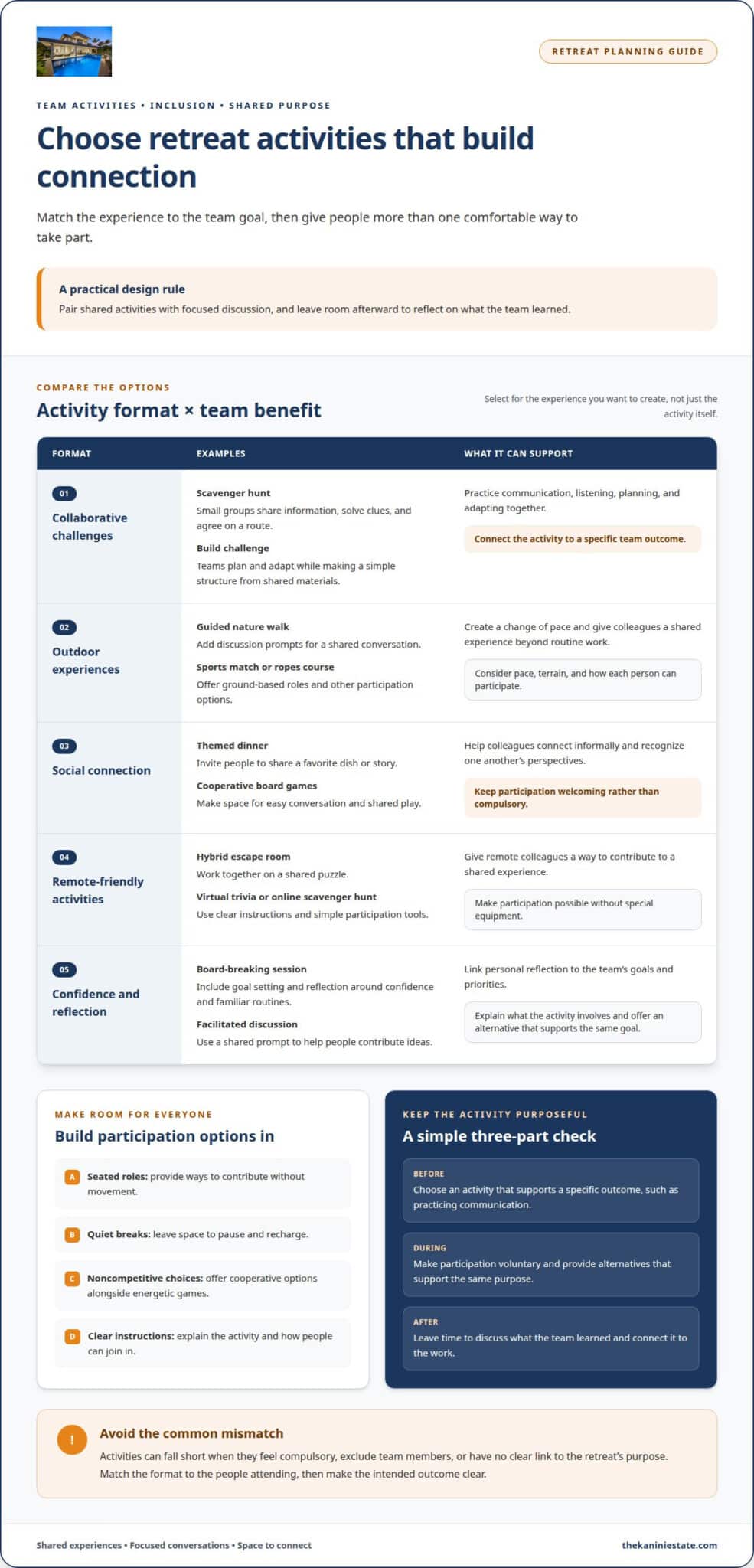
Choose activities that turn collaboration into action, then connect each experience to a team goal. An outdoor scavenger hunt, for example, can ask small groups to solve clues by sharing information, listening, and agreeing on a route. Effective corporate retreat activities offer different ways to participate rather than rewarding only the loudest or most athletic colleagues.
Outdoor team-building might include a guided nature walk with discussion prompts, a friendly sports match, or a ropes course with ground-based options. A problem-solving challenge, such as building a simple structure from shared materials, gives teams practice in planning and adapting. Before choosing a physical activity, consider its pace, terrain, and participation options for everyone attending.
Useful activities do not have to involve movement. A themed dinner can invite colleagues to share a favorite dish or story, while cooperative board games create space for easy conversation. Remote teams can tackle a shared puzzle through a hybrid escape room. Pair social activities with a short brainstorming session so ideas connect to the team’s work and productivity.
Complementary activities can add a memorable challenge. A board-breaking session can include goal setting and reflection, with an emphasis on confidence and stepping beyond familiar routines. Make participation voluntary, explain what the activity involves, and offer an alternative that supports the same goal. A retreat should not make personal comfort or physical ability a test of commitment.
Company policies and tax treatment matter when planning a retreat in the United States. Set expectations for conduct, travel expenses, accessibility, and work time before the event. Tax treatment depends on the business purpose and how expenses are documented, so keep clear records and seek qualified tax advice for your circumstances.
There is no single average cost per person that applies to every corporate retreat. The total depends on the destination, travel, lodging, meals, activities, and length of stay. Build a useful estimate by deciding on these elements first.
Ideas that work well remotely include a virtual trivia night, a shared online scavenger hunt, or a facilitated discussion around a common prompt. Keep the activity simple, provide clear instructions, and make sure remote participants can contribute without special equipment.
To make a retreat inclusive and accessible, offer options such as seated participation, quiet breaks, noncompetitive roles, and clear written instructions. A ropes-course challenge, for example, can include a ground-based planning role, while game night can offer cooperative games alongside more energetic choices.
Activities can fall short when they feel compulsory, exclude team members, or have no link to the retreat’s purpose. Tie each choice to a specific outcome, such as practicing communication through a scavenger hunt, and leave time afterward for participants to discuss what they learned.
2. Setting clear retreat goals and involving the whole team
Begin with a purpose, not a packed agenda. Choose one or two clear goals, such as improving handoffs between departments or agreeing on priorities for a new project. If the retreat addresses both, make sure each session supports one of them. This gives leaders a clear way to explain why the team is gathering and what decisions should follow.
Involve employees before shaping the schedule. Ask each person to share one challenge they want the retreat to address and one outcome that would make the time useful. A short survey, shared document, or team discussion can reveal differences between leadership’s priorities and daily work. Group similar responses, then use them to refine the goals and encourage genuine collaboration.
Plan the retreat in a simple sequence: gather input, choose goals, select a setting, shape sessions around the goals, and share the agenda. If teams struggle with project handoffs, for example, use a working session to map a real process and agree on ownership. If colleagues need to reconnect, make room for conversation as well as work. Close by recording decisions, owners, and next steps.
Fit the format to the purpose. A one-day retreat works best with one main objective, a light agenda, and room for shared experiences. A longer gathering can accommodate several connected discussions, but avoid turning every hour into a meeting. Send the goals and agenda in advance, and invite participants to suggest adjustments. This gives quieter voices a chance to contribute before group discussion begins.
A meaningful setting can support the work without becoming a distraction. Choose a place with areas for focused discussion and comfortable opportunities to pause together. Natural surroundings can offer a change from the usual office routine, while a quiet workspace helps people concentrate on a difficult decision. For a corporate retreat, a distraction-free retreat setting can give teams room to focus and reconnect.
How long should a team-building retreat last? Set the duration according to the goals, travel demands, and time needed for discussion and informal connection. A focused planning retreat may need less time than a gathering that also aims to rebuild relationships across departments.
Keep the goals visible throughout the retreat. At the end of each session, ask what the group decided, who owns the next step, and how it supports the shared purpose. A team discussing communication, for example, can agree on one handoff practice to test afterward. Clear follow-through helps the retreat foster connections and holds leaders accountable for acting on the team’s input.
3. Choosing retreat experiences around team interests and goals
Choose experiences that reflect how people work and what they want to strengthen. Improving team morale with a retreat is easier when activities fit the team’s needs. If colleagues spend their days solving complex problems, another quiet workshop may feel too familiar. A guided coastal walk followed by a short discussion offers a different pace. For creative thinking, a hands-on cooking session can prompt fresh ideas and conversation.
Use employee preferences to shape the schedule. Ask about preferred activity styles, such as active, creative, reflective, or social, and include options for different comfort levels. For example, pair a group nature walk with a seated journaling option. This lets colleagues participate in a way that feels natural instead of making one activity a test of team spirit.
A retreat location should support both focused work and relaxed interaction. Look for a quiet space for planning and comfortable shared areas for informal conversations. A team preparing for a product launch may need a table for sketching ideas, while a group building connections may value spaces where smaller conversations can unfold.
Consider the journey as part of the experience. A destination near a beach, forest, or walking trail can make it easier to take breaks between sessions. Travel time, transport needs, and the team’s schedule also affect whether people arrive ready to participate. A long, tiring journey may work against a retreat designed for reflection and renewed energy.
Workspaces and reliable internet matter when a retreat includes remote colleagues or essential online tasks. Match the setup to the planned work. Video calls need a quiet space, while collaborative planning may need room for shared screens and notes. Keep a backup plan, such as downloadable materials, in case the connection drops during an important discussion.
Let the organization’s purpose guide both the setting and activities. If teams need stronger cross-department connections, choose an experience that brings different roles together for a shared task, such as planning a walking route. If careful thinking is the priority, protect quiet work periods and choose a calm setting instead of filling the schedule with social events.
For leaders focused on improving team morale with a retreat, compare each experience using three practical questions: Does it support a team need? Can people participate comfortably? Does the location make the activity easier? A city setting may suit a team that needs convenient meeting spaces, while a nature-focused location can help colleagues step away from workplace routines and interact differently.
Choose a location that accommodates focused work and downtime, so the setting supports the retreat’s planned mix of work and activities.
4. Balancing work, play, relaxation, and wellness
A retreat schedule needs room for useful work and genuine rest. Start with the main purpose, then schedule focused sessions when people can think clearly. A morning workshop can address a team challenge, for example, while an afternoon walk leaves room for informal conversation. This rhythm distinguishes the setting from the workplace without losing sight of shared priorities.
Give each work session a clear action to focus on. A discussion about solving project delays might end with agreed owners and next steps. A communication workshop could use a real handoff example, then invite colleagues to reflect on what worked. Avoid filling every open space with another presentation. Participants need time to absorb ideas before putting them into practice.
Play gives colleagues another way to interact. A team cooking session, casual game night, or guided outdoor activity can encourage conversation beyond job titles. Choose an option that does not depend on one particular skill. A collaborative puzzle, for instance, lets people contribute through observation, planning, or organizing clues. Shared enjoyment can build connection without making the activity feel like another performance review.
Protect unstructured time as carefully as scheduled sessions. Leave a pause after a demanding discussion, and let participants choose between a quiet break and conversation with colleagues. At a retreat near nature, a short walk can offer a change of pace. In a quieter indoor setting, a reading corner or open lounge can serve a similar purpose. These pauses allow time for reflection and recovery.
Weave wellness into the day rather than treating it as a separate test. Offer water, comfortable seating, accessible routes, and clear information about activity levels. After a group challenge, for example, provide a calm alternative for those who prefer not to join. A retreat supports emotional and mental well-being when employees can pause, participate comfortably, and connect at their own pace.
Match the balance to the retreat format. For a one-day retreat, focus on one main objective, keep the agenda light, and prioritize shared experiences. A longer program can include more work sessions, but still needs breathing room between them. In either format, tell participants when sessions begin and end, and show breaks clearly on the schedule.
Use the team’s culture as a guide, not a reason to repeat familiar routines. If colleagues spend most days in back-to-back calls, avoid recreating that pattern with long blocks of presentations. Instead, combine a short planning session with a meal, relaxed conversation, and time outdoors. A thoughtful balance helps people return with clearer ideas and stronger connections.
5. Retreats as a way to strengthen team morale and engagement
Morale grows through everyday signs that employees feel heard, respected, and connected. A retreat can make those signs easier to notice. A cross-team discussion, for example, may reveal that a missed handoff stems from unclear ownership, not poor effort. Addressing the cause gives colleagues a practical way to strengthen teamwork after they return.
Shared experiences also help people see one another beyond familiar roles. During a group challenge, a quiet colleague might organize the plan while another spots a hidden risk. Leaders can recognize these strengths and invite employees to use them in daily work. That recognition can deepen relationships, especially when managers also make room for one-on-one conversations.
A change of setting can make honest discussion feel more natural. Employees may speak more freely away from routine meetings and screens. A relaxed conversation after a shared activity, for instance, can surface friction between departments before it grows. Leaders should listen without rushing to defend decisions, then clarify priorities and explain what happens next.
Retreats can also reconnect individual tasks with the organization’s wider purpose. Ask teams to name one recent achievement, then discuss how it supports a shared goal. This helps employees understand the value of their work and gives the group a moment to celebrate progress. Connecting effort with purpose can support stronger engagement beyond the retreat.
How can you measure whether a team retreat improves morale? Compare a brief pre-retreat pulse survey with a follow-up that asks about connection, recognition, and clarity. Send a post-retreat survey within 48 hours, then track agreed actions and recurring feedback over time.
Track signs of real workplace change, not just whether participants enjoyed the day. For example, notice whether teams follow through on decisions, share information across roles, or raise concerns earlier. Review these signs alongside employee feedback. A retreat has greater meaning when its conversations lead to visible improvements in teamwork and communication.
Gallup’s 2023 study found that 23% of workers feel engaged in their workplace. That figure offers context, not a promise that one retreat will transform engagement. Lasting progress depends on what leaders do afterward. If employees raise a concern during a retreat, share the response, assign an owner, and report back on the outcome.
For teams ready to step away from familiar routines and think together, explore a focused corporate retreat setting. A calm environment can give employees room for deeper conversations, shared reflection, and plans they can carry into daily work.
Far from routine, a team-building retreat is a structured off-site experience intended to improve company collaboration, communication, and alignment. Corporate retreats are off-site events intended to improve teamwork and skills. Shared retreat experiences can help employees recognize colleagues’ strengths, address friction, and clarify expectations. Meaningful shared experiences can help employees feel supported and strengthen their commitment to their workplace. Shared experiences can help employees feel connected and valued, supporting morale and engagement. A shared firewalk challenge can strengthen team bonds and improve collaboration.
The Kanini Estate: Time with friends and family
The Kanini Estate offers a high-quality, distraction-free setting for corporate retreats, with room for focused thinking and time together. As a luxury vacation rental, it also offers an escape to paradise for friends and family seeking a change of pace.
Teams can shape their stay around thoughtful work sessions and shared downtime. A private pool, hot tub, gym, game room, and beach access offer different ways to unwind and connect beyond the agenda.
If this setting suits your next corporate retreat, contact The Kanini Estate to discuss your plans.
Carry your shared purpose into the next chapter
Improving team morale with a retreat continues after everyone returns. Turn one insight from your time together into a simple team practice, then notice how it shapes daily collaboration. Small, steady actions help shared goals become part of the way your organization works.
The Kanini Estate is a luxury vacation rental for teams seeking focused time together, as well as an escape to paradise for friends and family. It offers a setting for thoughtful conversations and meaningful time away from familiar routines.
Give your next gathering room to become a lasting shared experience. Contact The Kanini Estate to plan your retreat, and take the next step toward time together with purpose.
Frequently Asked Questions
What activities should you do on a corporate retreat?
Choose activities that give people a shared task and a clear reason to participate. A team might map a customer journey together, then use a relaxed meal to discuss what surprised them. Include options for different energy levels, such as a quiet reflection exercise alongside group discussion. The strongest choice fits the team’s purpose and gives colleagues something useful to bring back to work.
What retreat activities improve team morale and trust?
Activities that make cooperation visible can help colleagues notice one another’s strengths. Try a paired listening exercise: each person describes a work challenge, then their partner summarizes what they heard before offering ideas. An appreciation circle can also recognize specific contributions, such as careful project planning or thoughtful support during a deadline. Keep sharing voluntary, and avoid asking people to reveal personal details.
How do you choose a retreat venue for your team size and goals?
Start with the retreat’s purpose, then match the space to how the group will use it. A planning session needs a comfortable shared work area, while sensitive discussions may benefit from quieter breakout spaces. Check that seating, access, and room layouts suit the people attending. For a team with remote colleagues, make sure the setting supports clear calls and shared materials without disrupting in-person conversation.
What risks can make a team retreat backfire, and how can they be prevented?
A retreat can undermine trust if activities feel compulsory, the schedule leaves no breathing room, or leaders invite honest feedback without responding afterward. Reduce these risks by explaining the purpose, offering participation choices, and making time for private breaks. Set ground rules for respectful discussion before sensitive topics arise. Afterward, share the team’s decisions, assign owners to next steps, and report progress openly.