
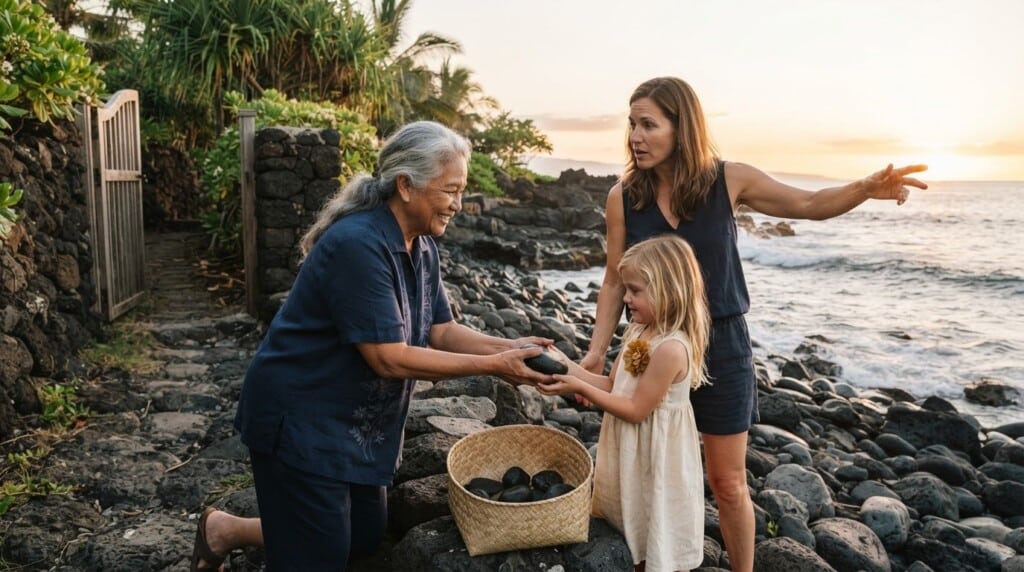

The most meaningful reunion traditions aren’t the most elaborate; they’re the ones relatives look forward to carrying into the next gathering. Creating traditions on a family reunion trip starts with a simple balance: plan shared moments, then leave room for the conversations and discoveries that happen naturally. A useful guide is to set aside about 60% of the time for group activities and keep the rest open.
It’s natural to want every hour to feel special, especially when generations have traveled far to be together. But traditions take root when everyone can join in, contribute a piece of family history, and enjoy the gathering at their own pace.
This guide will help you choose a theme, plan welcoming activities for different ages, share family stories, and invite relatives to shape traditions that can grow with each reunion. Small, thoughtful choices, from a familiar gathering ritual to a new way to record an older relative’s memories, can make the trip feel like a place your family returns to in spirit as well as in person.
Key Takeaways
- Choose a reunion theme that reflects your family’s values, then connect it to a simple lesson relatives can carry forward.
- Plan activities with different ages and abilities in mind, and leave space for quieter ways to join in.
- Invite older relatives to share memories, and preserve those stories in a format the family can revisit.
- Give relatives meaningful roles in planning so traditions reflect more than one generation’s ideas.
- Build rituals that are easy to repeat and adapt, making each reunion feel familiar while leaving room for new memories.
Choosing a reunion theme and lesson
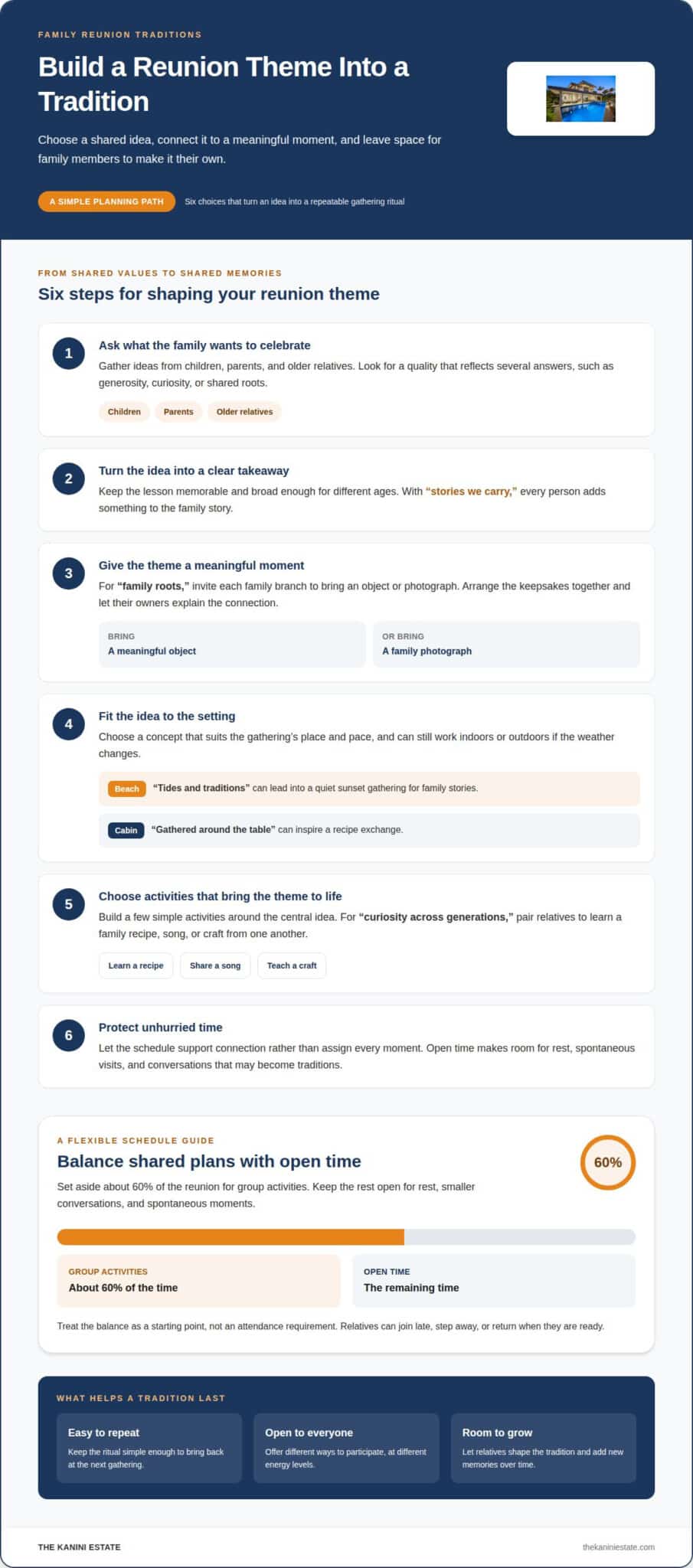
- Ask relatives what quality they want the reunion to celebrate. They might choose generosity, curiosity, or shared roots. Gather ideas from children, parents, and older relatives, then select a theme that reflects several answers, not just the organizer’s preference. “Stories we carry” can make room for family history, favorite recipes, and memories from every generation.
- Turn the theme into a clear takeaway. For “stories we carry,” it might be that every person adds something to the family story. Keep it memorable and broad enough for different ages. A theme of generosity could inspire relatives to share a skill, help with a group task, or teach a younger family member.
- Choose a theme that shapes a meaningful moment, not just the decorations. If relatives choose “family roots,” invite each branch to bring a meaningful object or photograph. Arrange the items together and let their owners explain the connection. This gives the theme a purpose and helps relatives discover stories they may not have heard before.
- Match the theme to the setting and pace of the gathering. A beach reunion might suit “tides and traditions,” with a quiet sunset gathering for family stories. A cabin retreat could inspire “gathered around the table” and a recipe exchange. Choose a concept that works indoors and outdoors, so weather does not determine the reunion’s meaning.
- Build a few simple activities around the theme. For “curiosity across generations,” pair relatives to learn a family recipe, song, or craft from one another. Keep each activity connected to the central idea. Swap unrelated plans for activities that help relatives practice or remember the theme.
- Leave room for both planned moments and unhurried conversation. A useful starting point for creating traditions on a family reunion trip is to balance shared activities with open time. Use those open periods for rest, spontaneous visits, and conversations that may become traditions. The schedule should support connection, not make every moment feel assigned.
Choosing activities and entertainment for different generations
Choose activities with different energy levels, costs, and ways to participate. A shared tradition can welcome everyone without expecting every relative to join in the same way.
-
Choose low-cost activities
Start with family stories, skills, or the surroundings instead of paid entertainment. A recipe exchange, porch singalong, family trivia game, or group walk can bring relatives together with little preparation. For a keepsake, invite everyone to write a memory on a card and collect the cards in a family notebook.
Low-cost traditions work best when materials are simple and optional. Use things relatives already have, such as printed photographs or favorite recipes. Avoid plans that require everyone to buy supplies or travel to a separate attraction.
-
Select entertainment for all ages
Choose an activity with several ways to take part. For example, a family scavenger hunt might involve finding a familiar song, matching photographs to relatives, or spotting something in the landscape. Children can search, older relatives can share clues, and anyone who prefers a quieter role can keep score or tell a related story.
For fun traditions across generations, try a shared playlist, a family talent hour, or a yearly group photo in the same pose. Keep activities flexible, with seating and breaks available. A recorded 10-minute conversation with an older relative can also become a meaningful listening activity.
-
Make traditions inclusive
Ask relatives what would help them feel welcome, then offer different ways to participate. A family toast could include a spoken wish, a written note, or a quiet moment. For a recipe gathering, invite stories about meaningful dishes while making it clear that relatives can share memories without bringing food.
Make room for different cultures, beliefs, relationships, and family structures. Use inclusive words such as “relatives” or “family members” rather than assuming everyone shares the same traditions or household pattern. Avoid games that require private details, physical ability, or a specific family role.
For a family reunion spanning about 48 waking hours, consider scheduling about 29 hours of group activities. Treat that as a planning guide rather than a requirement that everyone attend every gathering. Spread shared activities across the reunion so relatives have room to rest, talk in smaller groups, or choose a quieter way to take part. A schedule can identify the main opportunities without making each moment feel fixed. Leave space for family members to join late, step away, or return when they are ready.
Balance lively occasions with relaxed options, and make participation easy to adjust. A shared meal or game can anchor an activity, while conversation, listening, or helping with a simple task offers another way to join in. Let relatives know what is planned and invite suggestions before finalizing the schedule. If an activity no longer suits the group, change it. The goal is to make shared time available without making attendance feel like an obligation, so each person can connect in a way that feels comfortable.
Incorporating family heritage and history
Make space for family history through conversation and shared keepsakes. Preserve traditions with photographs, recorded stories, and brief notes that relatives can revisit later.
-
Incorporate family heritage
Invite an older relative to share a story about childhood, a family move, or a meaningful tradition. A 10-minute conversation can focus on one memory and leave time for follow-up questions. Ask what a familiar holiday, recipe, or song meant to the family, rather than asking for a complete family history.
Use a photograph, heirloom, or recipe to begin a conversation. For example, ask who appears in an old family portrait and what happened before it was taken. If relatives remember an event differently, make room for each account. A family story can hold several viewpoints without insisting that one version speaks for everyone.
Make it easy for relatives who prefer listening to take part. They can choose a photograph, help label names, or add a detail after the conversation. Avoid treating one person as the keeper of every family story. Invite cousins, siblings, and younger relatives to share what they know.
-
Document stories and keepsakes
Choose a simple way to preserve each reunion’s stories. Take a group photograph in a familiar spot, then record the reunion date and the names of the people pictured. A shared album can also include candid moments, handwritten recipe cards, and short captions explaining why each image matters.
For recorded interviews, ask an older relative about childhood memories, how they met their spouse, or life in their twenties. Keep each conversation focused, and ask permission before recording or sharing it. Write down names, places, and context while the details are fresh. A short caption can make an image meaningful to relatives who weren’t there.
Create a keepsake that returns at the next gathering. For example, collect written memories in a family notebook and add a page after each reunion. Ask a different relative to choose the next prompt, such as a remembered meal or a lesson from an elder. This gives the archive many voices and makes adding to it part of the tradition.
Keep digital and paper records easy for relatives to find. Label folders with the reunion year and add clear names to photographs. Share copies with participating family members so one person does not become the sole keeper of the records.
Involving family members in planning
- Offer relatives several date options when polling them. Include the reunion’s general location and expected length so people can compare plans. A simple poll lets cousins, grandparents, and parents share preferences before anyone books travel. Set a clear reply date, then choose the option that works for the most relatives.
- Match the planning timeline to the reunion’s scale. Allow 6-9 months for a small or local gathering, 9-12 months for a mid-sized reunion, and 12-18 months for a large or national one. Use that window to settle dates, lodging, and shared activities. Earlier decisions give relatives more time to arrange their own schedules.
- Give relatives clear roles that suit their interests. One cousin might collect family recipes, while an older relative gathers photographs and names. Another family member can coordinate games or share updates. Make each task specific, such as “gather three recipes,” rather than assigning a broad duty like “help with the reunion.”
- Invite input in a format relatives can use. A short message can ask for activity ideas, accessibility needs, dietary preferences, and favorite family rituals. Offer a phone call as another way to contribute. For example, a relative who dislikes group chats could share a tradition directly with the activity planner.
- Set a simple decision process before opinions multiply. Group suggestions under themes such as meals, outings, stories, and quiet time. If relatives suggest a beach walk and a board-game evening, note who each activity suits and what it requires. Share the shortlist, explain the final choices, and make the reasons clear.
- Keep one shared planning record that relatives can revisit. Include the chosen dates, assigned roles, activity ideas, and decisions still to be made. A family document or email thread can preserve the details without relying on one person’s memory. After the reunion, add notes about what relatives enjoyed and what they want to change next time.
The Eyre family is in charge of planning its 2026 reunion. To make that responsibility manageable, the planners can invite relatives to take ownership of decisions that suit their interests, while keeping the overall plan coordinated. When asking relatives about dates, offering three to four date options can make it easier for people to compare availability and explain any conflicts. A request for preferences can also ask whether a relative is willing to help with a particular part of the reunion, so interest and availability are clear before tasks are assigned. Family members who cannot take on a task can still contribute ideas or point out practical concerns.
As plans develop, show relatives how their contributions are being used. A brief update can acknowledge suggestions, identify open decisions, and explain what response would be useful next. If relatives have different preferences, look for an approach that accommodates both where possible. Otherwise, clarify who will decide and how the choice will be shared. This keeps participation welcoming without leaving every question unresolved. Invite relatives to pass information to family members who may not see digital messages, and give them a direct way to respond. Clear, considerate communication helps relatives feel included, even when they are not involved in every planning task.
Building meaningful family traditions through reunions
Welcome relatives with a familiar greeting, then remember loved ones through a shared story, song, or quiet moment. Adapt rituals to the destination and season, such as a winter reading or a summer sunset walk.
-
Plan welcoming and remembrance rituals
Choose a simple ritual that helps arriving relatives feel included. Set out a guestbook for greetings, or invite everyone to add a note to a shared memory book. Keep the ritual open to relatives arriving at different times, so no one misses the welcome.
Make space to remember loved ones who have died without making participation compulsory. A relative might share a favorite saying, play a meaningful song, or place a photograph beside the gathering. Family members can speak, listen, or take a quiet moment. A gentle invitation respects different ways of remembering.
-
Tailor traditions to destinations and seasons
Build a ritual around the place and season instead of copying an activity that may not suit the setting. At a lakeside reunion, relatives might gather for a quiet morning walk. In winter, a shared reading beside a warm meal can add a seasonal touch without requiring outdoor plans.
Make the ritual easy to adapt if weather or mobility changes the day. A family toast can move from a garden to a living room, while a nature walk can become a window-side story circle. The meaningful part is the repeated moment, not a fixed location or elaborate plan.
- Repeat a small ritual at each reunion, then let relatives shape it. The Eyre family has gathered at Bear Lake for reunions pretty much every year. A familiar place can make a gathering feel connected, but the ritual can travel too. A family could share a favorite memory at each reunion, wherever relatives meet.
Consistency matters more than adding new customs each time. A family that has held annual reunions for over twenty years shows how gatherings can become part of its rhythm. Keep a simple note of each ritual, who helped lead it, and what relatives enjoyed. At the next reunion, repeat what still feels meaningful and adjust the rest.
- Let traditions change as relatives and circumstances shift. A sunset gathering might begin with a shared song, then later include a reading chosen by younger family members. Creating traditions on a family reunion trip can welcome new voices while keeping a familiar moment at its center. Invite relatives to suggest a small addition without treating one version as the only right way.
The clearest takeaway is to choose one meaningful act relatives can repeat, then let the family carry it forward together. A greeting, remembrance, or seasonal gathering can become a lasting tradition through thoughtful repetition, not elaborate planning.
Make Room for Traditions at The Kanini Estate
The Kanini Estate offers a luxury vacation rental on the Big Island of Hawaii, giving friends and family a place to spend time together and create traditions on a reunion trip. Consider it when you’re ready to bring everyone together for an escape to paradise.
With ocean, sunrise, and sunset views, a private pool and hot tub, a gym, a game room, and beach access from a gated community, the estate offers options for gathering and unwinding. It also provides a high-quality, distraction-free thinking environment for corporate retreats.
Frequently Asked Questions
How do you create meaningful traditions for a family reunion trip?
Choose a shared value, then turn it into a small action relatives can repeat. If the family values curiosity, for example, invite everyone to bring a question for a relative they haven’t spoken with much. Keep the action tied to the gathering’s purpose, not elaborate supplies or strict timing. A tradition feels meaningful when relatives understand why it matters and can make it their own.
How can you include children, teens, and older adults in reunion traditions?
Offer different roles within the same shared activity. During a family music gathering, children might choose a song, teens could manage the playlist, and older adults could explain a song’s meaning. Provide seated and standing options, and let relatives join as listeners if they prefer. This gives each generation a meaningful way to contribute without assuming everyone has the same interests, energy, or comfort level.
How do you start a family reunion tradition that relatives will repeat each year?
Attach the new ritual to a moment that already happens at every gathering, such as the first shared meal or the final morning together. Keep the preparation simple and give a different relative the chance to lead it next time. For example, each host could choose a short toast prompt. After the reunion, note what felt natural so the family can carry forward the part people valued.
How do you plan reunion traditions when relatives have different interests or abilities?
Build a shared activity with flexible ways to participate. At a family art table, some relatives could draw, others could choose colors or arrange finished pieces, and anyone could simply enjoy the conversation. Share the plan in advance, including the setting and pace, so relatives can decide how they want to join. Don’t make one activity the measure of whether someone feels included.