
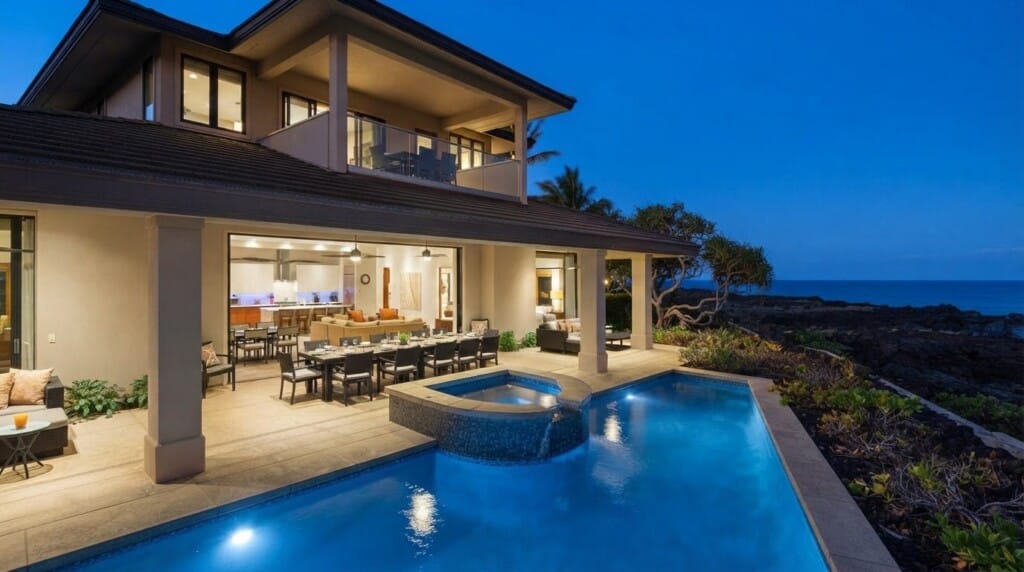

The four main Hawaiian Islands most travelers compare are Maui, Oʻahu, Kauaʻi, and Hawaiʻi Island, also known as the Big Island. Each offers a distinct experience, so the best choice depends on what you want from your trip.
It’s easy to picture the same warm beaches and bright Pacific across every island. But the Hawaiian Islands differ in scale, scenery, climate, and pace, from lush, rain-fed landscapes to volcanic terrain and lively urban shores.
This guide compares the main islands by travel experience, land area, weather, beaches, and landscapes. Use these differences to find the setting that best suits your plans.
Key Takeaways
- Choose an island by the pace and experiences you want, from lively urban shores to quieter, nature-focused escapes.
- Compare land area to understand how much ground each island covers and how varied a stay may feel.
- Hawaii’s climate shifts across regions, so local conditions can shape your plans as much as the season.
- Look beyond the beaches: volcanic terrain, dramatic cliffs, rainforests, and high mountain landscapes give each island its own character.
- For a group trip centered on shared time or focused work, consider whether the Big Island offers the setting you’re seeking.
Choosing an island by travel experience
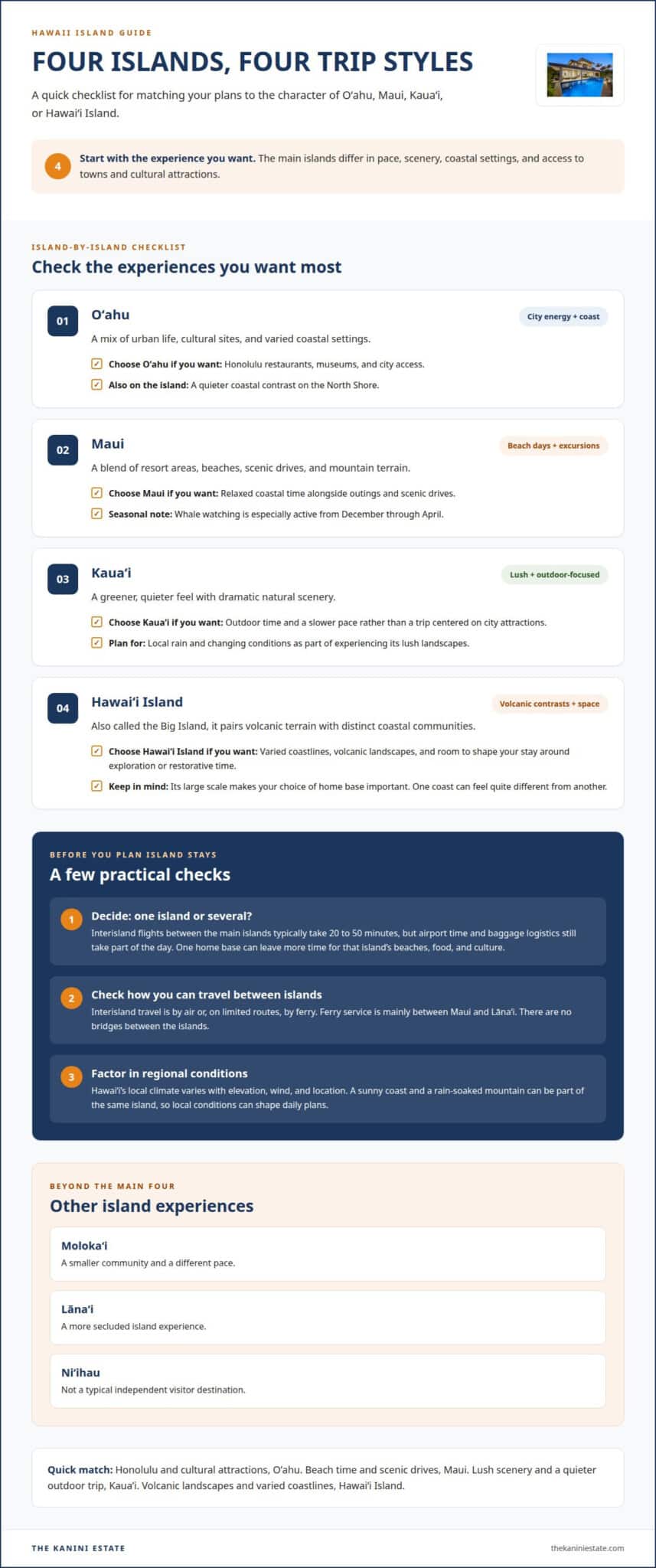
For most trips, start with four main islands: Maui, Oʻahu, Kauaʻi, and Hawaiʻi Island, also called the Big Island. These are the islands travelers often compare. Each offers a different balance of coast, culture, towns, and open landscapes. Choose by the days you want to spend exploring, the pace you prefer, and the scenery you hope to wake up to.
U.S. travelers visit Hawaii within the United States. International travelers must meet the U.S. entry requirements that apply to their nationality and journey. Review those requirements before booking flights, as they depend on each traveler’s circumstances.
Interisland travel means moving between islands by air or, on limited routes, by ferry. Flights between the main islands typically take 20 to 50 minutes; ferry service is mainly between Maui and Lānaʻi, and there are no bridges. Airfare depends on the route, travel dates, and baggage, so include those details when comparing trip costs.
Oʻahu blends city energy and coastal scenery. Honolulu offers restaurants, museums, and urban life, while the North Shore provides a quieter contrast. Consider Oʻahu if you want a tropical stay with varied outings and access to cultural sites.
Maui combines resort areas and beaches with scenic drives and mountain terrain. It suits travelers who want relaxed coastal days alongside excursions. Whale watching is especially active from December through April, so consider the season if marine life is a priority.
Kauaʻi is known for its greener, quieter feel and dramatic natural scenery. It suits travelers looking for outdoor time and a slower pace rather than a trip centered on city attractions. Local rain and changing conditions are part of experiencing its lush landscapes.
Hawaiʻi Island offers striking contrasts, from volcanic terrain to distinct coastal communities. Its scale gives travelers room to shape a stay around scenery, outdoor exploration, or restorative time. For a group seeking a private tropical base, a luxury vacation rental on the Big Island can make shared days feel unhurried.
Beyond the main four, Molokaʻi and Lānaʻi may appeal to visitors seeking a different pace. Molokaʻi has a smaller community, while Lānaʻi offers a more secluded island experience. Niʻihau is not a typical independent visitor destination, so focus planning on islands with established visitor access.
Use this simple decision path:
- Choose Oʻahu for Honolulu, cultural attractions, and varied coastal settings.
- Choose Maui for beach time, scenic drives, and seasonal whale watching.
- Choose Kauaʻi for lush scenery and a quieter outdoor-focused trip.
- Choose Hawaiʻi Island for volcanic landscapes, varied coastlines, and space to settle in.
When comparing islands, decide whether you want one home base or several island stays. Interisland flights are short, but airport time and baggage logistics still take up part of the day. Staying on one island often leaves more time for its beaches, food, and culture. Add another island when its distinct character is central to your plans.
Major islands and their land areas
Land area is the ground covered by an island, measured here in square miles. Hawaiʻi Island is the largest major island, at 4,028.0 square miles. The land areas of Maui, Oʻahu, Kauaʻi, Molokaʻi, and Lānaʻi vary. These six islands are the principal visitor destinations.
Visitors can travel to Kauaʻi, Oʻahu, Molokaʻi, Lānaʻi, Maui, and Hawaiʻi Island. Each has a distinct size and character, so compare land area with the places you hope to see. Kahoʻolawe and Niʻihau are also part of the island chain, but they aren’t among the six major visitor islands.
Hawaiʻi Island is the largest island in the chain’s main visitor group. Its 4,028.0 square miles offer a striking sense of scale, from the Kona coast to Hilo and the volcanic landscapes around Kīlauea. That breadth can make choosing a base important: a stay on one coast may feel quite different from a visit to another.
Maui is a large island with 727 square miles of varied terrain. Haleakalā, its famed high point, gives the island a dramatic inland landmark, while coastal communities create a different rhythm along the shore. Its area is greater than Kauaʻi’s and Oʻahu’s, offering plenty of room to shape a trip around distinct regions.
Oʻahu covers 597 square miles and is home to Honolulu, the state capital. Its size sits between Maui and Kauaʻi, but its appeal isn’t measured by area alone. Honolulu’s urban setting and the island’s coastal stretches give visitors a mix of city access and scenic outings within one destination.
Kauaʻi spans 552 square miles, making it smaller than Oʻahu. Its compact scale can help travelers focus their itinerary, while its landscapes still invite time across different parts of the island. The area figure helps set expectations, but roads, terrain, and chosen stops also shape how much ground a day can cover.
Molokaʻi is a smaller island of 260 square miles. Lānaʻi is smaller still, at 140 square miles. Their more modest land areas can appeal to travelers seeking a quieter itinerary, with fewer destinations competing for attention. These islands offer a different scale from Hawaiʻi Island’s expansive volcanic terrain.
For a stay centered on Hawaiʻi Island, consider how its broad land area fits your plans. A luxury vacation rental on the Big Island offers a home base for time together, with the island’s coast and landscapes as part of the setting.
The Hawaiian Islands have a total land area of 6,423.4 square miles. Kahoʻolawe covers 45 square miles, and Niʻihau covers 69 square miles. Kauai covers 562 square miles.
Hawaii’s climate
Climate is the usual pattern of temperature and rainfall in a place over time. Hawaii has a tropical climate, but local conditions vary with elevation, wind, and location. A sunny coast and a rain-soaked mountain can belong to the same island. That contrast matters when choosing travel dates and daily plans.
The best time to visit depends on what you want from the trip, since Hawaii’s island conditions vary throughout the year. Summer temperatures average about 84 °F. If warm days are your priority, summer offers a clear seasonal reference, while your chosen island and elevation also shape the feel of each outing.
A microclimate is a local climate that differs from nearby areas. On Hawaiʻi Island, coastal conditions can differ from those on cooler, higher volcanic slopes. Elevation affects temperature, and windward and leeward locations can receive different amounts of rain. Pack for the places on your itinerary, not just the forecast at your arrival airport.
Kauaʻi shows how strongly terrain can shape rainfall. Mount Waiʻaleʻale receives an average of 384 inches of rain a year, while other parts of Kauaʻi have different local conditions. This contrast helps explain the island’s lush scenery. It also means that a visit to a mountain area may call for different clothing than a day along the coast.
Hawaii’s seasons are called summer and winter, but conditions don’t follow a single pattern across the islands. A statewide summer average offers context, not a guarantee for a particular beach or town. Plans on Maui’s coast, for example, may feel different from plans at Haleakalā’s higher elevations. Leave room for conditions to change as you travel.
Volcanoes are openings or landforms through which molten rock reaches the surface, and they help shape Hawaii’s varied terrain. On Hawaiʻi Island, Kīlauea’s volcanic setting contrasts with coastal landscapes. Molokaʻi offers a different island environment. These examples show why a statewide climate description can’t capture every day outdoors.
Use these practical steps when planning around climate:
- Choose your island and main activities first, such as beaches, mountain visits, or scenic drives.
- Compare coastal and higher-elevation stops, especially on Maui and Hawaiʻi Island.
- Bring layers and rain protection if your itinerary includes Kauaʻi’s mountain landscapes.
- Leave flexibility in outdoor plans, since conditions can differ between nearby parts of an island.
When planning a stay on Hawaiʻi Island, consider how the coast and inland terrain fit your preferred pace. Its varied elevations and volcanic landscapes make location part of the climate experience, not just a detail on the map.
Hawaiian Islands weather
Weather describes the conditions of the air at a particular place and time. Across the Hawaiian Islands, a forecast for one town may not match conditions elsewhere. Use local forecasts to plan beach visits, drives, and outdoor activities.
The state of Hawaii is the U.S. political entity, while the Hawaiian Islands are the Pacific island chain within it. The islands lie more than 2,000 miles west of California, far from the U.S. mainland.
A local forecast describes expected conditions for a specific place. The listed forecast for Poipu, Kauaʻi, gives light rain and 80°F today; Līhuʻe, on the same island, has light rain and 78°F. Those separate readings show why checking the town near your plans is more useful than relying on one island-wide number.
On Oʻahu, Honolulu’s listed forecast gives light rain and 79°F today. Hoʻolehua, on Molokaʻi, has light rain and 77°F, while Lānaʻi City has moderate rain and 73°F. These town-level examples help travelers compare conditions across islands, especially when choosing between coastal walks, scenic drives, or a quieter afternoon outdoors.
Hawaiʻi Island also shows local variation: Hilo’s forecast lists light rain and 81°F today, while Kailua/Kona lists light rain and 84°F. The readings differ even on one island. For a day planned around the Kona coast, use its local forecast rather than Hilo’s conditions as a guide.
Check the forecast for each day’s destination. Match the location to the activity: Poipu for a Kauaʻi beach day, Honolulu for an Oʻahu city visit, or Kailua/Kona for a Hawaiʻi Island outing. If your plans cross regions, check each stop separately.
Weather can shape more than clothing. On Molokaʻi, a 500-acre coffee plantation offers a distinct example of the island’s agricultural landscape. A visit there calls for attention to local conditions, just like any outdoor stop. Pack a light rain layer when forecasts show showers, and keep footwear suited to the day’s terrain.
Hawaiian is one of Hawaii’s two official languages, alongside English. Recognizing Hawaiian place names can help you find destinations such as Līhuʻe, Hoʻolehua, and Kailua/Kona on weather reports. Pronunciation varies by name, so match the written spelling to your route.
Use these steps before leaving your lodging:
- Look up the forecast for the exact town on your itinerary.
- Compare conditions between stops, such as Hilo and Kailua/Kona.
- Adjust outdoor plans and clothing to the forecasted rain and temperature.
Hawaii’s beaches and landscapes
Hawaii’s beaches meet the sea alongside landscapes shaped by volcanoes, cliffs, mountains, and waterfalls. Pairing a beach day with nearby scenery can help you choose an island that suits your pace, whether you prefer a quiet shoreline or a full day exploring inland.
Landscape means the visible natural features of a place. On Maui, Haleakalā rises to 10,023 feet, bringing a high mountain setting into contrast with the coast. That change in elevation makes Maui more than a beach destination. Travelers can pair time by the water with views from a striking volcanic summit.
Hawaiʻi Island offers an even higher landmark: Mauna Kea reaches 13,796 feet. Its volcanic terrain gives the island a dramatic scale, while ʻAkaka Falls drops 442 feet through a lush setting. These landmarks show how one island can bring together coast, mountain, and waterfall scenery within a single trip.
Molokaʻi’s landscape includes Kalaupapa, a 13-square-mile peninsula below high cliffs. Its steep coastal form differs from the open volcanic terrain of Hawaiʻi Island and Maui’s elevated summit. Consider this contrast when deciding whether your ideal itinerary centers on beaches, mountain scenery, or a more rugged shoreline.
Beach conditions, trail terrain, and volcanic activity can all affect a day outdoors. At beaches, watch for changing ocean conditions and choose activities suited to your abilities. On trails, stay on marked routes and follow posted guidance. Near volcanoes, keep clear of hazardous areas and obey signs and closures.
Hawaiian landscapes also tell stories of exploration and science. Astronauts walked on Mauna Loa’s dry lava to practice for lunar voyages. This detail offers another way to understand the island’s volcanic ground, beyond its visual beauty, and is a reminder to wear sturdy footwear and pay attention to the terrain when walking.
Use these steps to plan a day around scenery:
- Choose a shoreline, such as a beach near your base, before setting out.
- Add one inland landmark, such as Haleakalā, Mauna Kea, or ʻAkaka Falls.
- Check local conditions and posted guidance before outdoor activities.
- Allow time for the route between coast and inland stops.
For a stay that keeps the coast close, explore a private Big Island getaway with beach access. It offers a restful base between time outdoors and quieter moments at home.
The Kanini Estate: Luxury vacation rental on the big island of Hawaii
The Kanini Estate is a luxury vacation rental on Hawaiʻi Island for guests seeking a private escape centered on time together. It’s a natural fit for friends or family who want to share one stay rather than move between separate island stops.
The setting also suits corporate retreats seeking a high-quality, distraction-free environment for focused thinking. Between working sessions, the island offers a change of pace and room to settle into a more restorative rhythm. For a personal getaway, it offers an escape to paradise to enjoy together.
If the Big Island feels right for your trip, contact The Kanini Estate or visit thekaniniestate.com to explore the stay.
Let your island choice shape the stay
The right destination is the one that fits how you want to spend your time. Let your priorities guide your choice, then leave room to experience the island at an unhurried pace. A thoughtful home base can make the trip feel more personal.
If you’re drawn to the Big Island, The Kanini Estate offers a private setting for shared time and an escape to paradise. Make your stay part of the journey, not simply a place between outings.
Explore The Kanini Estate for your Big Island getaway and begin shaping a stay that feels like your own. The next memorable chapter can start with a place that invites you to slow down.
Frequently Asked Questions
Not Sure Which Island to Visit?
Choose the island that best fits the experience you want. Start with your main priority: time in a city, a quiet natural setting, volcanic scenery, or a shared retreat. Then consider how much time you want to spend traveling between destinations. If a private base and time together matter most, focus on Hawaiʻi Island rather than dividing your stay across several islands.
So, How Many Hawaiian Islands Are There?
The state of Hawaii counts 137 islands in the Hawaiian Chain. The number visitors usually need to remember is eight: the main islands commonly named in travel guides. Not all are typical visitor destinations, and six are the major islands for visitors: Kauaʻi, Oʻahu, Molokaʻi, Lānaʻi, Maui, and Hawaiʻi Island. The broader island count includes smaller islands and islets beyond those familiar travel choices.
What are the eight main Hawaiian Islands?
The eight main Hawaiian Islands are Kauaʻi, Oʻahu, Molokaʻi, Lānaʻi, Kahoʻolawe, Maui, Niʻihau, and Hawaiʻi Island, also called the Big Island. These are the central islands in the archipelago, but they don’t all play the same role in travel planning. Six are major visitor islands; Kahoʻolawe and Niʻihau are part of the main eight but aren’t among that group.
How do the Hawaiian islands differ in size, population, and attractions?
Hawaiʻi Island is largest at 4,028.0 square miles, while Lānaʻi covers 140. In 2020, Oʻahu had 1,016,508 people, compared with 73,298 on Kauaʻi. Attractions also vary: Honolulu brings urban sights, Haleakalā defines Maui’s highlands, and Hawaiʻi Island has five National Parks. Kauaʻi’s Mount Waiʻaleʻale is known for heavy rainfall, while Molokaʻi’s Kalaupapa sits on a dramatic peninsula.
What is the history and cultural significance of the Hawaiian Islands?
The first known residents arrived from the Marquesas about 1,500 years ago, followed later by people from what is now Tahiti. King Kamehameha I unified the islands in 1810, forming the Kingdom of Hawaiʻi. English and Hawaiian are the state’s two official languages, and Honolulu offers cultural attractions and museums.