
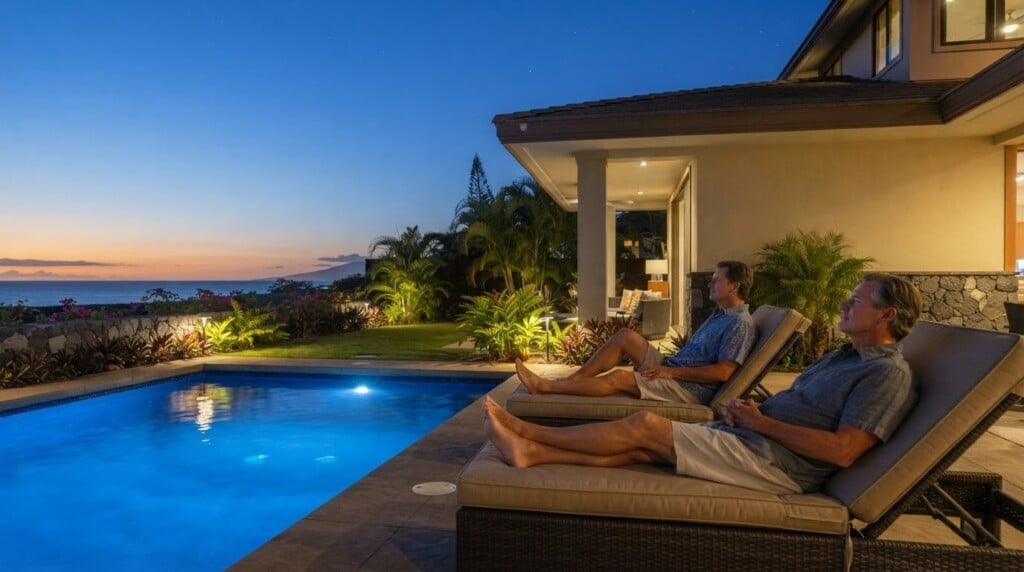

The quietest vacation escape isn’t necessarily in the most remote destination. It’s the one that matches the kind of stillness you’re looking for. If you’re finding a quiet vacation spot in Hawaii, the Big Island offers secluded beaches, sunset views, and stargazing opportunities. Lush island landscapes bring a different kind of calm, while coastal regions are known for uncrowded shores and intimate settings.
A peaceful getaway takes more than a beautiful view. You may want room to slow down, a sunset worth lingering over, and evenings away from busy tourist areas. This guide helps you choose a destination that fits your idea of quiet, find places to watch the sun go down, and plan for breathtaking night skies. You’ll also learn how a stay at The Kanini Estate can bring ocean views and unforgettable time with family or friends together.
Key Takeaways
- Match the island to the kind of quiet you want, from Kauaʻi’s lush scenery to the Big Island’s stargazing and secluded beaches.
- Explore beach options such as Hulopoe Beach on Lānaʻi, and consider how access and setting shape a peaceful visit.
- Plan your travel dates with crowd levels in mind, and learn which timing factors can affect the feel of a stay.
- Understand how nightly rental costs can vary, and what to consider when comparing resorts, vacation rentals, and cottages.
- Discover how The Kanini Estate offers a Big Island retreat for time with loved ones or a focused corporate getaway.
1. Choosing a Hawaiian island for a peaceful getaway
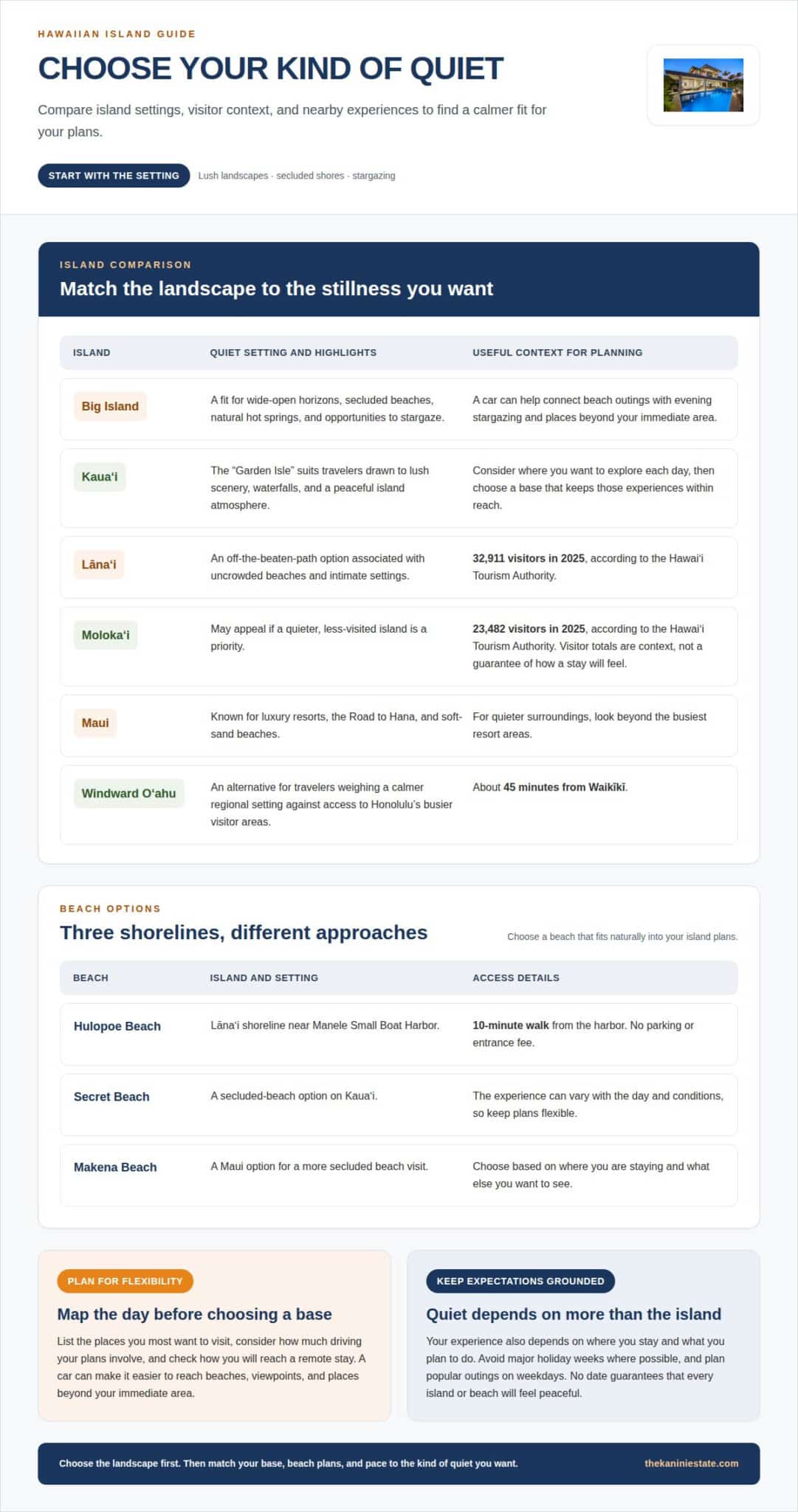
Start by defining the quiet you want: remote beaches, lush scenery, or stargazing. Hawaiʻi’s islands offer different settings, so choose the landscape and pace that fit your plans. The Big Island combines secluded beaches, natural hot springs, and opportunities to stargaze. Its varied scenery and wide-open horizons appeal to travelers looking for room to explore.
Kauaʻi, known as the “Garden Isle,” suits travelers drawn to lush landscapes and waterfalls. Its peaceful ambiance offers a different kind of retreat from the Big Island’s volcanic expanses. Consider what you want to see each day, then choose a base that keeps those experiences within reach. A quiet place to stay matters, but so does the character of its surroundings.
For a less-visited island, compare Lānaʻi and Molokaʻi. Lānaʻi had 32,911 visitors in 2025, according to the Hawaii Tourism Authority. Molokaʻi had 23,482 visitors in 2025, according to the Hawaii Tourism Authority. These figures offer useful context when considering visitor volume, but your experience will also depend on where you stay and what you plan to do.
Lānaʻi is often described as an off-the-beaten-path destination, with uncrowded beaches and intimate settings. Molokaʻi may appeal if a quieter, less-visited island is your priority. Compare the scenery and activities you want with the travel connections that fit your itinerary. A secluded setting may have fewer nearby options, so plan how you’ll spend each day before choosing a base.
Maui is known for luxury resorts, the Road to Hana, and soft-sand beaches. If you want quieter surroundings without choosing a less-visited island, look beyond the busiest resort areas. Windward Oʻahu offers another option: it is about 45 minutes from Waikīkī. That distance can help you weigh a calmer regional setting against access to Honolulu’s more active visitor areas.
Renting a car can give you more flexibility when exploring an island, making it easier to reach beaches, viewpoints, and places beyond your immediate area. Before choosing where to stay, map the spots you most want to visit and estimate how much driving your plans involve. On the Big Island, a car can help you pair a beach outing with an evening of stargazing.
Remote settings call for thoughtful planning. At a less-developed beach, plan your route and stay within your swimming ability. Before booking accommodation, understand how to reach it and where to find essential items. A peaceful location should still feel manageable for your group, especially if your plans include beach visits or evening drives.
List your priorities, such as Kauaʻi waterfalls, uncrowded beaches on Lānaʻi, or Big Island stargazing. Then match them to an island and a base that support your plans. Finding a quiet vacation spot in Hawaii is less about expecting an entire island to be peaceful and more about choosing a setting that fits your getaway.
3. What are the best secluded beaches in Hawaii?
For a quieter beach day, start with Lānaʻi’s Hulopoe Beach. The shoreline sits a 10-minute walk from Manele Small Boat Harbor. That walk gives the visit a gentle transition from arrival to sand and sea. Hulopoe has no parking or entrance fee, making it a useful choice for travelers arriving on foot from the harbor.
Hulopoe Beach suits visitors looking for a named destination with a straightforward approach. Include the walk from the harbor in your plans rather than expecting to drive directly onto the beach. Pack what you need for the time you intend to spend there. A little preparation helps keep the day calm and avoids unnecessary trips back toward the harbor.
Kauaʻi’s Secret Beach is another option for travelers seeking a more secluded setting. The beach is known by that name, but the experience can vary with the day and conditions. Keep your plans flexible. If it doesn’t suit your visit, Kauaʻi’s coastline offers other places to explore, so the whole day needn’t depend on one stop.
On Maui, Makena Beach is another option for a more secluded beach visit. It gives travelers an alternative to Lānaʻi and Kauaʻi. Choose based on where you’re staying and what else you want to see. A beach that fits naturally into your day can feel more peaceful than a distant stop that requires a complicated schedule.
To choose among Hulopoe, Secret Beach, and Makena, match the beach to your travel style. Consider whether you prefer a clear walking approach, as at Hulopoe, or want to explore a different coastline. Plan transportation and time around your accommodation. Renting a car can help connect beaches with other stops, especially when your itinerary covers more than one region.
Keep the visit unhurried by making one beach the focus of the day. At Hulopoe, allow for the walk from Manele Small Boat Harbor. For Secret Beach or Makena, leave enough time for the journey and a visit by the water. Avoid packing several distant beaches into one outing; a slower pace gives you more time to enjoy each shoreline.
If beach access matters throughout your stay, consider a Big Island retreat with beach access from a gated community. The Kanini Estate’s Big Island vacation rental offers that setting, while Hulopoe, Secret Beach, and Makena remain distinct island outings.
Each beach offers a different kind of escape: Hulopoe pairs its shoreline with a harbor walk, while Secret Beach and Makena are alternatives on Kauaʻi and Maui. Choose the setting that fits your island plans, then leave room to linger. That balance can make a secluded beach visit a true pause in your Hawaiian getaway.
4. When is the least crowded time to visit Hawaii?
For a quieter Hawaii trip, avoid major holiday weeks where possible and plan popular outings on weekdays. No date guarantees that every island or beach will feel peaceful. Visitor activity shifts with travel schedules, local events, and popular gathering spots. A weekday visit to a well-known lookout may feel different from a busy weekend. Build your trip around flexible plans, not the idea of a supposedly empty season.
Check the calendar for the island you plan to visit. Holiday periods and school breaks can bring more travelers to familiar beaches and scenic stops. If your schedule allows, avoid those periods and visit popular spots on ordinary weekdays. For example, plan a beach outing or sunset viewpoint for a weekday, then leave other days open for quieter areas.
Consider the destination, too. Tantalus Lookout near Honolulu, for example, draws visitors for sunset views. A weekday visit may offer a calmer stop than a weekend outing. Arrive with enough time to settle in rather than reaching the viewpoint at the last moment. The same approach can help at popular beaches across Oʻahu, Maui, and Kauaʻi.
On the Big Island, consider how your daily plans shape the feel of your stay. A beach visit, scenic drive, and evening under dark skies may each bring different levels of activity. Give every outing room in your schedule. If a popular area feels busier than expected, you can move the beach visit to another day.
Travel dates can shape how easily you find a restful rhythm. If you have flexibility, compare different weeks around the activities you want to enjoy. Choose a period that avoids major holidays and local events. Keep your arrival and departure days light, since airport travel and arrival schedules can limit time for a busy itinerary.
Once you’ve chosen your dates, plan outings with timing in mind. Visit a popular beach earlier in the day or choose a less central stretch of coast. Save a familiar viewpoint for a weekday evening instead of the weekend. On Kauaʻi, you could pair a quieter beach outing with a waterfall visit on a separate day.
If you can’t avoid school breaks or holiday weeks, adjust your location and timing. Choose quieter regions, visit well-known attractions on weekdays, and leave room to change plans. A flexible itinerary can help create a peaceful experience even when your dates are fixed. This applies across the islands, from Oʻahu’s busy centers to the Big Island’s wide-open landscapes.
5. What are typical nightly prices for quiet resorts, rentals, and cottages in Hawaii?
Nightly costs in Hawaii depend on the island, travel dates, and type of accommodation. Resorts, private rentals, and cottages differ in setting, space, and included features, so they aren’t direct comparisons. First decide what matters most: privacy, room to gather, or on-site amenities. Then compare options that meet the same needs.
Location can affect the price as much as accommodation type. A rental near a popular beach or visitor area may differ from one in a quieter setting. On the Big Island, compare properties by their surroundings and how well they connect with your plans. Ocean views, beach access, and private amenities also shape what a stay offers.
Dates matter. Demand can shift around holidays, school breaks, and popular travel periods, so compare the same accommodation across different dates if your schedule allows. A quieter travel week may change the available options, but it doesn’t mean every property will cost less. Compare the total cost of the stay, not only the nightly amount.
For a specific vacation rental, the price depends on the stay and is provided after a quote request; island, dates, length, and selected property shape the quote. For resorts and cottages, review the stated total and what it covers. This keeps the comparison focused on the actual trip, rather than a headline rate that leaves out important details.
Compare similar stays side by side. For example, look at a resort and a cottage for the same dates, then note location, privacy, included amenities, and space for your group. A vacation rental may suit travelers who value a shared setting, while a resort may appeal to guests seeking on-site amenities. The right choice depends on how you plan to spend your days.
Consider how each property fits your itinerary, too. A lower nightly rate may be less useful if the location adds long drives to the beaches, restaurants, or viewpoints you want to visit. On the Big Island, map your intended stops before choosing a base. That way, your comparison reflects both the accommodation cost and the pace of your trip.
Before booking, make a short comparison list: dates, location, accommodation type, included features, and total cost. Check the same details for each resort, rental, or cottage. If quiet is your priority, weigh the setting and privacy alongside the price. This gives you a clearer basis for choosing a peaceful Hawaii stay without relying on a single nightly figure.
5. Are there noise, short-term rental, or access rules that affect quiet stays in Hawaii
Yes. House rules, community guidelines, and access instructions can shape how peaceful a stay feels. Details vary between a resort, cottage, and private rental, so read the property terms before booking. Look for quiet-hour guidance, visitor policies, parking directions, and expectations for shared spaces. These practical details help you decide whether the setting suits your preferred pace.
Noise expectations matter in places with nearby homes or shared amenities. A rental may set expectations for outdoor conversations, music, or pool use. Read the terms alongside the property description, especially if you plan to spend evenings outside. A quiet location also depends on considerate behavior from guests and neighbors.
Short-term rental requirements can vary by location and property. Don’t assume that every home listed for visitors has the same rules or permitted uses. Review the booking terms, occupancy instructions, and any posted permit or registration details. If the listing provides information about its operating status, include it in your comparison.
Access details deserve equal attention. A gated community may have entry instructions that differ from those at a public resort. Find out how guests enter, where vehicles belong, and which areas are available to visitors. For a beach outing, follow posted signs and marked routes. Don’t enter closed areas or cross private property.
Hawaiian shorelines and coastal paths may sit beside homes, community spaces, or protected areas. Treat signs and barriers as important guidance, and keep noise low near residences. At the beach, leave the area as you found it and keep your belongings with your group. These small choices help protect the calm that brought you there.
Before reserving a stay, follow a simple review sequence. First, read the property rules for quiet hours and shared spaces. Next, check arrival, parking, and gate-entry instructions. Then review how the property describes beach access and nearby routes. This helps prevent surprises, especially if your itinerary includes sunset visits or evening returns.
If you’re planning a Big Island stay, compare the property’s setting with its access details and community guidelines. A gated community can offer a defined arrival process, while clear beach-access information helps you plan each outing. To explore a stay in this setting, view a gated-community vacation rental on the Big Island.
Quiet depends on both the place and how guests use it. Read the terms, follow posted directions, and choose a stay whose access and shared-space expectations suit your plans. These steps can help you settle into Hawaii with greater ease, whether you spend the day near the coast or return after sunset.
The Kanini Estate: Luxury vacation rental on the big island of Hawaii
The Kanini Estate is a luxury vacation rental for travelers seeking a quieter place to gather on the Big Island. Located in the gated, oceanfront community of Naupaka at Waikoloa, the villa suits families and friends who want unhurried time together, as well as corporate groups seeking a distraction-free environment for a retreat.
Choose a stay like this when privacy and shared time matter more than a packed itinerary. The Big Island’s varied landscapes offer room to plan days around the coast, sunset views, or time beneath the night sky. A private retreat also gives your group space to reconnect between outings.
If a peaceful Big Island escape fits your plans, contact The Kanini Estate to discuss your stay.
Let Your Hawaiian Escape Take Shape
The right accommodation can make a peaceful itinerary feel like a more personal retreat. Think about how you want your days to feel: unhurried time with loved ones, quiet moments between island outings, or a change of scenery that helps your group reconnect. Finding a quiet vacation spot in Hawaii isn’t only about choosing a less-busy destination. It’s also about choosing a place that supports the pace you want.
On the Big Island, The Kanini Estate offers a luxury vacation rental in the gated, oceanfront community of Naupaka at Waikoloa. It provides an escape to paradise and meaningful time with family and friends. Ocean views and sunsets bring a beautiful close to the day, while the private pool, hot tub, and game room offer ways to unwind together. For corporate groups, the villa also provides a distraction-free setting for focused retreat time.
Let your next step be choosing a stay that feels aligned with your plans. Explore a peaceful Big Island stay at The Kanini Estate, and begin imagining the moments you’ll share there.
Frequently Asked Questions
What are the quietest places to stay in Hawaii?
Look for accommodation away from dense visitor areas, then assess the immediate surroundings rather than relying on a “quiet” label. Check whether the property faces a main road, shares walls, or sits near common spaces. Reviews may also reveal patterns in traffic or evening activity. For a restful stay, consider the setting around the property and how you plan to spend your evenings.
Which Hawaiian island is best for a peaceful vacation?
There’s no single best island for every peaceful vacation. Choose one where you can enjoy your preferred activities without making each day feel like a transfer between distant stops. Write down your must-do experiences, then consider how easily one home base can support them. If a calm pace matters most, leave open time in your itinerary rather than filling every day with scheduled outings.
What are the quietest towns and regions on each Hawaiian island?
Quiet can vary from one neighborhood to the next, even within the same region. Compare specific areas by looking at nearby roads, clusters of lodging, and proximity to busy visitor hubs. On Oʻahu, for example, Windward Oʻahu offers an alternative to staying near Waikīkī. On other islands, use the same approach to assess the area around each potential stay.
How can I find a secluded vacation rental in Hawaii and verify its location?
Use the property’s map pin and address to inspect its surroundings before deciding. Check satellite imagery for nearby buildings, road layouts, and open space, then map the places you expect to visit. Compare routes at the times you’re likely to leave or return. Read the listing for arrival and parking details, and make sure its description matches the location shown on the map.
How do Kauai, Lanai, Molokai, and quieter areas of Maui and the Big Island compare for a peaceful trip?
Compare stays by the kind of itinerary they support, rather than assuming every area on an island feels the same. Consider how often you want to change locations, how much driving you’re comfortable with, and whether your plans center on one region. A single base can make a slower trip easier to manage. Choose the island and accommodation that fit your preferred daily rhythm.