
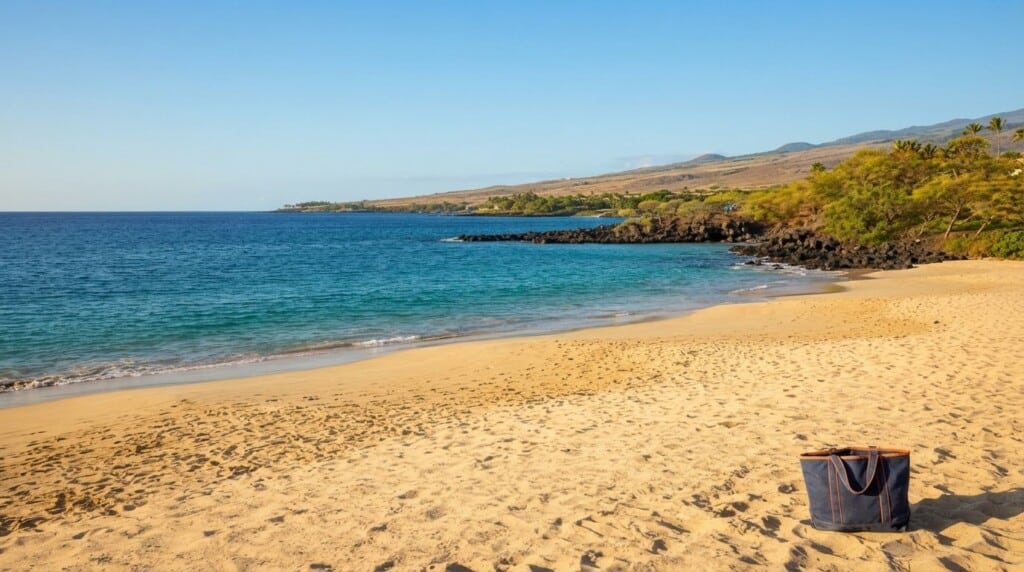

Hāpuna Beach State Recreation Area stays warm through every season, with the driest stretch from May through October. Spring temperatures range from 67 to 83°F, while summer brings 71 to 86°F.
That steady warmth is part of the appeal, though seasonal conditions can shape a beach day. Fall temperatures range from 70 to 86°F, and winter temperatures from 66 to 82°F. July brings approximately 290 hours of sunshine to the area.
This guide covers seasonal conditions, directions, nearby towns, opening hours, and entrance fees for Hāpuna Beach State Recreation Area, making it a great day trip during your stay at The Kanini Estate. Use these details to plan your visit and avoid surprises.
Key Takeaways
- Plan for warm conditions across the seasons, with May through October identified as the driest period.
- Use the park’s location near Kawaihae, Kailua-Kona, and Hilo to plan your route and choose a convenient base.
- Allow for the park’s daily opening hours when planning a beach visit, and review the vehicle fee that applies to your group.
- According to the Hawaii Department of Land and Natural Resources, Division of State Parks, the fee for 1-7 passenger vehicles is $25.
- Campers must attend staff check-in at 3:00 p.m., according to the Division of State Parks, Hawaiʻi; The Kanini Estate offers a private retreat for time with friends and family.
1. What is the climate of Hāpuna Beach State Recreation Area?
Hāpuna Beach has a warm coastal climate and an open sandy shoreline. The beach stretches 0.5 mile, giving visitors room to walk, rest, and enjoy the shore. At Hāpuna Beach State Recreation Area, beach plans can include time on the sand or a walk along the Ala Kahakai National Historic Trail. Consider current ocean conditions before choosing water activities.
Compared with other Big Island beaches, Hāpuna is notable for its 0.5-mile sandy shoreline. A portion of the 175-mile Ala Kahakai National Historic Trail also passes through the recreation area. This combination offers visitors a choice between a beach day and a coastal walk.
For a beach visit, plan activities such as walking, sunbathing, or swimming based on conditions. Follow posted park directions when picnicking, and leave the shoreline clean. Campers have a required arrival step: according to the Division of State Parks, Hawaiʻi, all campers must attend mandatory staff check-in at 3:00 p.m. This check-in applies to campers, not general beach visitors.
The sandy shore and trail access are defining features of the area. Loose sand can make movement difficult for wheelchair users, visitors with strollers, and people with limited mobility. Plan for the change from park paths to beach sand, and use marked routes where available. Accessibility depends on the surface and each visitor’s needs.
Don’t assume lifeguards are on duty or rely on an unverified schedule. Follow posted safety notices, assess the water before entering, and stay within your swimming ability. For a visit to Hāpuna Beach State Recreation Area, bring water, sun protection, and anything else you need to stay comfortable outdoors. A little preparation helps you enjoy the beach and trail while adapting to the day’s conditions.
2. Climate and seasonal conditions
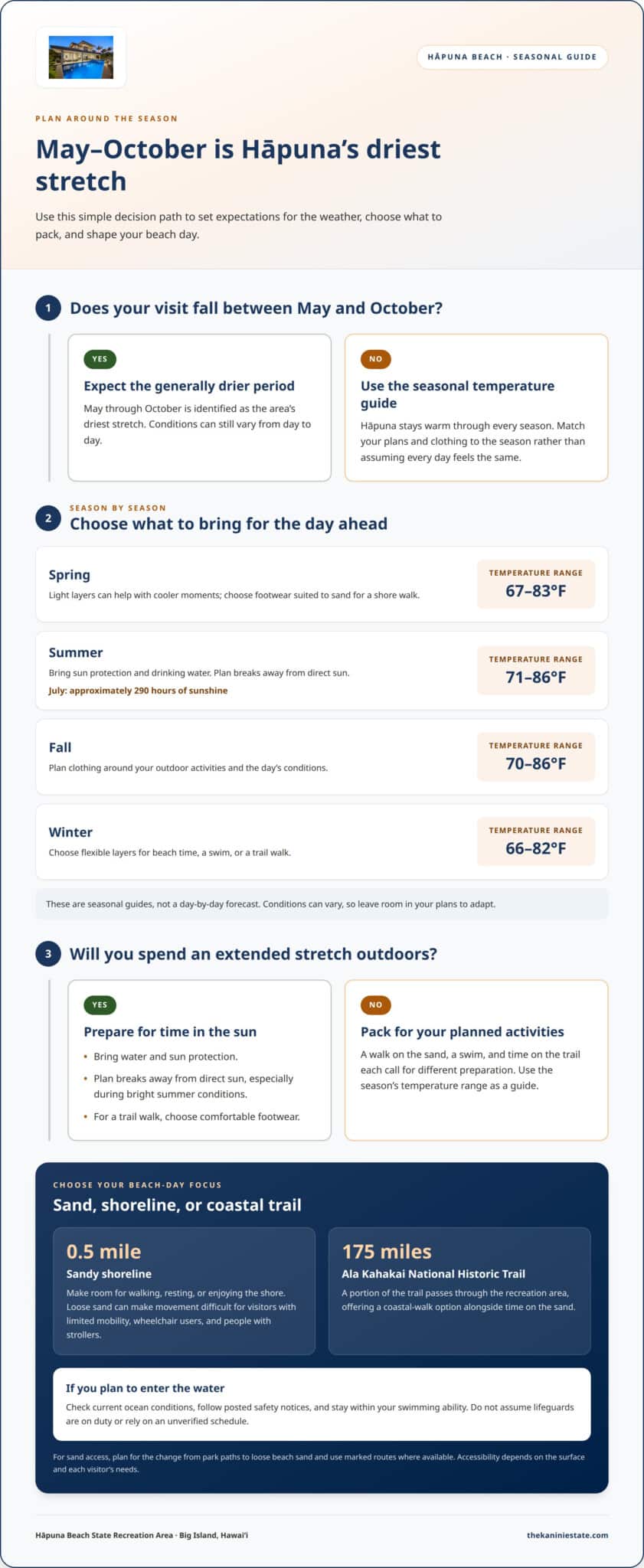
Seasonal temperatures at Hāpuna Beach stay within a warm range. Spring averages 67-83°F, while summer ranges from 71-86°F. Fall brings temperatures of 70-86°F, and winter ranges from 66-82°F. These figures help set expectations for time outdoors, but they don’t describe conditions on every day. Use them as a seasonal guide when choosing clothing and planning beach time.
Spring offers a broad temperature range, from 67°F to 83°F. For a spring visit, pack light clothing for warm hours and an extra layer for cooler moments. If your plans include a long walk along the shore, choose footwear suited to sand. A beach day can combine time by the water with a visit to the Ala Kahakai National Historic Trail.
Summer has the warmest listed upper temperature, reaching 86°F. July brings approximately 290 hours of sunshine to the Hāpuna area. For a summer outing, bring sun protection and drinking water, and plan breaks away from direct sun. A morning beach visit or a shaded pause can help make outdoor time more comfortable during bright conditions.
Fall temperatures range from 70°F to 86°F, keeping the season within a similar warm pattern. Winter remains mild by comparison with many mainland destinations, with listed temperatures from 66°F to 82°F. Pack for the day’s activities rather than assuming every season feels the same. A walk on the sand, a swim, and time on the trail each call for different preparations.
May through October is generally the drier period and can help you choose when to visit. Conditions still vary, so don’t assume the weather will be the same each day. Leave flexibility in your itinerary, especially if you plan to spend extended time outdoors.
Use this quick guide to match what you pack to the season:
- Spring: Prepare for the 67-83°F range with light layers.
- Summer: Plan for 71-86°F, and bring sun protection.
- Fall: Pack for 70-86°F and outdoor activities.
- Winter: Choose flexible layers for 66-82°F.
For the clearest planning, pair the seasonal range with your intended activities. A beach day calls for sun protection, while a trail walk benefits from comfortable footwear. July’s sunshine figure may help you anticipate bright conditions, but it isn’t a day-by-day forecast. If you’re building a longer island visit around Hāpuna, consider a peaceful Big Island home base between outings.
3. Directions to the recreation area
Hāpuna Beach State Recreation Area lies on the northwest end of Hawaiʻi Island. It is 2.3 miles south of Kawaihae, a useful landmark for the final part of your journey. Enter the full park name into your navigation app before setting out. This helps distinguish the recreation area from other beaches and access points on the island.
From Kailua-Kona, the park is about 30 miles north. Use Hāpuna Beach State Recreation Area as your destination, then follow the route from your starting point. From Hilo, it is 72 miles northeast. These distances help you understand the island’s geography, but they don’t indicate how long your drive will take.
Kawaihae is a useful coastal reference point. The recreation area is just south of town, making Kawaihae a helpful landmark for travelers approaching from that direction. If you’re nearby, search for the park by its full name rather than just “Hāpuna Beach.” This can help you avoid choosing a different beach or access point.
Before leaving Kailua-Kona or Hilo, set your destination and review the route. Consider your starting point, any planned stops, and how much time you want to spend at the beach. If your group is traveling in separate vehicles, share the same destination and meeting point so everyone heads to the same entrance.
Use these location references as you plan your drive:
- From Kawaihae: Hāpuna is 2.3 miles south.
- From Kailua-Kona: The park is about 30 miles north.
- From Hilo: The park is 72 miles northeast.
Distances are not guaranteed travel times. Your starting address and chosen route affect the journey. For example, someone leaving from Hilo will need a different plan from someone already near Kawaihae. Allow time for stops, and make sure your arrival fits within the park’s opening hours.
For a straightforward trip, set Hāpuna Beach State Recreation Area as your destination before driving and use Kawaihae as a coastal landmark. Keep your route handy if you plan to visit other places on the island. Checking your destination and timing in advance lets you arrive ready for the shoreline instead of sorting out directions at the last minute.
4. Location and nearby cities
Hāpuna Beach State Recreation Area is on the northwest end of Hawaiʻi Island, near Kawaihae and within reach of Kailua-Kona and Hilo. These place names can help orient your visit, whether you’re planning a beach outing or stops across the island. The surrounding coastline gives the trip a distinct northwest-island setting.
Kawaihae is the closest named town in the provided location details. Hāpuna Beach lies 2.3 miles south of Kawaihae. That short distance makes Kawaihae a useful reference point when describing the park’s position. If your plans include both places, consider their proximity as you shape the day, while leaving room for the time you want to spend at the beach.
Kailua-Kona is about 30 miles south of Hāpuna Beach. Visitors starting there can use the distance to understand the park’s place along the coast. It is a practical point of orientation for anyone planning a northbound island outing. The figure describes the distance, not the time needed to travel. Your starting address and route affect the journey.
Hilo sits farther away, 72 miles northeast of Hāpuna Beach. That relationship can help visitors decide whether to make the beach a dedicated destination or part of a wider island itinerary. Kailua-Kona and Hilo are on different sides of the island’s travel picture. Use your actual starting point when organizing a route, rather than judging the journey by distance alone.
Hawaiʻi Volcanoes National Park provides another geographic reference. Its campground is about two hours south of Hāpuna Beach, making the park and beach separate stops rather than neighboring destinations. If you plan to visit both, allow for the distance between them instead of treating the campground as a nearby base for a quick beach trip.
For planning, group your locations by starting point:
- Kawaihae: 2.3 miles north of Hāpuna Beach.
- Kailua-Kona: About 30 miles south.
- Hilo: 72 miles northeast.
- Hawaiʻi Volcanoes National Park campground: About two hours south.
These reference points help place Hāpuna Beach in relation to nearby towns and a major national park. They’re useful for planning a broader stay, but they don’t predict travel time from every starting address. Choose your starting point, then map the route to the recreation area to keep the island’s geography clear as you plan your day.
5. Park hours and entrance fees
Hāpuna Beach State Recreation Area is open daily from 7:00 a.m. to 6:45 p.m. Plan your arrival and departure within those hours. If you want time for both the beach and a walk, allow space for each activity. An early start also gives you more of the open day to enjoy the coast.
Listed entrance fees distinguish between Hawaiʻi residents and nonresidents. Car fees may vary by residency status. A Hawaii resident’s car has a listed entrance fee of $0.0. These are car entrance fees. Passenger vehicle rates are listed separately by vehicle size.
For passenger vehicles carrying 1-7 people, the Hawaii Department of Land and Natural Resources, Division of State Parks lists a $25 fee per vehicle. For vehicles carrying 8-25 people, the same department lists a $50 fee. For vehicles carrying 26+ people, it lists a $90 fee. Each rate is associated with a passenger capacity category.
Keep the distinction clear when planning a group visit. The car rates identify resident status, while passenger vehicle fees use capacity bands. For example, a vehicle carrying 8-25 people falls into the $50 category listed by the state parks division. The vehicle category, rather than a per-person calculation, frames those listed rates.
Before setting out, match your vehicle to the relevant fee information. Then plan your park visit around the 7:00 a.m. opening and 6:45 p.m. closing. If your plans include several stops, consider the time needed to reach the park and enjoy your visit. Avoid leaving the beach portion of your day until the final moments before closing.
Use this short planning sequence:
- Choose your arrival time within the daily 7:00 a.m. to 6:45 p.m. hours.
- Identify whether your vehicle falls under the resident car fee or passenger capacity rates.
- Allow time for your planned beach activities before the 6:45 p.m. closing.
For a longer island visit, make room for both a beach day and a comfortable place to return afterward. Explore a private Big Island vacation rental as part of your stay planning.
The Kanini Estate: Private Pool and hot tub, gym, game room and beach access from a gated community
The Kanini Estate offers a luxury vacation rental on the Big Island of Hawaii, a natural next step for travelers planning time beyond a day at Hāpuna Beach. It creates a private setting for friends and family, with beach access from a gated community and room to unwind between island outings.
After a day out, relax by the private pool or in the hot tub, or enjoy the in-home gym and game room. The estate suits guests seeking a private escape with space to slow down between excursions.
For a private Big Island stay, contact The Kanini Estate.
Let your island stay unfold at an easier pace
A visit to Hāpuna Beach State Recreation Area can be part of a more considered Big Island escape. Leave room in your itinerary for unhurried mornings, time together, and the freedom to choose each day’s plans. That slower pace can make a beach outing part of a richer island experience.
The Kanini Estate offers a luxury vacation rental on the Big Island of Hawaii, creating a setting for time with friends and family and an escape to paradise. It’s a natural fit for travelers who want their stay to feel as restorative as the landscape, with space to settle in between coastal excursions.
As you shape your plans, consider what would make the trip feel meaningful to everyone coming along. Then take the next step at your own pace. Contact The Kanini Estate to discuss your stay and begin imagining a memorable Big Island retreat.
Frequently Asked Questions
What is the climate of Hāpuna Beach State Recreation Area?
The climate is warm throughout the year, with seasonal temperatures ranging from 66°F to 86°F. In spring, temperatures are 67-83°F; summer ranges from 71-86°F. Fall is 70-86°F, and winter is 66-82°F. For a beach visit, bring sun protection and light layers. The area’s driest period is May through October, which can help guide your travel dates.
Where is Hapuna Beach State Recreation Area on the Big Island?
Hāpuna Beach State Recreation Area sits on the northwest end of Hawaiʻi Island, 2.3 miles south of Kawaihae. It is about 30 miles north of Kailua-Kona and 72 miles northeast of Hilo. These distances help you place the beach within an island itinerary. For example, travelers staying near Hilo should plan a dedicated outing rather than treating Hāpuna as a nearby stop.
What are Hapuna Beach State Recreation Area’s hours and entrance fees?
The park is open daily from 7:00 a.m. to 6:45 p.m. The listed entrance fee for a non-Hawaii resident’s car is $5.0, while a Hawaii resident’s car is listed at $0.0. Passenger vehicle rates depend on capacity: according to the Hawaii Department of Land and Natural Resources, Division of State Parks, fees are $25 for 1-7 passenger vehicles, $50 for 8-25, and $90 for 26+.
Are there parking fees at Hapuna Beach State Recreation Area?
Budget for the listed vehicle entrance fee when arriving by car. A non-Hawaii resident’s car has a listed $5.0 entrance fee, while a Hawaii resident’s car has a listed $0.0 fee. Passenger vehicles are listed in separate capacity categories, so identify the vehicle type before planning group travel. This distinction helps avoid confusing the car entrance listing with the larger-vehicle fee schedule.
What swimming and snorkeling conditions and hazards should visitors know about?
Swimming and snorkeling depend on ocean conditions, which can change during your visit. Observe the surf and follow posted beach warnings before entering the water. A calm appearance doesn’t guarantee safe swimming, so stay within your ability. Don’t assume lifeguards are on duty. If conditions seem unsafe, enjoy the shoreline instead.
What is the best time of year or day to visit Hapuna Beach?
May through October is identified as the area’s driest period, making it a useful seasonal guide. July receives approximately 290 hours of sunshine in the Hāpuna area. No specific best time of day is established, so shape your arrival around your plans and the park’s opening hours. For a quieter-paced visit, arrive with enough time for the beach and your chosen activities.
How do you get to Hapuna Beach State Recreation Area from Kona or Waikoloa?
From Kailua-Kona, Hāpuna Beach is about 30 miles north. From Waikoloa, enter the full park name as your destination in a navigation app and follow the route from your starting point. Kawaihae is a helpful landmark, with the recreation area 2.3 miles south of town. Check your route before leaving, especially if your day includes other island stops.
What facilities and amenities are available at Hapuna Beach?
Hāpuna has a 0.5-mile sandy beach and access to a portion of the Ala Kahakai National Historic Trail.