
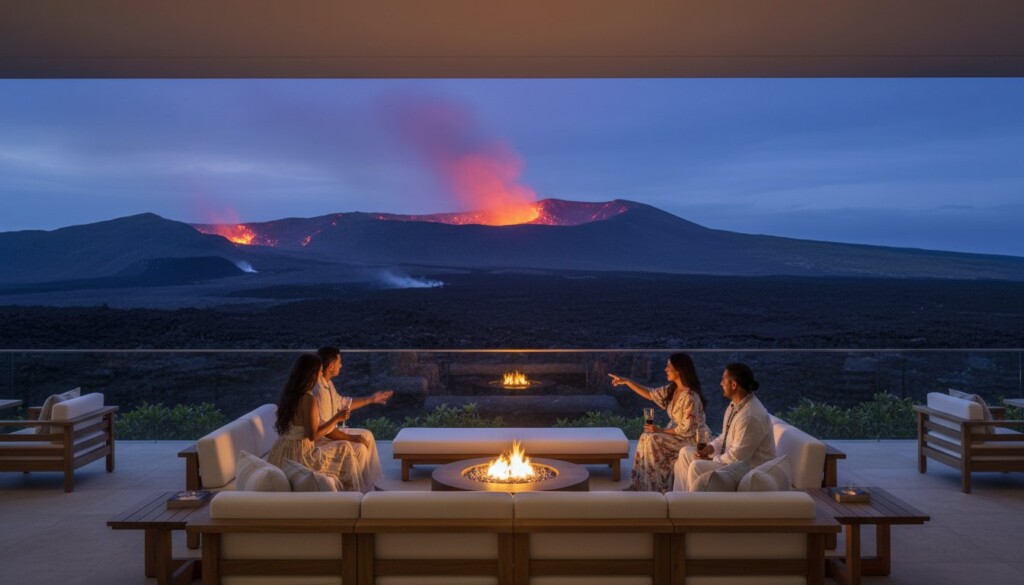

What if the most profound sense of stillness is found at the very edge of the earth’s creation? Many visitors arrive at hawaii volcanoes national park expecting a simple checklist of volcanic craters, yet they often leave feeling overwhelmed by the 335,259 acres of raw, shifting terrain and the bustle of standard tourist paths. It’s true that witnessing the primal pulse of Kilauea is a bucket list dream. However, the reality of navigating changing volcanic activity and crowded overlooks can often fracture the serenity you seek.
This guide promises to transform your 2026 expedition into a curated masterclass of soulful exploration and refined discovery. You’ll gain the expert level clarity needed to bypass the generic routes, replacing them with bespoke moments of connection to the Aina. We’ll unveil the most secluded vistas for your group of 16 guests and provide a meticulous roadmap for a journey that feels like a homecoming to the elements. From the rhythmic flow of ancient lava tubes to the sanctuary of a home featuring 8 king size beds, we’ll show you how to experience the heart of the fire with absolute grace.
Key Takeaways
- Discover the profound significance of this UNESCO World Heritage site as a living laboratory where the primal creation of new land unfolds in real-time.
- Delve into the contrasting majesty of Kīlauea and Mauna Loa to understand the geological forces that shape our world with both restless energy and silent power.
- Curate an elevated itinerary through hawaii volcanoes national park, navigating the dramatic descent of Chain of Craters Road and the ethereal depths of the Thurston Lava Tube.
- Master the nuances of an unhurried exploration by timing your journey for serene solitude and preparing for the evocative temperature shifts across the park’s diverse microclimates.
- Transition from the island’s raw energy to the refined peace of The Kanini Estate, a private sanctuary that features eight king size beds and comfortably sleeps 16 guests for the ultimate group retreat.
A Primal Awakening: The Significance of Hawaii Volcanoes National Park
The atmosphere shifts as you journey toward the summit. It’s a sensory transition marked by the scent of sulfur and the cooling mountain air. Hawaii Volcanoes National Park stands as a living laboratory of evolution, offering a rare glimpse into the primal forces that shape our world. This landscape is a UNESCO World Heritage site, recognized for its exceptional natural beauty and geological significance. From the crashing Pacific waves at sea level to the 13,680-foot peak of Mauna Loa, the scale is breathtaking. You feel small here. It’s a place where the earth is still being born, and witnessing the creation of new land in real-time is an experience that resonates deep within the soul.
A Legacy of Fire and Sea
The park’s foundation dates back to August 1, 1916. Since then, it has served as a guardian of unique biodiversity. The terrain offers a striking visual rhythm; lush, verdant rainforests give way to desolate, obsidian lava fields within a few miles. This diversity is why the area is celebrated as a biosphere reserve of global importance. You can explore the history of Hawaii Volcanoes National Park to understand how it protects over 1,000 species of vascular plants and several endangered birds. It’s a meticulously preserved sanctuary where life and destruction exist in a delicate, beautiful balance. The park provides a home for several key species, including:
- Nēnē: The endangered Hawaiian goose.
- ‘Ōhi‘a Lehua: The resilient trees that are the first to grow on new lava.
- Hapu‘u: Giant tree ferns that create a prehistoric canopy.
The Sacred Connection to Pele
Spirituality is woven into the very fabric of the basalt. Halema‘uma‘u Crater is the sacred home of Pele, the goddess of fire and volcanoes. Her presence is felt in every wisp of steam and every hardened flow. We ask our guests to travel pono, which translates to traveling with righteousness and respect. This means observing the landscape with a quiet heart and leaving every stone and fern untouched. By honoring these traditions, you participate in the preservation of a cultural heartbeat that has sustained the Hawaiian people for centuries. It’s about more than sightseeing; it’s about connecting with a heritage that is both ancient and alive.
The Living Earth: Understanding Kīlauea and Mauna Loa
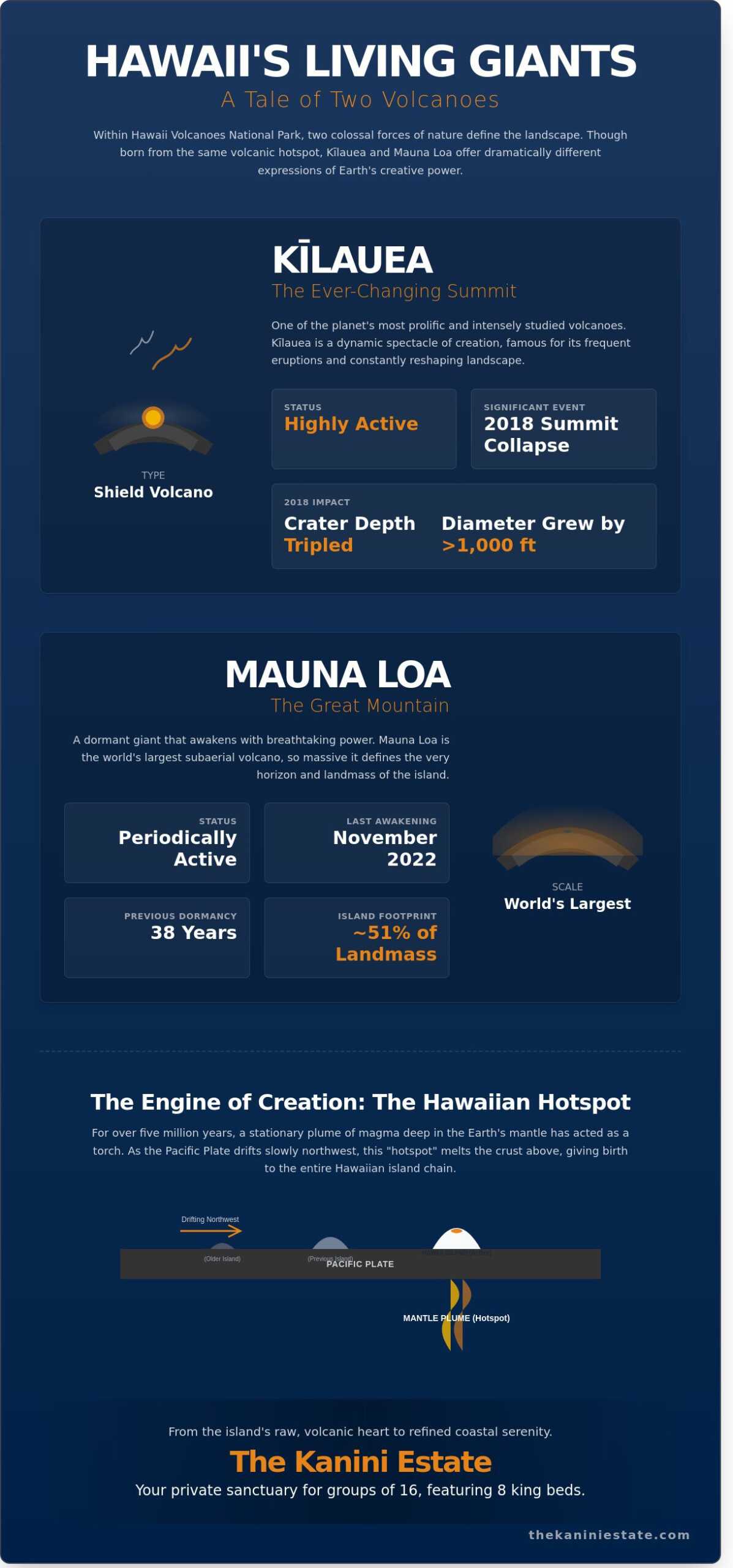
The ground beneath Hawaii Island is a living, breathing testament to the earth’s primordial creative fire. This volcanic landscape exists because of a stationary “hotspot” in the Earth’s mantle, where a plume of intense heat melts the overlying Pacific Plate as it drifts slowly northwest. Over five million years, this steady geological pulse has birthed the entire archipelago, leaving hawaii volcanoes national park as the current masterpiece of this subterranean artisan. It’s a place where the veil between the world’s core and its surface is exceptionally thin, offering a sensory experience that is both humbling and deeply evocative.
Kīlauea: The Ever-Changing Summit
Kīlauea stands as one of the most prolific and meticulously studied volcanic systems on the planet, providing a rare window into the world’s formative forces. Between May 3 and August 4, 2018, the park underwent a dramatic metamorphosis when a massive eruption sequence caused the Halemaʻumaʻu crater to collapse, tripling its depth and expanding its diameter by more than 1,000 feet. This seismic event fundamentally reshaped the summit’s geometry, a reminder of the island’s volatile beauty that guests should monitor through the official park website before beginning their ascent. Visitors often encounter “vog,” a delicate volcanic smog created when sulfur dioxide reacts with sunlight and moisture, casting an ethereal, silvery haze over the crater’s rim. A shield volcano is defined by its broad, gently sloping profile that resembles a warrior’s fallen shield resting upon the earth.
Mauna Loa: The Great Mountain
Mauna Loa dominates the horizon with a quiet, brooding presence, occupying approximately 51 percent of the entire island’s landmass. While it remained silent for 38 years until its brief awakening on November 27, 2022, it remains the world’s largest subaerial volcano, rising 13,681 feet above the Pacific. At these soaring heights, the lush tropical ferns of the lowlands give way to a stark alpine tundra climate zone where life is tenacious and the air is crisp. During the winter months, it’s common to witness a pristine dusting of snow atop its massive peaks, creating a striking visual contrast against the sun-drenched coastlines of Waikoloa. The scale of this mountain is truly immense, representing a volume of roughly 19,000 cubic miles of rock.
After a day spent witnessing the raw, unhurried power of hawaii volcanoes national park, returning to a sanctuary that comfortably sleeps 16 guests ensures a restful transition from the wild to the refined. The sense of scale found within the park is breathtaking, yet it makes the intimate comforts of a private estate experience feel all the more precious. Within these walls, 8 king size beds await to cradle you in luxury, providing the perfect end to a journey through Hawaii’s geological heart.
From Craters to Coastlines: Curating an Elevated Day at the Park
The descent along Chain of Craters Road offers a 3,700-foot transition through time and texture. You’ll witness the stark contrast between the 1969 Mauna Ulu flows and the coastal shifts that have reshaped the island over centuries. It’s a journey that demands a slow pace. Each bend in the road reveals a new layer of the island’s soul, from high-altitude rainforests to the sun-drenched, salt-sprayed cliffs of the Pacific. Hawaii volcanoes national park reveals its true scale here, where the land meets the sea in a dramatic, frozen cascade of basalt.
The Thurston Lava Tube, known locally as Nāhuku, serves as a subterranean cathedral. Formed 500 years ago, its mossy walls and cool, damp air offer a sensory reprieve from the heat of the surface. Nearby, the Devastation Trail provides a lyrical contrast. This half-mile path showcases the aftermath of the 1959 Kīlauea Iki eruption. Skeletal trees stand as silver monuments against a landscape of dark cinder, creating a visual rhythm that is both haunting and beautiful.
At the coastal end of the park, the Pu‘uloa Petroglyph Field contains over 23,000 images carved into the stone by ancient hands. These etchings offer a window into the spiritual heritage of the islands. To truly appreciate the geology of Kīlauea and Mauna Loa, one must see how these layers of earth have been meticulously built over millennia. The park isn’t just a destination; it’s a living, breathing record of creation.
The Path Less Traveled: The Kahuku Unit
Located about 50 minutes south of the main entrance, the Kahuku Unit is a 116,000-acre sanctuary of rolling green hills. This former ranching estate offers a serene alternative to the busier trails. Its verdant pastures and historic stone walls reflect a legacy of land stewardship that predates its 2003 addition to the hawaii volcanoes national park system. It’s a place for quiet reflection, far from the crowds.
Eruption Viewing and Night Skies
As daylight fades, the park transforms into a theater of light. The dark-sky environment provides a seamless view of the cosmos, where the Milky Way appears with startling clarity. Bringing high-quality optics allows you to witness the distant fire of the Earth within the caldera. This sensory experience, where the glow of the lava meets the brilliance of the stars, creates a memory of profound peace and refinement.
Navigating the Elements: Essential Guidance for an Unhurried Exploration
The journey from the sun-drenched Kohala Coast to the mist-shrouded peaks of hawaii volcanoes national park is a transition between worlds. To truly honor this landscape, one must embrace a pace that mirrors the slow creep of cooled pahoehoe. Arriving before 8:30 AM or after 4:00 PM ensures you witness the caldera bathed in a soft, golden light, far from the midday bustle of larger tour groups. These quiet hours offer a rare solitude, allowing the rhythmic breath of the earth to be heard without distraction.
Success requires a keen awareness of the island’s dramatic climate shifts. Temperatures at the Kīlauea summit, sitting at 4,000 feet above sea level, typically drop 3.5 degrees Fahrenheit for every 1,000 feet of elevation gained. A light linen shirt that served you well at breakfast won’t suffice against the damp, high-altitude chill. Layering with high-quality natural fibers provides both comfort and breathability as you move between the verdant fern forests and the stark, exposed crater rims.
Safety remains a priority for every discerning guest. Before departing, consult the 1912-established USGS Hawaiian Volcano Observatory for real-time updates on volcanic activity and air quality. Conditions change rapidly; a sudden shift in trade winds can carry volcanic gases across the popular trails. Monitoring these official alerts ensures your exploration remains serene and secure. This meticulous planning allows you to lose yourself in the beauty of the island while maintaining a seamless connection to the environment.
Preparation for the Soulful Traveler
Pack a curated selection of local provisions to sustain your spirit. Artisanal macadamia nuts, Big Island honey, and plenty of filtered water turn a simple rest stop into a moment of refined indulgence. Sturdy, closed-toe footwear is essential for the uneven, abrasive surfaces of the 1959 Kīlauea Iki trail. Whether you choose a gentle stroll through the Nahuku lava tube or a rugged trek across the caldera floor, your equipment should reflect the intentionality of your journey.
Distance and Logistics from the Kohala Coast
Expect a 2 to 2.5-hour drive via the Daniel K. Inouye Highway, known locally as the Saddle Road. This route offers a majestic passage between Mauna Kea and Mauna Loa, showcasing the island’s diverse topography through a series of dramatic volcanic vistas. The drive isn’t merely a means to an end; it’s a curated experience of shifting microclimates. After a day of profound discovery, you’ll find solace in returning to a sanctuary that comfortably sleeps 16 guests in expansive luxury, ensuring every member of your party finds deep, restorative rest.
Returning to Serenity: The Kanini Estate as Your Private Sanctuary
The journey back from the primordial landscapes of hawaii volcanoes national park marks a transition from the elemental to the elegant. While your day was defined by the raw, unpredictable energy of shifting earth and ancient craters, your return to The Kanini Estate offers a necessary grounding. It’s a private sanctuary where the day’s geological discoveries are distilled into quiet contemplation. The estate serves as a refined counterpoint to the island’s wild interior. It’s a place where the air feels lighter and the pace slows to a graceful, unhurried crawl.
Unwinding here is a sensory experience. You might choose to rinse away the dust of the trails in the private pool or let the heat of the hot tub soothe tired muscles under a canopy of stars. This transformative environment allows you to process the day’s profound sights in total seclusion. The shift from the tectonic intensity of the volcano to the rhythmic pulse of the Pacific is both restorative and deeply moving.
A Haven for Connection and Reflection
Large groups find a rare luxury here: the luxury of intentional space. The Kanini Estate is designed as a distraction-free thinking environment, making it a preferred choice for corporate retreats and family reunions. With 8 king size beds, the property ensures that every individual enjoys a restorative night of sleep. It comfortably sleeps 16 guests, providing ample room for collective reflection without sacrificing personal privacy. The seamless transition from the fiery history of the island to the estate’s sun-drenched ocean views creates a narrative of peace and refinement.
Bespoke Amenities for Your Group
Processing the profound sights of the volcano requires a curated environment for wellness. The estate provides diverse spaces to suit your group’s unique rhythm. You can maintain your physical edge in the full gym or foster social connection in the expansive game room. These areas are designed for both physical and social wellness, ensuring no one feels crowded or hurried.
- Enjoy direct beach access for a final sunset walk along the sea.
- Experience the security and quiet of a premier gated community.
- Relax in a home where heritage and contemporary luxury meet.
The estate’s craftsmanship and meticulous attention to detail ensure your stay is as memorable as the landscapes found within hawaii volcanoes national park. Every corner of the property reflects a commitment to excellence and soulful hospitality. Discover the understated elegance of The Kanini Estate for your next group retreat.
Embrace the Eternal Glow of the Big Island
Your exploration of hawaii volcanoes national park reveals a landscape defined by the raw, primal energy of Kīlauea and Mauna Loa. By traversing the 11-mile Crater Rim Drive and witnessing the ever-evolving 2026 topography, you’ve connected with the very heartbeat of the earth. These 335,259 acres of volcanic wonder demand an unhurried pace and a deep respect for the elements. Once the sun dips below the Pacific horizon, the transition from the rugged caldera to a refined sanctuary becomes essential for true restoration.
The Kanini Estate offers this seamless transition within an exclusive gated community. It’s a sun-drenched haven where 8 king size beds await to cradle up to 16 guests in absolute comfort. You’ll find direct beach access for morning reflections and unmatched sunrise and sunset ocean views that paint the sky in bespoke hues. This high-quality environment is meticulously designed for corporate retreats and family legacies alike. It’s more than a stay; it’s a return to serenity. Secure Your Private Sanctuary at The Kanini Estate. We look forward to welcoming you home to the island.
Frequently Asked Questions
Is Hawaii Volcanoes National Park safe to visit right now?
Hawaii Volcanoes National Park is safe to visit as the National Park Service and USGS scientists monitor volcanic activity 24 hours a day. While geological conditions change, official alerts provide real-time guidance for every visitor. You’ll find that air quality remains within federal health standards 95% of the time. This sanctuary of stone and fire invites exploration with a sense of profound peace and security.
Can you still see active lava at the park in 2026?
Seeing active lava in 2026 depends on the rhythmic cycles of Kīlauea and Mauna Loa. While the 2023 eruption lasted for 12 days in June, these geological events are unpredictable. Even without molten flow, hawaii volcanoes national park offers a sensory journey through steaming vents and vast, silent craters. The landscape remains a testament to the earth’s enduring craftsmanship and raw power.
How much time should I spend at Hawaii Volcanoes National Park?
You should dedicate at least 6 hours to fully experience the quiet majesty of hawaii volcanoes national park. A 2 hour drive along Chain of Craters Road reveals the dramatic descent to the sea. Allotting an additional 90 minutes for the Kīlauea Iki trail allows you to walk across a solidified lava lake. This unhurried pace ensures a deep connection with the island’s volcanic heritage.
What is the best time of year to visit the volcanoes?
The most tranquil months to visit are May and October when the weather is mild and crowds are sparse. During these shoulder seasons, daily high temperatures hover around 70 degrees Fahrenheit. You’ll avoid the peak winter rains that often exceed 10 inches per month in December. These windows offer a seamless blend of clear skies and lush, verdant scenery for your bespoke adventure.
Are there places to eat inside the National Park?
The historic Volcano House provides a sophisticated dining experience with views of the Halemaʻumaʻu Crater. Established in 1846, this iconic lodge serves locally sourced cuisine in a room filled with heritage and warmth. For a more casual bite, the Tuk-Tuk Thai food truck often sits just outside the park gates. These options provide necessary nourishment before you return to your private retreat.
Do I need a 4WD vehicle to explore the park?
You don’t need a 4WD vehicle to explore the primary wonders of the park. Every mile of the main thoroughfares, including the 19 mile Chain of Craters Road, is meticulously paved and maintained. A standard luxury sedan or SUV provides a smooth, comfortable journey through the diverse ecosystems. This accessibility ensures a seamless transition from the sun-drenched coast to the volcanic highlands.
How far is the park from the Waikoloa luxury rentals?
The park is 95 miles from the Waikoloa luxury rentals, a scenic drive that takes about 2 hours and 15 minutes. After a day of discovery, the journey back to your estate is a transition to total relaxation. Our sanctuary comfortably sleeps 16 guests and features 8 king size beds, offering a refined space to recount the day’s memories. It’s the perfect return to a home away from home.
What should I wear for a day at the volcano?
Wear breathable layers and sturdy, closed-toe shoes to navigate the uneven volcanic terrain. Temperatures at the 4,000 foot summit are often 15 degrees cooler than the tropical warmth of Waikoloa. Bring a waterproof jacket to shield against the mist that frequently blankets the verdant fern forests. Proper attire ensures you remain comfortable while witnessing the transformative power of this ancient, storied landscape.