
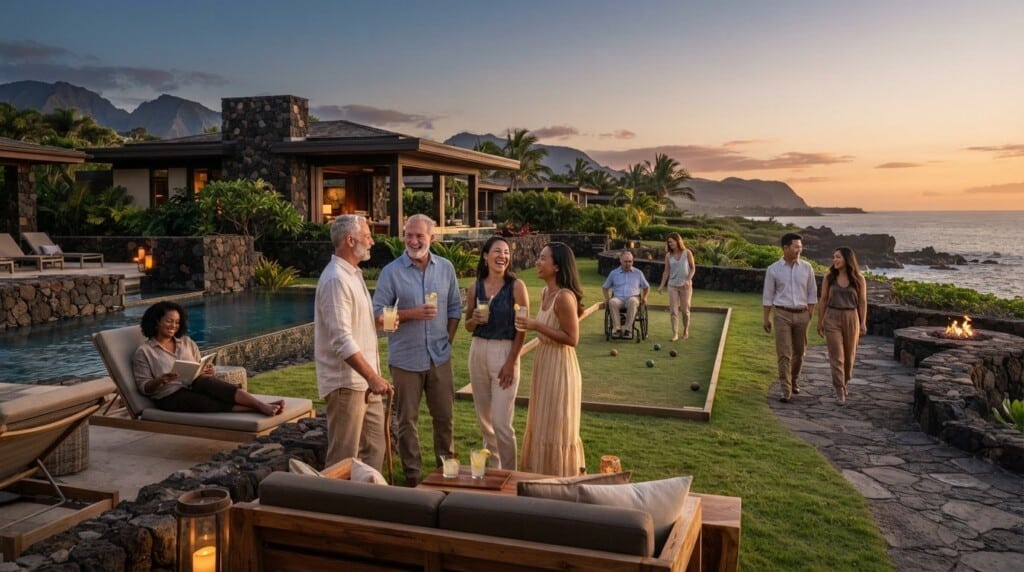

What if the best retreat activity is the one people can choose to join, rather than one everyone is expected to attend? Finding leisure activities for corporate retreat attendees can be challenging when the group has different energy levels, interests, and ideas of fun. A packed schedule may look purposeful, but it can leave little room to rest or connect naturally.
Shared experiences can give colleagues an easy way to spend time together, but they work best when they suit the retreat’s goals and leave room for personal choice. A quiet hour by the pool, time outdoors, or an informal game can be as welcome as a planned group activity. The setting matters, too. A private retreat base with space to gather and unwind can support connection without making every moment an event.
This guide covers inclusive ideas for different personalities, from creative and active options to gentle ways to recharge. You’ll also learn how to match an activity to your retreat’s purpose, make participation welcoming, and leave room for unhurried conversation and downtime.
Key Takeaways
- Match each leisure activity to a clear retreat goal, such as encouraging conversation, supporting rest, or sharing a new experience.
- Consider attendee preferences, group size, mobility, energy, and logistics before choosing activities.
- Compare conversation-led, creative, movement-based, restorative, and self-directed options to find a fit for varied personalities.
- Build an agenda with focused work, a shared experience, open time, and an optional gathering, adapting each block to your group.
- Choose leisure activities for corporate retreat attendees that suit the setting, and confirm outside arrangements or permissions in advance.
What leisure activities for corporate retreat attendees should accomplish
Leisure activities for corporate retreat attendees are optional experiences that give colleagues room to connect, restore their energy, or discover something together. They complement a retreat’s work sessions rather than replace them. Give clear business objectives and facilitated discussions their own time and attention.
A useful definition: “Retreat leisure activities are optional experiences that invite connection, restoration, or shared discovery without requiring every attendee to take part.” That choice matters. A relaxed conversation, a walk, a creative pursuit, and a quiet break can all support a retreat in different ways.
- Social connection: Informal conversation over a game or shared experience.
- Physical movement: An activity that lets people stretch, exercise, or spend time outdoors.
- Creative exploration: A low-pressure opportunity to make, taste, or learn something.
- Quiet personal time: Space to reflect, read, or simply pause between sessions.
How do leisure activities support a corporate retreat?
A shared experience gives colleagues a fresh subject to talk about and a relaxed setting in which to get to know one another. It may encourage connection, but it can’t guarantee stronger relationships or specific business results. Choose activities that fit the retreat’s purpose and complement the work instead of competing with it.
Leave room for reflection, too. An open break gives attendees time to process a discussion, continue a conversation at their own pace, or enjoy a little quiet. These pauses are part of the retreat experience, not empty space that must be filled.
Leisure activities versus structured team building
Leisure is generally optional and participant-led. Structured team-building exercises, by contrast, are designed around a specific outcome, such as clarifying roles or practicing collaboration. The broader Team building concept includes approaches such as goal setting and role clarification. A planner may choose a facilitator when the group needs guided discussion, a defined process, or support connecting an activity to a work objective.
A self-led format may be enough for a casual game or open social hour. For facilitated work, specialist instruction, or activities beyond the property’s usual use, confirm arrangements, services, and permissions independently before adding them to the agenda. Keep the distinction clear: leisure invites people in, while a structured exercise asks them to work toward a planned outcome.
How to choose leisure activities for corporate retreat attendees
Start with the people in the room, not a list of popular activities. Use this four-step process to connect the retreat’s purpose with attendee preferences and practical needs. The result can feel considered without making every leisure moment serve a formal work objective.
- Define the retreat goal. Decide whether the group needs time to build relationships, recharge, celebrate, or explore ideas together. Let that purpose guide the kinds of experiences you consider.
- Learn attendee preferences. Ask about interests, accessibility needs, energy levels, and comfort with group participation. A brief, private way to share preferences can help people answer honestly.
- Shortlist varied options. Offer a small range of styles, such as a conversation-led gathering, a creative activity, gentle movement, or self-directed downtime. Avoid assuming one format will suit everyone.
- Confirm the details. Check group size, available time, equipment, transport, and whether you need an outside facilitator. Consider weather contingencies and property permissions where relevant.
“Attendee choice belongs in activity planning because people connect and recharge in different ways.” Make participation inviting, not compulsory, and offer an alternative for anyone who prefers a quieter pause.
Match the activity to the retreat’s purpose
For relationship-building, consider low-pressure shared experiences that leave room for conversation, such as a casual game or creative activity. For restoration, consider quieter, wellness-oriented, or self-directed options. Keep the connection to the retreat clear, but don’t make every activity carry a work lesson. Sometimes a welcome change of pace is enough.
Check preferences, access, and practical requirements
Before finalizing the plan, ask attendees what they’d enjoy and what would help them take part comfortably. Don’t assume everyone has the same mobility, fitness, swimming ability, dietary needs, or appetite for competition. Verify equipment, weather plans, facilitator availability, transport, and permissions as needed. For a retreat based at a private property, review its confirmed amenities and access details, such as those at The Kanini Estate’s private retreat setting, before shaping activities around the setting.
Which retreat activities work for different attendee preferences?
The strongest choice isn’t always the liveliest one. A quiet creative session may suit some attendees, while others prefer movement, conversation, or time to themselves. Use the comparison below to weigh energy, participation pressure, and planning needs before selecting leisure activities for corporate retreat attendees.
| Activity style | Energy level | Participation pressure | Planning considerations |
|---|---|---|---|
| Conversation-led | Low | Low to moderate | Offer prompts or relaxed social games, with an easy option to listen or step away. |
| Creative | Low to moderate | Low to moderate | Check materials, setup, and whether an instructor or facilitator is needed. |
| Movement-based | Moderate to high | Moderate | Consider access, fitness differences, equipment, weather, and alternatives. |
| Restorative | Low | Low | Allow for quiet activities, personal reflection, or a calm wellness option. |
| Self-directed | Varies | Very low | Make choices clear and confirm any property access or activity requirements. |
Use this as a guide, not a promise that one category will suit everyone. A movement activity could mean a gentle walk or a more energetic game; the right choice depends on the group and setting. A creative option might invite collaboration or simply give each person room to explore at their own pace.
Low-pressure activities for conversation and connection
Conversation prompts, collaborative creative exercises, and relaxed social games can give colleagues an easy way to spend time together without putting anyone on the spot. Explain that joining in is optional. Attendees who prefer to observe, chat privately, or take a break should have a comfortable alternative. That freedom can make an invitation feel warmer and less like another work assignment.
Active, creative, and restorative activity options
Movement or outdoor experiences can offer a refreshing change of pace, but plan alternatives for different mobility and energy levels. Creative workshops may need materials or an outside facilitator. Restorative choices, such as quiet individual time, need little structure but still deserve space in the agenda; planners seeking inspiration on rejuvenating schedules can explore Wellness Retreat Packages and Long-Stay Accommodations to see how dedicated wellness spaces integrate restful downtime. Before confirming an activity, check equipment, bookings, access, weather plans, and permissions as relevant.
A retreat doesn’t need a packed schedule to feel worthwhile, and success doesn’t require universal participation. A considered mix of shared experiences and unclaimed time lets attendees choose a pace that feels right.
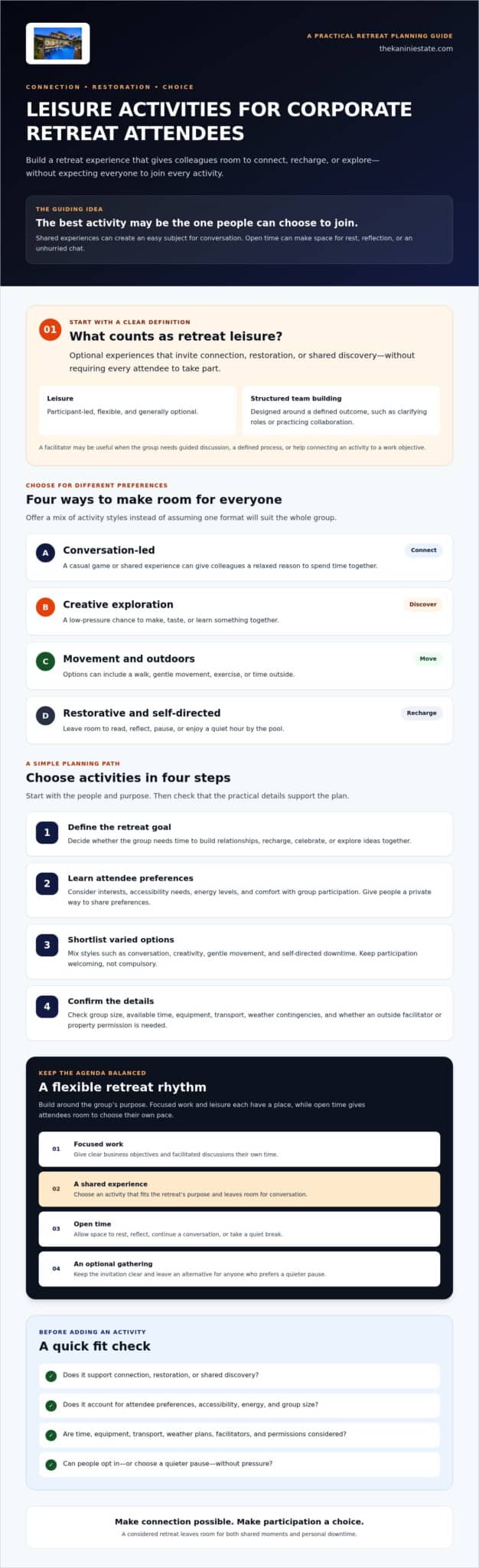
How to build leisure activities into a corporate retreat agenda
A well-paced agenda gives the day a natural rhythm: focused work, a shared activity, open time, and an optional evening gathering. Treat this as a flexible sequence, not a timetable with fixed durations. Adjust each block to the group’s energy, the retreat’s objectives, and the work that needs attention.
Planning principle: Leave enough unstructured time for genuine rest and informal conversation. Attendees can use this time to pause, reflect, or continue a discussion without a formal prompt.
- Focused work: Protect time for strategic conversations and essential decisions.
- Shared activity: Offer an experience that suits the group and complements the day’s purpose.
- Open time: Leave room to rest, explore, or connect at an individual pace.
- Optional evening gathering: Invite attendees to continue socializing, while making it equally acceptable to step away.
Create a balanced flow without overfilling the schedule
Place leisure activities for corporate retreat attendees where they can refresh the day, rather than interrupt an essential work session. Allow transition time between locations or activities, and include quiet breaks so attendees aren’t expected to participate continuously. An evening gathering can be a gentle invitation, not another obligation. Some people may welcome conversation; others may prefer a calm end to the day.
Let the setting support the flow, too. A private property with spaces for recreation and rest can make it easier for attendees to move between a shared experience and personal downtime. Confirm in advance that any planned activity suits the property and its permissions.
Make participation welcoming and easy to understand
Share practical details before the retreat: what the activity involves, where it will take place, its physical demands, and whether attendees need to prepare or bring anything. If an option may not suit everyone, offer an alternative, such as observing, taking a quiet break, or choosing a less active experience. Clear information helps each person decide comfortably.
Afterward, ask what felt useful, enjoyable, or difficult to join. Keep feedback simple and use it to shape future agendas. The aim isn’t to fill every open space. It’s to create a thoughtful balance of work, shared moments, and room to breathe.
For a retreat base with confirmed amenities such as a private pool, hot tub, full gym, game room, and direct beach access, explore The Kanini Estate’s private retreat setting and verify current details before planning activities around the property.
Choose a private retreat setting that makes connection feel natural
A private setting can give a group one shared place to focus, spend time together, and step away to rest. With the full property reserved for the group, work sessions and leisure can sit within the same retreat experience, while attendees choose how they use their open time.
The Kanini Estate is rented as a whole property for groups and professional retreats. It’s a private stay, not an event venue, and commercial catering isn’t offered. Confirmed amenities include a private pool, hot tub, full gym, game room, and direct beach access.
Use shared amenities to support optional downtime
These amenities can offer different ways to unwind between planned sessions. Some attendees may enjoy time in the game room or gym; others may prefer the pool, hot tub, or beach access, subject to property rules and suitability. These are amenities, not scheduled or hosted activities. Before building plans around them, confirm current details, access, and any relevant property permissions.
Shared spaces can make informal interaction easier, but no one needs to join every activity. Leave room for personal choice, including quiet time away from the group.
What planners should confirm before choosing a retreat stay
Start by checking that the property suits your group’s accommodation needs, access requirements, and intended use. Confirm the current amenities and any limits that may affect your plans. If you want an outside facilitator or other services, arrange them separately and verify availability, logistics, and permissions before confirming the agenda.
For more planning context, read the private-estate vacation planning guide and the luxury vacation home selection guide. Both can help you consider what matters in a private stay before choosing a base for leisure activities for corporate retreat attendees.
If a private group stay feels right for your retreat, explore The Kanini Estate as a retreat base and confirm that its current details align with your group’s plans.
Plan a Retreat That Leaves Room to Connect
The most memorable leisure activities for corporate retreat attendees aren’t necessarily the most elaborate. Choose options that fit your retreat’s purpose, offer different ways to take part, and leave space for rest and informal conversation. A thoughtful rhythm can help the group connect without turning every moment into a scheduled exercise.
The setting can support that balance. The Kanini Estate offers exclusive full-property stays for groups and professional retreats, with a private pool, hot tub, gym, game room, and direct beach access. These amenities provide a shared backdrop for recreation and downtime, while attendees choose how they spend their free moments.
Explore The Kanini Estate as a private setting for your group retreat and consider how its spaces might complement your plans. With clear goals, welcoming choices, and time to unwind, you can shape a retreat that feels purposeful and refreshingly unhurried.
Frequently Asked Questions
What are the best leisure activities for corporate retreat attendees?
The best leisure activities for corporate retreat attendees suit the group’s goals, interests, and energy levels. Conversation prompts or relaxed games can invite easy connection, while creative activities offer a different way to share time. Movement, quiet wellness options, and self-directed breaks can round out the choices. Offer a few distinct styles and make participation optional so attendees can choose what feels comfortable.
How do you choose activities for a corporate retreat?
Choose activities by starting with the retreat’s purpose, then checking attendee preferences and practical needs. Consider group size, available time, energy, mobility, and comfort with group participation. Shortlist options that fit, then confirm details such as equipment, transport, access, weather plans, and any outside facilitator or booking needs. Ask attendees about interests and accessibility needs before finalizing the agenda.
Can leisure activities be optional at a corporate retreat?
Yes, leisure activities can be optional, and that choice helps make a retreat more welcoming. Let attendees know what an activity involves and offer a comfortable alternative, such as observing, taking a break, or choosing a quieter option. Keep essential business sessions distinct from recreation. Optional leisure gives people room to connect at their own pace without making every shared moment feel like an assignment.
How many activities should a corporate retreat include?
There’s no fixed number of activities a corporate retreat should include. Choose what fits the retreat’s goals and the group’s available time, rather than filling every opening in the schedule. A flexible flow might include focused work, a shared experience, open time, and an optional gathering. Leave space for transitions and rest, then adjust the plan to the attendees and setting.
What happens if attendees do not want to participate?
Attendees who don’t want to join should be able to decline without pressure. Explain the activity in advance, including its physical demands, location, and any preparation needed. Where possible, offer an alternative, such as quiet personal time or a chance to observe. This respects different needs and preferences while keeping the invitation open to those who would enjoy taking part.
Can a private estate support leisure activities during a corporate retreat?
Yes, a private estate can provide a shared setting for work, recreation, and rest, depending on its features and rules. The Kanini Estate is rented as a whole property for groups and professional retreats, with a private pool, hot tub, full gym, game room, and direct beach access. These are amenities, not hosted activities. Confirm current details and permissions, and arrange any outside services separately. The estate is not an event venue and doesn’t offer commercial catering.