
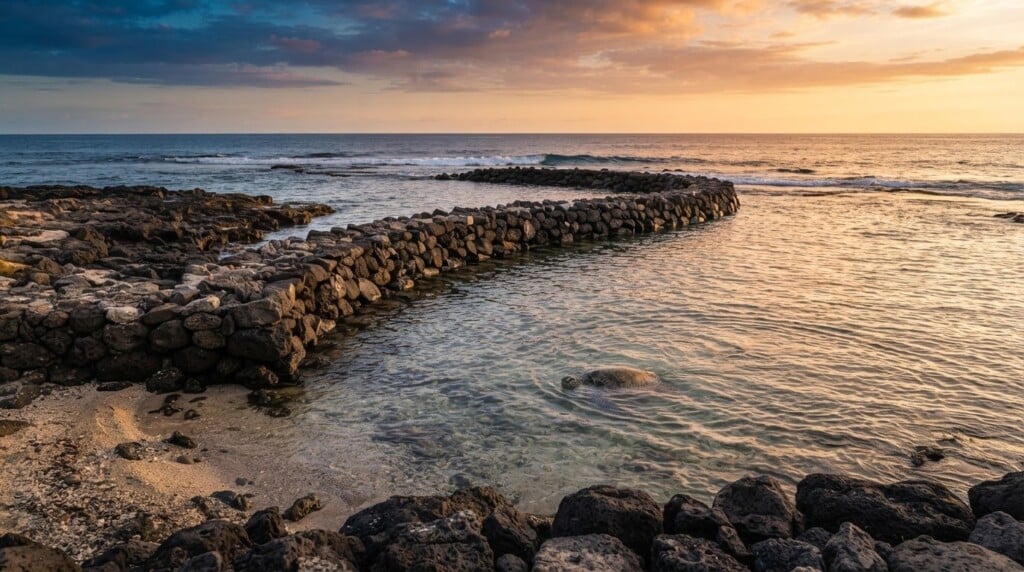

The western coast of the Big Island gives the sunset a clear stage: the Pacific horizon, warm evening light, and a shoreline that invites you to slow down. For travelers dreaming of a Hawaiian getaway from anywhere in the country, or those planning a stay at The Kanini Estate, experiencing the best sunset spots on the kona coast includes unforgettable locations like Magic Sands Beach, Old Kona Airport Beach Park, Hapuna Beach, Honl’s Beach, and the historic shores of Pu‘uhonua o Hōnaunau.
A beautiful view is only part of the experience. Leave time to find parking, choose a good vantage point, and enjoy the changing colors without rushing. Arriving early can help, especially at popular waterfront spots where space is limited.
This guide highlights what makes a Kona sunset memorable and what each of these five locations offers for ocean views and photos. It also covers simple ways to appreciate sea turtles and other wildlife respectfully, so the evening feels as thoughtful as it is beautiful.
Key Takeaways
- Choose a west-facing shore or waterfront viewpoint for open Pacific sunset views.
- Arrive early to improve your chances of finding parking and a comfortable place to watch.
- At Kaloko-Honokōhau, plan your visit around the park’s sunset closing time and give sea turtles and other wildlife space.
- At Anaehoomalu Bay, use the shoreline and changing evening light to shape your sunset photos.
- Pick a spot that suits your evening, from a walkable Kailua-Kona waterfront to a broad, open beach.
1. What Makes a Good Kona Sunset?
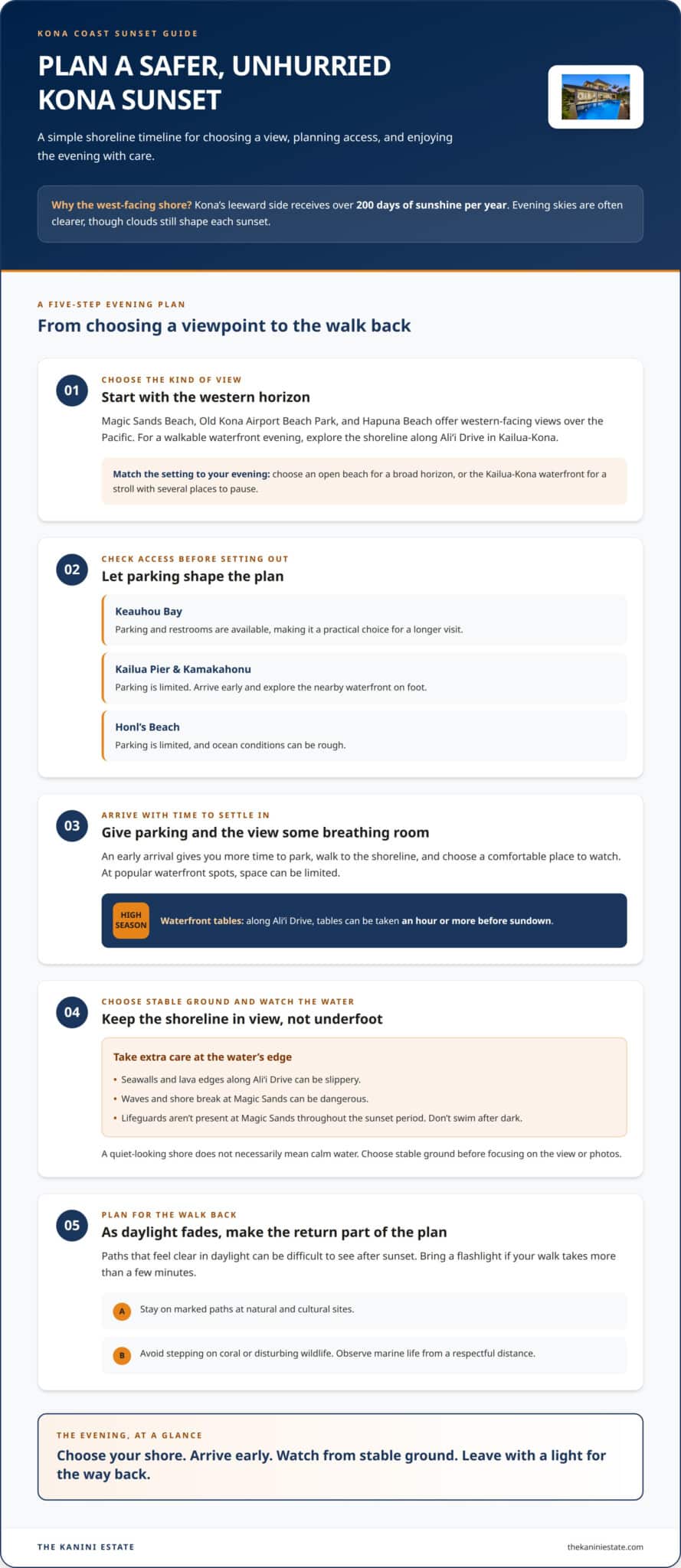
Which Kona Coast beaches have the best sunset views? Magic Sands Beach, Old Kona Airport Beach Park, and Hapuna Beach offer western-facing views over the Pacific. For an easy evening stroll, Kailua-Kona’s waterfront along Aliʻi Drive brings the coastline and sunset together.
Which Kona Coast sunset viewpoints have parking, restrooms, and easy access? Keauhou Bay has parking and restrooms, while parking at Kailua Pier and Kamakahonu is limited. For a walkable visit to Kailua-Kona, arrive early and explore the waterfront on foot.
Kona sits on the island’s dry, leeward side, where evening skies are often clearer. The region receives over 200 days of sunshine per year. Those conditions can make the last light especially vivid, though clouds still shape each evening’s view. Watch the horizon from the shore, where the sun sets over the western Pacific.
Aliʻi Drive is a useful starting point for a relaxed sunset walk. Along the Kailua-Kona coastline, you’ll find several places to pause as the light changes. Kailua Pier and Kamakahonu sit at the north end of Kailua Bay in Historic Kailua Village. From there, the waterfront offers a natural route to nearby viewpoints without committing to one fixed spot.
For a table beside the water, consider the restaurants along Aliʻi Drive. Don the Beachcomber is one option on the Kailua-Kona waterfront. In high season, waterfront tables can be taken an hour or more before sundown. Arrive early to find a seat and enjoy the shifting colors without hurrying through dinner.
Elevated views call for a different perspective from the town’s shoreline. Mauna Kea rises nearly 14,000 feet above the island, creating a striking contrast with Kailua-Kona’s ocean-level viewpoints. It is a separate high-country setting, not a walkable waterfront stop. Along Aliʻi Drive, the sea-level view keeps the horizon wide and the shoreline close.
For photos, consider how each setting frames the light. Magic Sands and Old Kona Airport Beach Park offer open western exposure, while Hapuna Beach pairs a broad shore with a clear horizon. In town, the Kailua Pier and Kamakahonu area brings historic Kailua into the scene. Seawalls and lava edges along Aliʻi Drive can be slippery, so choose stable ground before focusing on the view.
A memorable Hawaiian sunset is as much about the setting as the colors. Walk the Kailua-Kona waterfront for changing coastal views, or settle at a table along Aliʻi Drive. On clear evenings, watch as the sun reaches the horizon: a green flash may appear for a split second.
2. Arriving early for parking and viewing spots
Arriving early gives you more time to park, choose a safe place to watch, and settle into the evening. Parking at Kailua Pier and Kamakahonu is limited, so these historic waterfront areas call for extra patience. Keauhou Bay offers parking and restrooms, making it a practical choice for a longer visit. During high season, popular Kailua-Kona waterfront tables can be taken an hour or more before sundown.
Make parking part of the plan, not an afterthought. Choose your viewing area before setting out, then allow time to walk from the car to the shoreline. At Honl’s Beach, parking is limited and ocean conditions can be rough. A quiet-looking shore does not necessarily mean calm water, especially as daylight fades.
What are the safety risks and ocean conditions to consider at Kona sunset spots? Seawalls and lava edges along Aliʻi Drive can be slippery, while waves and shore break at Magic Sands can be dangerous. Lifeguards aren’t present there throughout the sunset period, so don’t swim after dark, and bring a flashlight if your walk takes more than a few minutes.
Rays on the Bay adds a manta ray viewing experience to an evening near the water. Treat wildlife viewing as separate from watching the sunset, and give marine life space rather than approaching or disturbing it. Light, water conditions, and wildlife activity all shape what you see, so focus on observing respectfully.
An oceanfront lanai offers a more settled way to watch evening light change over the sea. It can suit visitors who prefer a private seat to a public shoreline, or who want to enjoy the view without searching for a place along the waterfront. For a stay with ocean and sunset views, explore this Kohala Coast ocean-view escape.
A boat tour offers a different vantage point, with panoramic sea views of the sunset. Some tours may include guides who share information about local history, marine life, and cultural significance. Arrive at the departure point with time to spare, and follow the crew’s directions around the vessel and water. From offshore, the horizon feels expansive as the shoreline recedes behind you.
Keep the return journey in mind, too. A beach path that feels clear in daylight can be difficult to see after sunset, so bring a flashlight for longer walks. At natural and cultural sites, stay on marked paths and avoid stepping on coral or disturbing wildlife. These small choices help keep the evening safer and gentler on the coast.
For a low-stress plan, choose a viewpoint with the access you need, arrive before the late-afternoon crowd, and allow for changing conditions. Keauhou Bay’s restrooms and parking offer useful conveniences; limited parking at Kailua Pier makes an early arrival worthwhile. At Magic Sands, watch from shore rather than entering the water as darkness approaches.
3. Kaloko Honokohau National Historic Park sunsets and sea turtles
Kaloko-Honokōhau National Historical Park brings a sunset together with coastal history, lava shoreline, and habitat for sea turtles. The National Park Service places the visitor center 3 miles south of Kona Airport along Highway 19. From there, visitors can plan a stop at ʻAiʻōpio, where a late-afternoon view meets the park’s historic setting. Leave time to reach the shoreline and enjoy the changing light before closing.
Pay close attention to park access points. The main visitor-center parking lot at ʻAiʻōpio closes before sunset, and Kaloko-Honokōhau closes at sunset. Timing matters: arrive with enough daylight to reach your viewing area, then leave as the park closes. Don’t plan to linger after the sun drops below the horizon.
Sea turtles can make a shoreline visit memorable, but wildlife deserves space and quiet. Keep a respectful distance from turtles on shore or in the water, and don’t touch, feed, or crowd them. Avoid stepping on coral or disturbing other animals. Stay on marked paths, especially where dark lava meets the beach, and watch both the terrain and the evening view.
For a different coastal outing, Kekaha Kai State Park offers sunset scenery away from the central Kailua-Kona waterfront. Driving from the highway to Kekaha Kai State Park takes about 15-20 minutes. Allow that travel time before setting out, then leave room to reach a beach viewpoint before dusk. The coast’s open setting gives the sunset a broad ocean backdrop, while the park visit calls for care on natural paths and shorelines.
Kikaua Point Park is another option for a quieter sunset. It is described as having calm waters and fewer crowds, with picnic tables at Kikaua Point Beach Park near Kailua-Kona. This setting may suit visitors who want to settle in rather than follow a busy waterfront. Bring what you need for a simple pause, choose a stable place to sit, and leave room for other beachgoers.
For photos at Kaloko-Honokōhau, frame the sunset with the shoreline or dark volcanic rock rather than approaching turtles for a closer shot. The park’s historic features and natural setting are part of the experience, not props. Keep to marked routes, leave wildlife undisturbed, and watch the time as daylight fades. At ʻAiʻōpio, enjoy the view and exit before the park closes at sunset.
4. Anaehoomalu Bay sunset photography
Which Kona Coast sunset spots are best for photography or avoiding crowds? Anaehoomalu Bay, often called A-Bay, offers a broad ocean horizon for sunset photos. For a quieter setting, Kikaua Point Park is described as having fewer crowds, while A-Bay gives photographers room to explore different shoreline compositions.
A-Bay lies about 40 minutes north of Kona, so plan the drive as part of your photo outing. Public beach access and Lava Lava Beach Club are listed at 69-1081 Ku’uali’i Pl, Waikoloa Village. Use the public access to reach the shore, then take a moment to notice where the horizon meets the water. That first look can help you choose a frame before the evening colors deepen.
Start with a wide composition. Place the horizon near the upper or lower part of the frame rather than splitting the image evenly. A low viewpoint can bring the foreground into the picture, while a higher stance can simplify the scene. At A-Bay, try both perspectives and compare how each balances shore, sea, and sky.
As the light changes, make small adjustments instead of rushing between places. Take one image with the sun in the frame, then turn slightly to capture color spreading across the horizon. If people appear in the scene, include them as silhouettes only when they add scale without distracting from the view. The most beautiful moment may come just before the sun disappears.
For a natural foreground, look for shoreline patterns and textures already in the frame. Keep your camera or phone steady, and avoid stepping on coral or disturbing wildlife. Check tide charts before visiting a Big Island beach, since water levels can change how much shoreline is visible. At A-Bay, this can affect where you stand and how much foreground your composition includes.
Arrive with enough daylight to find public access and choose a stable place to watch. Getting there early also gives you time to test a few frames before the strongest color appears. Keep your belongings close and stay aware of other beach visitors, especially when framing a shot near the water. A sunset photo should never require an unsafe step toward shore.
If A-Bay feels busy, consider Kikaua Point Park for a more peaceful beach setting. Its quieter atmosphere may suit a slower photo session, with more time to study the light and adjust your composition. Each place offers a distinct way to experience the evening. At A-Bay, let the wide horizon guide your frame, then pause to enjoy the view without the camera.
5. Kona’s western-coast sunset views
Kona’s west-facing beaches look toward the Pacific, giving sunset watchers an open horizon as the sun slips from view. The best sunset spots on the Kona Coast include Magic Sands Beach, Old Kona Airport Beach Park, and Hapuna Beach State Recreation Area. Each offers a different frame, from open ocean to golden sand and a broad sweep of sky.
At Magic Sands, the ocean fills the view, making the changing sky the main subject. Old Kona Airport Beach Park offers broad western exposure for a dramatic panorama. At Hapuna, the long stretch of golden sand leads the eye toward the horizon. Choosing among the best sunset spots on the Kona Coast depends on whether you prefer shoreline texture or an uncluttered ocean view.
For a town-side option, Honl’s Beach sits along Aliʻi Drive, south of Historic Kailua Village. Its setting pairs a western ocean view with Kailua-Kona’s waterfront. Conditions can be rough and parking is limited, so allow time to find access and choose a safe place on shore. Waves and shore break at Magic Sands can also be dangerous.
Pu‘uhonua o Hōnaunau National Historical Park offers a sunset shaped by history as well as scenery. Its coastal setting brings the ocean and cultural history into the same visit. Treat historic places with care, stay on marked paths, and don’t use culturally significant features as props. The surrounding landscape offers a meaningful view without disturbing the site.
To choose a beach, consider the mood you want for the evening. Magic Sands suits an unobstructed Pacific view; Old Kona Airport Beach Park offers a wide western outlook; Hapuna pairs the horizon with golden sand. Honl’s brings the coast closer to town, while Pu‘uhonua o Hōnaunau offers a historic setting. Arrive with daylight to spare, especially where parking is limited.
At any shoreline, watch the sunset from stable ground, away from wet rocks and breaking waves. The seawall and lava edges along Aliʻi Drive can be slippery. Don’t swim after dark at Magic Sands, even if others remain in the water. Bring a flashlight if your walk back takes more than a few minutes.
On some clear Kona evenings, a green flash may appear for a split second as the sun meets the horizon. Keep watching the last edge of sunlight, but don’t let the camera pull you away from the view. The western coast gives the island a natural stage for sunset, from open beaches to historic shorelines. For a stay with ocean and sunset views, explore an ocean-view escape.
The Kanini Estate: Unmatched views of the ocean, sunrise and sunset
After exploring Kona’s shoreline viewpoints, The Kanini Estate offers a private place to unwind. This luxury vacation rental on the Big Island of Hawaii is in the gated, oceanfront community of Naupaka at Waikoloa. Friends and family can enjoy ocean, sunrise, and sunset views together at an unhurried pace.
Choose this retreat when you want more than an evening stop along the coast. Rather than finding a new public viewpoint each day, settle into an escape to paradise and let the changing light become part of your stay. Ocean views welcome the first light of morning, then return in softer tones as the sun sets.
For a gathering centered on time together and the beauty of the island, The Kanini Estate brings those moments into one setting. Contact The Kanini Estate to discuss your stay.
Make the Sunset Part of Your Island Stay
Planning around the best sunset spots on the Kona coast can shape more than one evening. Let the changing light set an easy rhythm for your time on the island: a day outdoors, a quiet pause as the sky softens, and space to enjoy the moment without watching the clock. Meaningful memories often come from being together, not fitting another stop into the day.
As you plan your stay, think about the feeling you want to carry home. A sunset can be a photograph, a shared conversation, or simply a beautiful stretch of silence beside the ocean. Give yourself room for those moments to unfold naturally.
If you’re ready to make your Big Island escape a reality, take the next step with The Kanini Estate. Let the island’s evening light become part of a stay you’ll remember.
Frequently Asked Questions
What Makes a Good Kona Sunset?
A memorable sunset pairs an unobstructed horizon and changing color with a comfortable place to linger. For photos, notice how the light falls across the water and foreground instead of focusing only on the sun. A shoreline with room to settle can make the evening feel less rushed. The best setting depends on whether you want a quiet pause, a coastal walk, or a composed photograph.
What About Clouds, Rain and Vog?
Clouds can add texture and color, while low cloud or rain may hide the sun. Vog, or volcanic haze, can also reduce the clarity of distant views. Keep your plans flexible: if the horizon is obscured, enjoy the changing light over the water rather than waiting for a clear view of the sun. Conditions can vary across the island, so check the sky near your chosen coast.
What Are the Best Spots for Watching Sunrises and Sunsets on the Big Island?
For sunset, choose a west-facing coastal outlook; for sunrise, look toward the eastern horizon. The island’s varied terrain offers different viewing experiences, from sea-level shorelines to higher inland settings. Choose based on the atmosphere you want, then consider the drive and access involved. A coastal viewpoint suits an easy evening, while an elevated destination calls for more planning and attention to conditions.
What Time Should You Arrive?
Arrive with enough daylight to orient yourself, settle in, and enjoy the changing sky before sunset. The extra time helps if you’re unfamiliar with the access route or want photos from more than one angle. If you’re planning a meal with a waterfront view, make time for the evening’s dining stop. Leave time for the return walk, since paths and shoreline edges become harder to see after dark.
What Side of the Big Island Does the Sun Set?
From Kona, the sun sets over the Pacific on the island’s western side. At an unfamiliar viewpoint, use a map or compass to orient yourself before choosing where to stand. Coastlines curve, so the ocean may not appear directly west from every point along the shore. Find a clear line of sight to the horizon, then frame the view around the sun’s position.
What Are the Best Sunset Viewing Spots on the Kona Coast?
The right viewpoint depends on the experience you want. Choose an open stretch of coast for a wide horizon, a historic shoreline for a sense of place, or a boat tour for a view from the water. When choosing between options, consider how you’ll get there and what you’d like to do before or after sunset. That can help narrow your choice beyond the view alone.
What Are the Best Sunset Spots Near Kailua-Kona Town?
For a sunset close to town, focus on the Kailua-Kona waterfront and the shoreline south of Historic Kailua Village. A waterfront walk lets you take in the evening at your own pace, while a restaurant table can make sunset part of dinner. Decide whether you’d rather keep moving or settle in for the view, then plan your evening accordingly.
Which Kona Coast Sunset Spots Are Accessible Without a Long Hike?
If you want to avoid a long hike, look for public shoreline access and established beach parks. They let you enjoy an ocean view without planning a summit walk or remote trail. Access varies by location, so choose a route that suits your group and allow time to return before dark. A flashlight can help on the walk back as daylight fades.