


What if a group vacation could feel spacious before you even arrive? Stress-free group travel planning starts with a few clear decisions: choose dates together, assign a coordinator, and agree on bookings and how to share costs. Then leave room for the quiet, unplanned hours that make a getaway feel like a true retreat.
Group plans can quickly become a long list of opinions, errands, and expenses. A simple structure lets everyone contribute without leaving one person to manage everything. This guide explains how to coordinate schedules, delegate tasks, book shared activities and dinners, track expenses, and plan for transportation, meals, and entry fees.
You’ll also learn how to balance memorable plans with time to unwind, so the trip feels considered rather than crowded. Shared expectations and a little flexibility help everyone settle into the experience, whether the day calls for exploring or simply slowing down.
Key Takeaways
- Use a shared calendar to find dates that work, then protect open time for rest and flexibility.
- Choose one planning lead and divide research, bookings, and other tasks across the group.
- Reserve a few activities and dinners in advance while leaving space for spontaneous plans.
- Agree on a per-person budget range and decide when the group will settle shared expenses.
- Build transportation, meals, and entry fees into the trip budget before plans are finalized.
1. Balancing shared plans with downtime and flexibility
Choose a destination by comparing what each traveler wants from the trip. Ask everyone to name a priority, such as beach time, local food, or outdoor activities, then find a place that supports several interests. Compare weekday and weekend dates, travel time, and the pace each person prefers. For stress-free group travel planning, agree on one shared experience and leave other choices flexible.
Use a shared calendar to compare availability and mark fixed plans first. Add travel days, reservations, and group activities, then leave open blocks for rest or independent exploring. For example, keep the afternoon free after a morning outing. This gives everyone time to recharge while keeping the next group meetup clear.
A group itinerary app can keep ideas, stops, and practical details together. Add the date, location, meeting point, and estimated cost for each idea. Separate optional stops from confirmed plans. Someone who wants a quiet afternoon can then skip an outing and still know where to meet the group later.
Store shared travel documents in a folder everyone can access. Include booking confirmations, transportation details, emergency contacts, and essential travel information. Add a packing list for shared items, such as sunscreen or a first-aid kit, and personal reminders, such as comfortable walking shoes. Assign each item to a traveler to avoid duplicate purchases or forgotten essentials.
Illness, travel delays, and changed plans can disrupt a group trip. Travel insurance may help with costs covered by the selected policy, so compare its coverage, exclusions, and claims process before purchasing. According to the Centers for Disease Control and Prevention, a travel companion’s inability to adjust to an international environment can lead to early repatriation.
Reduce tension by agreeing on a decision-making process before departure. Each traveler can name a priority, then the group can discuss differences calmly. If opinions clash over a stop, pause and revisit the choice later. For stress-free group travel planning, use the shared itinerary to distinguish fixed commitments from optional plans, rather than treating every suggestion as a group obligation.
Capture the trip’s small details in a shared travel journal. Invite each person to add a photo, a favorite meal, or a short note about a memorable stop. One traveler might record a scenic viewpoint while another remembers a lively dinner. These entries preserve individual perspectives alongside the group’s shared itinerary.
2. Assigning a trip-planning lead and delegating tasks
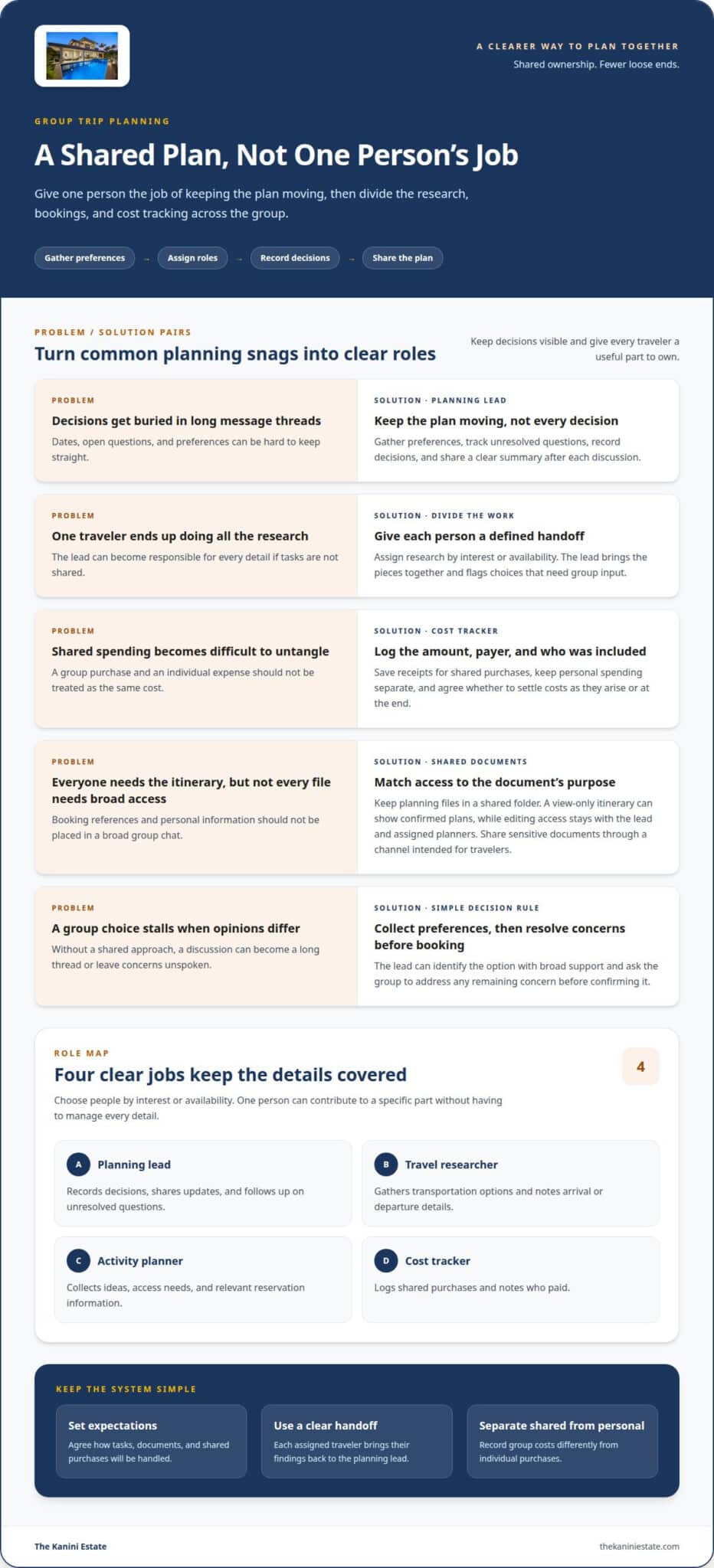
Give one person responsibility for keeping the plan moving, not for making every decision. The lead can gather preferences, track open questions, and share a clear summary after each discussion. For example, ask everyone to choose between two travel dates before anyone researches activities. A defined role keeps decisions from getting lost in long message threads.
Collaborative planning works best when each traveler contributes to a specific part. Divide tasks by interest or availability, then set a clear handoff. One friend can compare transportation options, another can shortlist outings, and someone else can review meal preferences. The lead brings those pieces together and flags decisions that need group input. Everyone gets a voice without having to manage every detail.
- Planning lead: Records decisions, shares updates, and follows up on unresolved questions.
- Travel researcher: Gathers transportation options and notes arrival or departure details.
- Activity planner: Collects ideas, access needs, and relevant reservation information.
- Cost tracker: Logs shared purchases and notes who paid.
Set expectations before sharing trip documents. Use a shared folder for planning files, but limit access to travelers who need them. A view-only itinerary can help everyone follow confirmed plans, while editing access stays with the lead and assigned planners. Avoid posting private details, such as booking references or personal information, in a broad group chat. Share sensitive documents through a channel intended for the travelers.
Agree on how to record shared purchases before anyone pays. For example, whoever handles a group reservation can save the receipt, note the amount, and record who was included. Keep personal purchases separate from shared costs. If one friend buys an individual museum ticket while another pays for a group ride, record them differently. The group can decide whether to settle costs as they arise or at the end.
Use a simple decision rule for choices that affect everyone. The lead might collect each traveler’s preference, identify the option with broad support, and ask the group to resolve any remaining concern before booking. For a shared stay with space for gathering, explore The Kanini Estate as a setting for time with friends and family.
3. Booking group activities and dinners in advance
Start with the experiences that shape the trip, then arrange smaller details around them. Agree on travel dates before booking flights or accommodations so everyone can coordinate arrival and departure. No single booking window guarantees good prices. Once dates align, compare options by route, schedule, cancellation terms, and the group’s budget.
Book guided tours early if they are central to the itinerary. Popular tours may book out months in advance, limiting the group’s choices if you wait. A tour may include a professional local guide, planned route, transportation, safety arrangements, and gear. For mixed preferences, look for an option that accommodates different activity levels and suits the group’s pace.
Choose dinners with the group’s timing and preferences in mind. A reservation can anchor an evening, especially after a scheduled activity or travel day. Before booking, gather dietary needs, preferred meal times, and the final headcount. Add the reservation details and arrival instructions to the itinerary. Keep another evening open so the group can follow a local recommendation or rest.
Plan accommodations around the full itinerary, not just the arrival night. Compare location, transportation needs, shared spaces, and cancellation terms. A stay near planned activities may reduce travel between stops, while a quieter setting may better suit a slower retreat. Once the group chooses, save the confirmation and address alongside flight details so everyone can find the same information.
Consider an eSIM as part of the trip’s connectivity plan. An eSIM is a digital SIM that accesses a mobile network without a physical SIM card. Compare destination coverage, data allowances, and device compatibility before choosing one. Include activation instructions with travel documents, and note whether each traveler needs separate access. This helps the group plan how to stay in touch during transit.
Create one itinerary entry for each confirmed booking, with the date, meeting point, time, and cancellation terms. Mark tours and dinners as fixed, and label optional stops clearly. This prevents a suggested activity from being mistaken for a reservation. Keep receipts and confirmation messages together so the person tracking group costs can record shared bookings accurately.
- Secure first: Dates, accommodations, and activities with limited availability.
- Share clearly: Confirmation details, meeting points, and any required preparation.
- Leave open: Unreserved time for rest or spontaneous plans.
4. Group budget tracking and expense settlement
Set a per-person budget range before anyone books. Ask each traveler to share a comfortable spending range, then agree on a level the group can plan around. This gives the trip lead a useful guide when comparing stays, tours, and shared reservations. If an option exceeds the agreed range, discuss it before committing. Don’t assume everyone has the same spending limit.
Next, decide how the group will settle shared expenses. Travelers can split each cost as it occurs or record expenses and tally them at the end of the trip. The first approach keeps balances current, while the second reduces payment requests during the getaway. Choose a method together to prevent confusion when one person pays for a shared booking.
Keep one expense record that everyone can review. For each shared purchase, record the date, purpose, total, payer, and travelers included. For example, a group reservation paid for by one friend should show whether it covers everyone or only some travelers. Save the receipt with the entry. This makes the balance easier to understand when the group reviews it.
- Shared purchase: Record the purpose, payer, and people included.
- Personal purchase: Keep it outside the shared total.
- Changed plan: Update the record if a traveler joins or opts out.
- Payment made: Mark it settled so it isn’t counted again.
Separate shared costs from personal choices before calculating what each person owes. A group transfer or common reservation may belong in the shared ledger. A souvenir or individual upgrade usually belongs to the person who chose it. If a cost benefits only some travelers, record their names instead of dividing it across the whole group.
Review the expense record at an agreed point, such as after a major booking or before departure. Compare payments with receipts and correct missing entries while details are fresh. If one traveler has paid more, show the amount clearly before requesting repayment. A visible record replaces guesswork with a shared reference.
For a trip with changing plans, leave room in the budget for optional choices without counting that amount as spent. Record an optional activity only after the group decides to book it. When plans change, update the entry instead of relying on old messages. These habits keep the shared total current and help everyone make informed choices.
5. Accounting for transportation, meals, and entry fees
A useful trip budget includes transportation, meals, and entry fees, not just flights and accommodations. List each category before booking, then note which costs are shared and which are personal. Airport transfers may serve the whole group, while one traveler’s snack does not. This breakdown clarifies what the shared budget covers.
Map transportation around the itinerary. Record flight plans, arrival times, airport transfers, local transit, and travel between activities. A group arriving on separate flights may need different pickup plans, while a shared arrival can simplify the transfer. Compare each option’s route, timing, and convenience. Include local travel, since distant stops can add both cost and time.
Give meals their own place in the estimate. Mark which meals are planned as a group, included with accommodations or activities, or left to individual choice. Before confirming a dinner reservation, note the expected group size and any dietary needs. Plan a grocery stop or shared breakfast separately from restaurant meals. This makes the estimate reflect how the group will actually eat.
List entry fees beside the activity they belong to. A museum visit, guided outing, or attraction may have admission costs separate from transportation or meals. Record who plans to attend, since optional activities should not automatically be divided among everyone. If a traveler skips a stop, keep that choice separate from shared costs. Clear categories make expense reviews easier.
Give each planned expense an estimated amount, a payer, and a status such as “considering,” “booked,” or “paid.” Update the estimate when a reservation is made, then compare it with the final receipt. If a shared ride changes after the group adjusts its arrival plan, revise the transportation entry. Keep the original and updated details together to avoid counting the same cost twice.
Before departure, review the full budget by traveler and category. Check that transportation, meals, and entry fees are included, then identify optional costs that could change each person’s total. This final review clarifies planned spending and helps surface mismatched expectations before they affect the trip.
For a group getaway where shared time and a private retreat matter, explore a stay at The Kanini Estate as you shape your plans.
The Kanini Estate: High-quality, distraction-free thinking environment for corporate retreats
The Kanini Estate provides a high-quality, distraction-free setting for corporate retreats, where colleagues can step away from daily routines and focus on shared work. The luxury vacation rental also creates space for time with friends and family. Choose it when your group wants a private escape with room to think, connect, and spend meaningful time together.
For a corporate retreat, shape the gathering around your team’s goals and allow room for unhurried conversation. For a personal getaway, let shared time and a slower pace guide the experience.
To discuss a stay, contact The Kanini Estate.
Choose the setting for your next shared escape
Let the next decision be how you want the group to feel when the journey ends. A memorable trip leaves room for easy conversation, quiet reflection, and moments everyone can share. Keep that feeling in mind as you choose where to gather.
Stress-free group travel planning isn’t about filling every hour or making every choice perfect. It’s about creating a thoughtful starting point, then letting the experience unfold at a comfortable pace. When your group is ready to turn its plans into a getaway, choose a place that invites you to slow down and be together.
Start a conversation with The Kanini Estate and take the next step toward your group’s time away.
Frequently Asked Questions
How do you plan a group vacation?
Start by agreeing on the trip’s purpose, travel dates, and comfortable spending level. Ask each person to name a priority, such as nature, local culture, or a quiet pace. Then choose a destination and stay that suit the group’s shared interests. Once the main decisions are settled, assign planning roles and keep key details in one shared place. Leave some choices open for the trip itself.
How do you plan a group trip step by step?
Plan in this order: collect preferences, settle dates, agree on a per-person budget range, choose lodging, and arrange transportation. Then select a few shared activities and confirm any time-sensitive bookings. Give each task an owner and a due date. Before departure, share a concise travel brief with arrival details, reservations, key contacts, and changes everyone needs to know.
Which tools help coordinate group travel plans and communication?
Use a shared calendar for confirmed dates, a collaborative document for preferences, and a group messaging thread for quick updates. Keep final details, such as reservation confirmations and arrival instructions, in one shared folder instead of scattering them across conversations. Set a simple rule: add decisions to the itinerary after the group agrees. This makes suggestions easy to distinguish from confirmed plans.
How should a group set a travel budget and split shared costs?
Ask each traveler for a comfortable spending range, then agree on a shared planning limit before making reservations. Decide whether shared costs will be settled as they occur or tallied later. Track the payer, purpose, participants, and receipt for each group expense. For a cost shared by only some travelers, record their names rather than dividing it among everyone. Keep personal purchases separate.
What are the best apps for tracking and settling group expenses?
Choose a shared expense ledger that everyone can access and use consistently. It should record the payer, amount, purpose, participants, and settlement status. Before the trip, agree how to enter partial group costs, such as a ride used by only some travelers. Review entries against receipts and mark repayments clearly. A shared spreadsheet works too, as long as it stays current.
How do you choose lodging that works for different group sizes and needs?
Match the stay to the group’s sleeping arrangements, privacy needs, shared spaces, and planned activities. Check sleeping capacity, bathroom access, common areas, and location relative to the itinerary. The Kanini Estate is a luxury vacation rental that sleeps up to 16 guests, with 8 king-size beds and two additional airbeds available. Its maximum occupancy is 16 guests, including those airbeds.
How can you plan an itinerary that balances group activities and free time?
Anchor the itinerary with shared commitments, such as a tour or dinner, then leave open blocks between them. Consider travel time and the group’s energy when scheduling activities on the same day. Mark optional plans clearly so travelers can rest or explore independently without losing track of agreed meetups. A flexible outline provides structure while leaving room for unexpected discoveries.
How do you handle different travel preferences, accessibility needs, and dietary restrictions?
Invite each traveler to share needs privately before booking activities or meals. Ask about mobility access, pace, food restrictions, and preferred ways to spend free time. Use those details to choose inclusive plans and flag specific requirements with relevant venues. For example, confirm step-free access for an outing and share dietary restrictions when arranging a group meal. Limit personal information to those who need it.