


There is no single fixed number of large-group vacation rentals available in Hawaii. Options vary by island, travel dates, group size, and whether everyone wants to stay under one roof or book separate rooms. Booking holiday travel for a large group in Hawaii works best when you match your dates and preferred setup to the group’s needs.
Finding enough beds is only part of the decision. The right stay also shapes how your group spends time together. Compare sleeping arrangements, shared amenities, cancellation terms, package inclusions, and transportation to weigh comfort and convenience alongside capacity. Coordinate dates, lodging, and activities early, and leave space in the itinerary for both group outings and downtime. A little planning helps make the stay feel considered from arrival to departure.
Key Takeaways
- Rental availability changes with your island, travel dates, group size, and preferred setup, so compare options around your group’s needs.
- Look beyond sleeping capacity: room layouts, bathrooms, and shared amenities all shape how comfortable the stay feels.
- Read cancellation deadlines and package details closely to understand the terms and what each booking includes.
- Plan transportation alongside lodging so the group can move between the airport, activities, and stay with less friction.
- Start planning several months ahead; groups larger than four should allow at least six months to book rooms and activities.
How many large group vacation rentals are available in Hawaii?
There is no single fixed number of large-group vacation rentals in Hawaii. Availability varies by island, travel dates, group size, and whether your group prefers one shared home or separate rooms. When booking holiday travel for a large group in Hawaii, start by matching your dates and preferred island to the group’s sleeping and gathering needs.
Oahu suits groups seeking a broad mix of attractions and outdoor activities. Daniel K. Inouye International Airport is on Oahu and is Hawaii’s main airport, according to the Hawaii Department of Transportation. The Aloha Stadium Swap Meet & Marketplace features more than 400 vendors, crafters, and artists, while the Aloha Stadium Swap Meet is about 20 minutes from Waikiki. The Hālona Blowhole can send sea spray up to 30 feet into the air.
The best island for a large-group vacation depends on your plans. Oahu can suit groups interested in well-known sights, shopping, and varied activities. Another island may be a better fit if its scenery or experiences match your itinerary. Maui’s whale-watching season runs from December to April, which can help groups interested in whale watching choose travel dates.
The right rental or resort also depends on how your group wants to spend time together. A whole-home rental can bring shared meals and downtime under one roof, while a resort may mean separate rooms. Compare sleeping arrangements, bathrooms, common areas, and stated occupancy before choosing. Capacity and group booking terms vary by property, so use the listed limits and conditions to determine how many guests can stay together.
Plan one or two shared experiences, then leave room for individual plans and rest. A visit to Pearl Harbor National Memorial can bring the group together around the USS Arizona Memorial, USS Oklahoma Memorial, and USS Utah Memorial. The Byodo-In Temple welcomes people of all faiths. For private group tours, coordinate the full party on one booking, since separate reservations may prevent everyone from joining the same activity.
Compare package prices by listing each included activity, transfer, and other stated feature alongside the price. Don’t assume a package covers every part of an outing. Tours and activities can sell out weeks or months ahead, so agree on the itinerary early and reserve group activities together. Leave some unplanned time, too. After an outdoor excursion, a quiet afternoon lets guests rest, explore separately, or meet again for dinner.
Bedrooms, bathrooms, and amenities
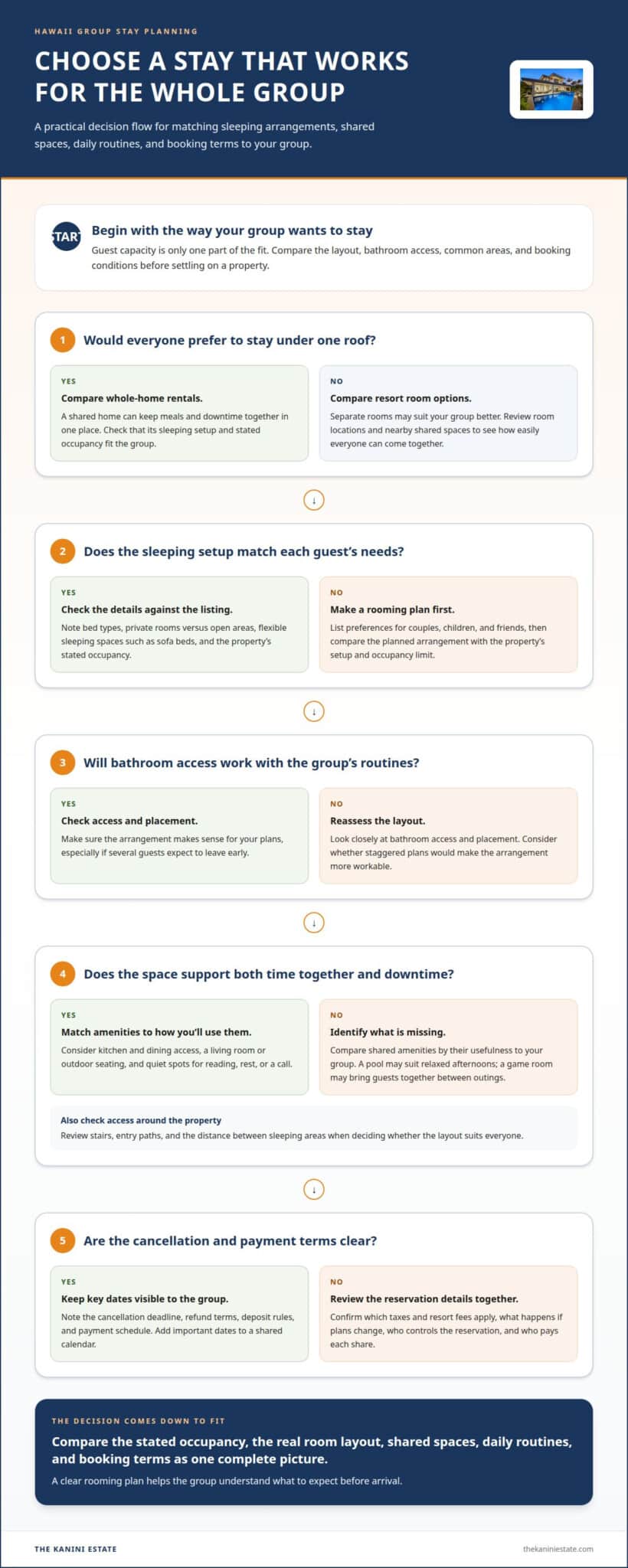
A comfortable group stay depends on more than the advertised guest capacity. Consider the sleeping setup, bathroom access, and shared spaces together. A home may have enough beds but limited room for everyone to get ready before an outing. A resort may provide separate rooms, while a whole-home rental keeps shared meals and downtime in one place. Choose a layout that suits your group’s routines, not just its headcount.
Start with the sleeping arrangements. Check whether beds are in private rooms or open areas, and whether the setup works for couples, children, or friends who value privacy. Note sofa beds and other flexible sleeping spaces separately. Then consider bathroom access: a group leaving for a morning hike may need a different arrangement from one with staggered plans. A clear layout helps everyone know what to expect before arrival.
Next, picture a typical day at the stay. A kitchen and dining area can make shared breakfasts easier, while a living room gives the group a place to gather after exploring a tropical coastline. Outdoor seating can offer a quiet spot for coffee or reading. For a resort, compare room locations and nearby shared spaces, since those details affect how easily the group comes together.
- Sleeping: Match bed types and room privacy to couples, children, and friends.
- Bathrooms: Look at access and placement, especially for early departures.
- Meals: Compare kitchen access, dining space, and the way the group plans to eat.
- Gathering: Consider a living room or outdoor seating for time together.
- Downtime: Note quiet corners where guests can read, rest, or take a call.
- Access: Review stairs, entry paths, and the distance between sleeping areas.
Make a simple rooming plan before booking. List each guest’s preferred bed arrangement, then compare it with the property’s stated setup and occupancy. A family with young children may prioritize nearby sleeping spaces, while colleagues on a retreat may prefer separate rooms and quiet work areas. Keep the group’s needs in view without assuming everyone will use shared amenities in the same way.
Finally, compare amenities by how your group will use them, not by how long the listing is. A pool may suit relaxed afternoons; a game room may bring guests together between outings. If a private Big Island stay with shared spaces fits your plans, explore this Kohala Coast property as one example to consider.
Group cancellation deadlines
Before paying for a Hawaii stay, review the cancellation deadline, refund terms, taxes, and resort fees. The reservation details show which charges apply and what happens if plans change.
Large groups face added complications if a traveler withdraws or dates shift. One family changing its plans, for example, may affect room assignments, shared costs, or the group’s ability to keep the same reservation.
Read the cancellation policy alongside the payment schedule. Identify the deadline, refund terms, and any deposit rules in the reservation, then add the key dates to a shared calendar. This gives the organizer and other decision-makers time to act before the cutoff.
For a group booking, decide who controls the reservation and who pays each share. If one organizer books for everyone, set an internal payment deadline before the property’s cancellation deadline. This leaves time to resolve late contributions without confusing your group’s payment date with the property’s official terms.
Taxes and resort fees can affect the checkout total. Review each line in the booking summary, including any cleaning, service, or other listed charges. Compare the final totals for the same dates and occupancy, rather than comparing one headline rate with another property’s full amount.
Keep a written record of key terms. Save the confirmation, cancellation policy, payment schedule, and messages about changes in one shared folder. If the booking platform and property show different details, refer to the final reservation terms before the group commits.
Before confirming, work through these steps:
- Choose one person to manage the reservation and share updates.
- Record the cancellation deadline and payment dates in a group calendar.
- Agree on how guests will pay the organizer and handle withdrawals.
- Review the final total for taxes, resort fees, and other listed charges.
- Keep the confirmation and policy details accessible to the group.
Check activity bookings separately. A private tour or outdoor adventure may have its own payment and cancellation terms, apart from lodging. Add those deadlines to the same calendar, and don’t assume that canceling a stay automatically changes an activity reservation. If the group adjusts its arrival dates, for example, review both the accommodation and tour details.
A clear deadline plan supports coordination as well as cost sharing. Before the organizer pays, make sure guests understand the reservation terms, how costs will be divided, and how to report a change. That shared understanding helps everyone stay on the same page as the Hawaii trip approaches.
Package inclusions and transportation
A Hawaii travel package may combine lodging, airfare, activities, or ground transportation. The word “package” alone doesn’t tell you what is included. Compare each listed item with your itinerary. A package might cover lodging but leave airport transfers and tours to the group. Reviewing the inclusions one by one helps prevent missed transportation or duplicate bookings.
To compare two options, record the same details for each: lodging dates, flight itinerary, included activities, transfer arrangements, and extra charges. Then review the terms for changes, cancellations, and payment timing. A package that includes an activity may suit guests who want a planned outing. Lodging alone may work better when the group prefers to choose activities independently.
There is no single average airfare price for a group traveling to Hawaii. The total depends on the departure airport, dates, route, fare terms, and baggage needs. Compare the same itinerary and baggage allowance for each guest. A fare that looks lower, for example, may have different baggage or change terms.
Plan airport transfers separately. Record each guest’s arrival airport and time, then group arrivals into shared pickup windows where practical. Daniel K. Inouye International Airport is on Oahu and is Hawaii’s main airport, according to the Hawaii Department of Transportation. Groups visiting another island should include onward travel in their itinerary rather than assume one airport serves every stay.
For activities, distinguish what is included from what guests must arrange themselves. A package might name a tour, but the group still needs to know its meeting location and transport plan. Keep the activity time, pickup details, and lodging address together. This makes it easier for the organizer to see whether anyone needs a separate ride or can travel with the group.
Use this simple comparison before booking:
- Flights: Match departure airport, dates, route, baggage, and fare terms.
- Lodging: Record the stay dates and what the reservation includes.
- Activities: Note each named outing and its meeting or pickup details.
- Ground transport: Map airport arrivals to the lodging and planned activities.
- Costs: Separate included items from optional charges and personal expenses.
Guests arriving on different flights may need separate airport transfers, even when they share a vacation rental. If arrivals are close together, the group may be able to plan a common ride and arrange later transport around its itinerary. Record who is coordinating each leg, from the airport to the final activity. This makes the package easier to assess and keeps travel details visible to everyone.
What is the best time to book a large-group trip to Hawaii?
Start planning a few months ahead, and settle on travel dates before arranging lodging or activities. Groups larger than four should allow at least six months to book rooms and activities. Larger groups may need to start earlier, since finding stays and plans that suit everyone takes coordination.
Allow extra time for trips during late December, early January, March, June, or July. These popular travel periods can make it harder to coordinate lodging and activities for a group. If your dates are fixed, begin with the stay, then build the itinerary around those dates.
A clear sequence keeps planning on track. First, agree on dates and the island. Next, estimate the group size and decide on the preferred sleeping arrangement. Then compare lodging before choosing activities. This helps prevent booking a tour for dates that don’t match the group’s eventual stay.
Use this planning checklist to keep each decision connected:
- Dates: Choose the travel window and identify guests with limited flexibility.
- Island: Select the destination based on the group’s priorities and planned outings.
- Lodging: Find a stay that fits the group’s needs and dates.
- Activities: Coordinate shared outings around the confirmed itinerary.
- Updates: Tell the group when dates or arrangements change.
Group size affects how long decisions take. A few travelers can often decide quickly, while a larger party may need more time to agree on dates, rooms, and shared activities. Set a decision deadline for each step. For example, agree on the island before comparing stays, then settle on dates before reserving activities.
Holiday travel needs particular care. If your group plans to visit Hawaii in late December or early January, coordinate dates early and allow time to compare lodging. March, June, and July also call for additional planning. Focusing on a few shared experiences can make it easier to coordinate different schedules.
On the Big Island, a private vacation stay may suit groups who want time together in one setting. Explore a Kohala Coast stay as you shape your dates and lodging plans.
Make travel dates the first group decision. Coordinating rooms and activities while the timing is unsettled can create extra work. Once the group agrees on a travel window, use it as the basis for lodging and activity plans.
Hawaii Tours recommends that groups larger than four allow at least six months to book their Hawaii trip and secure activities and rooms with enough beds. Use that as a planning target: decide on dates first, then coordinate lodging and activities around the chosen window.
The Kanini Estate: Luxury vacation rental on the big island of Hawaii
The Kanini Estate is a luxury vacation rental on the Big Island for groups seeking time together in Hawaii. Located in the gated, oceanfront community of Naupaka at Waikoloa, the villa can suit friends and families looking for an escape to paradise, as well as colleagues planning a corporate retreat in a high-quality, distraction-free setting.
Choose a private stay when your plans call for shared time, room to focus, and a setting apart from daily routines. The Kanini Estate brings the group together in one vacation rental rather than separate resort rooms, with ocean views and amenities for time together and downtime.
If this setting suits your group’s plans, contact The Kanini Estate to discuss your stay.
Shape a stay around the moments you want to remember
The most meaningful group trips leave room beyond a packed itinerary. Consider the atmosphere you want to create: a calm start to the morning, an unhurried gathering at day’s end, or time to reconnect without a schedule. That shared intention can help your group choose a stay that feels personal, not simply practical.
When booking holiday travel for a large group in Hawaii, choose a setting that supports the time you hope to share. The Kanini Estate offers a place to gather on the Big Island, in a gated oceanfront community, with ocean views and space for shared experiences.
If this feels like the right direction for your group, contact The Kanini Estate to begin a conversation about your stay. A thoughtful plan can make the journey feel more grounded from the first shared decision. May your time in Hawaii bring everyone closer and leave you with memories worth returning to.
Frequently Asked Questions
How to Plan a Group Trip to Hawaii?
Choose who will coordinate decisions and how the group will share updates. Agree on travel dates, the island, and the kind of stay everyone wants, then gather each traveler’s needs, including arrival timing, sleeping preferences, and activity interests. Families traveling with children may want a different pace from colleagues on a retreat. Use one shared planning document to track decisions and outstanding details.
How far in advance should a large group book Hawaii flights and accommodations?
Start several months ahead, giving larger groups the longest lead time. Groups larger than four should allow at least six months to arrange rooms and activities. Compare flight arrival times before coordinating airport transport, since staggered arrivals can affect the first day. If your dates fall in late December, early January, March, June, or July, leave extra time to align everyone’s plans.
How do group rates and discounts work for Hawaii hotels and flights?
Group rates and discounts depend on booking terms, travel dates, and the number of travelers included. Don’t assume one group reservation automatically costs less than separate bookings. Compare the full terms, including change rules, baggage, room setup, and listed fees. A shared flight itinerary may be easier to coordinate, while separate tickets can give guests more flexibility.
How much does a Hawaii trip cost per person for a large group?
There is no single useful per-person total for every group. Costs depend on airfare, lodging, ground transportation, meals, and activities. Build a shared budget by listing each expense and dividing shared costs among the people who will use them. Keep personal spending separate. Guests extending their stay, for example, can calculate those extra nights apart from the group’s common lodging and transport.
How can a large group coordinate flights, lodging, transportation, and activities in Hawaii?
Use one shared itinerary for flight details, lodging information, pickup plans, and activity times. Assign one organizer to update it when plans change, and ask each guest to submit arrival details in a consistent format. Group travelers arriving close together for a shared transfer, while noting who needs separate transport. Keep activity confirmations beside their meeting locations so guests can find key details without searching through messages.