
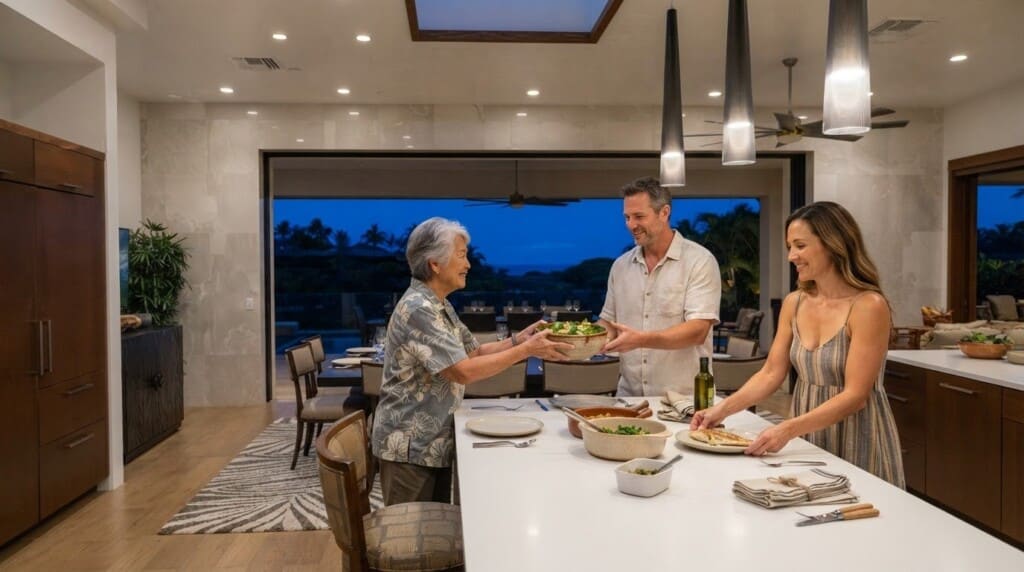

To learn how to make a family reunion feel like a vacation, start with spacious accommodations, a flexible itinerary, and a simple plan for meals and shared tasks. Choose a place where everyone can gather comfortably, then leave room for quiet mornings, spontaneous swims, and unhurried time together.
A reunion can quickly become a list of errands when one person handles the planning, cooking, and activity schedule. Share responsibilities, plan meals around the group, and choose amenities that make it easy to relax. This guide shows how to shape a reunion around comfort, from choosing a welcoming place to stay and dividing practical tasks to enjoying a pool, game room, or outdoor setting. The aim is not to fill every hour, but to create a gathering that feels easy, generous, and restorative.
Key Takeaways
- Balance shared plans with open time so relatives can enjoy activities at their own pace.
- Choose accommodations with room to gather and places to retreat for a quieter moment.
- Make meals easier by planning around dietary needs and sharing cooking responsibilities.
- Assign planning tasks across the family to keep one person from carrying the whole reunion.
- Use amenities such as a pool, game room, or beach access to make downtime part of the experience.
1. How Do I Even Begin to Plan a Family Reunion?
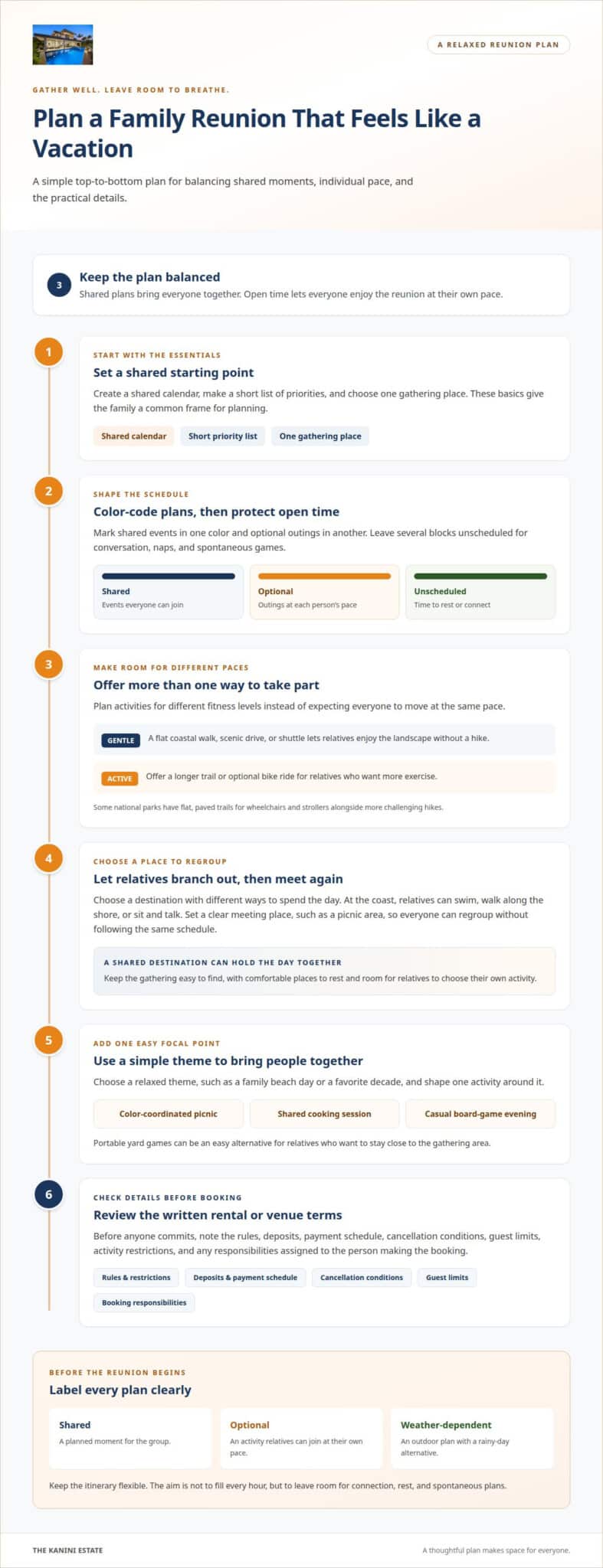
Begin with a shared calendar, a short list of priorities, and one gathering place. To plan a reunion that feels like a vacation, balance group meals and activities with open time for independent plans. A color-coded itinerary can help: mark shared events in one color, optional outings in another, and leave several blocks unscheduled. This is a practical first step in deciding how to make a family reunion feel like a vacation.
Plan activities for different fitness levels instead of expecting every relative to keep the same pace. For a coastal walk, choose a flat route for grandparents and young children, then offer a longer trail for those who want more exercise. Some national parks have flat, paved trails for wheelchairs and strollers alongside more challenging hikes. A scenic drive or shuttle can also let relatives enjoy the landscape without hiking.
Before anyone commits, read the written rental or venue terms for rules, deposits, cancellation policies, and liability. Note the payment schedule, cancellation conditions, guest limits, activity restrictions, and any responsibilities assigned to the person making the booking.
Choose a beach with more than one way to spend the afternoon. Look for a stretch of coast where relatives can swim, walk along the shore, or sit and talk. If relatives prefer different activities, set a clear meeting place, such as a picnic area, so everyone can regroup without following the same schedule. A shared destination can hold the day together while leaving room for individual choices.
Outdoor plans can connect generations without requiring everyone to have the same energy. Pair a gentle garden visit or beach stroll with an optional bike ride, then meet for a shared snack. For a reunion with four generations, include comfortable places to rest and make the main gathering easy to find. This structure encourages bonding while letting relatives choose their own pace.
Give the reunion a simple theme, such as a family beach day or a favorite decade, and use it to shape one relaxed activity. A color-coordinated picnic, shared cooking session, or casual board-game evening creates a focal point without filling the itinerary. Pack portable yard games as an easy alternative for relatives who want to stay close to the gathering area.
Before booking activities, label each plan as shared, optional, or weather-dependent. Keep a rainy-day alternative for outdoor meals, and leave unscheduled time for conversation, naps, and spontaneous games. For families wondering how to make a family reunion feel like a vacation, this flexible approach makes room for both connection and rest.
2. Choosing spacious vacation rental accommodations
Choose a rental based on how your family will use it, not appearance alone. Start with a headcount, then consider parents traveling with young children, relatives who need quiet, and family members who enjoy gathering late. Look for spaces that support both shared time and privacy: a large dining area, comfortable seating, and quiet corners can make a stay feel less crowded. A common room should welcome everyone without making togetherness mandatory every hour.
Next, match the destination to the kind of reunion you want. A beach suits families who enjoy shoreline walks and relaxed afternoons. A national park can offer scenic drives, accessible trails, and more demanding hikes in one setting. A group of cabins in a state park can keep relatives close while giving each household a separate place to rest. For a slower stay, prioritize a peaceful setting and a short list of nearby activities rather than a packed schedule.
Ski towns can offer a different atmosphere outside their busiest season. In summer, they’re often less expensive and less crowded than during peak ski periods. That can suit families who want mountain scenery, outdoor time, and a calmer pace. Compare the season with your group’s interests: parents may prefer easy access to shops and gentle walks, while active relatives may value nearby trails or cycling.
Set the reunion date by working backward from the destination and the family calendar. Ask households to share their available travel windows before choosing a week. Then compare likely weather, seasonal activities, travel time, and rental options for each date. For a popular summer destination, start comparing rentals well ahead of the trip. Early planning gives family members more room to coordinate schedules and choose accommodations that fit.
Before reserving, map the rental’s spaces against a typical day. Picture breakfast, a rainy afternoon, and a quiet evening. Ask whether the layout supports those moments without crowding one room. A spacious vacation rental for a family gathering can provide a setting for relatives to settle in, reconnect, and enjoy time together.
Finally, compare the overall travel experience, not just the rental. A remote cabin may offer solitude but require more driving for groceries or outings. A beach rental may put the shoreline close by and draw the group outdoors. Write down what matters most, such as separate spaces, shared meals, or easy access to nature, then use that list to choose a destination and rental suited to your family’s rhythm.
3. Coordinating meals, allergies, and dietary needs
Start the meal plan with a short list of each household’s dietary needs, favorite dishes, and food allergies. Ask members to share ingredients they avoid and any concerns about food preparation or serving. Then build a menu with clear options, such as a vegetarian main dish alongside grilled fish, and label shared dishes with their ingredients. This gives relatives useful information before they sit down.
Give each family a dinner night so cooking doesn’t fall to one person. One household can prepare a favorite recipe, while another handles a fresh salad or dessert. For a summer reunion, plan lighter meals for warm afternoons, such as fruit, sandwiches, or grilled vegetables. Families can also prepare sauces, baked dishes, or chili before traveling, then reheat them during the stay.
Make the shared kitchen easier to use by assigning a cook, a helper, and someone to serve each meal. Set out ingredients before cooking begins, and keep allergy-aware dishes separate from shared serving utensils. Check the rental’s kitchen setup and dishwasher, then plan simple cleanup tasks. A clear routine keeps meal preparation from taking over time relatives could spend together.
Grocery shopping works best with one list and one coordinator. Divide it into breakfast staples, lunch supplies, dinner ingredients, snacks, and drinks. One household can shop for pantry basics, while another brings ingredients for its assigned meal. If everyone contributes to a shared grocery fund, agree on what it covers, such as breakfast, lunch, and staples, before anyone shops.
A potluck brings family traditions to the table without asking one cook to make every dish. Invite each household to bring a favorite recipe, and note who is bringing the main course, sides, and dessert. A recipe swap adds a keepsake: guests can share the recipe beside each dish or send copies afterward. Coordinate the menu so the table has variety without several families bringing the same item.
Set a shared evening meal as a daily anchor, while keeping daytime meals flexible. For example, one home can serve breakfast and lunch, while another hosts dinner. This arrangement spreads kitchen use across spaces and gives relatives a natural gathering point. If the rental has several bathrooms, account for bathroom access in the schedule for large gatherings, especially before everyone leaves for an outing.
Finally, invite relatives with additional health or social-distancing concerns to share their preferences early. Offer a quieter place to eat or a separate serving option if that would help them feel comfortable. Clear roles, labeled food, and a realistic menu make cooking a shared part of the reunion rather than another task one person must manage.
4. Planning early and dividing responsibilities
Start with a shared planning document and one family coordinator. Ask each household to name a contact, preferred dates, and key needs. For example, one relative can track travel, while another manages meals and grocery shopping. A third can compare rental layouts, including sleeping arrangements, shared spaces, and bathroom access. Clear roles prevent one person from arranging every detail.
Begin preparations well ahead of the reunion, especially when relatives need to coordinate work schedules, school calendars, and travel plans. Ask households to share possible dates before choosing a week. Then compare those windows with seasonal activities, expected weather, and rental options. Early planning gives family members more time to discuss lodging preferences and comfort levels before settling on a destination.
Choose dates by weighing the destination’s busiest periods against the group’s priorities. Ski towns, for example, are often less expensive and less crowded in summer than during their busier seasons. A summer stay may suit relatives who want mountain scenery and outdoor time, while another season may better fit families drawn to winter activities. Compare the likely pace and interests before selecting dates.
Divide the work into manageable tasks, with a named owner and a clear deadline for each. One person can coordinate travel arrivals; another can organize shared activities. Assign each household a specific contribution, such as preparing a meal, bringing games, or handling a supply run. Keep the list visible to everyone, and give relatives a simple way to report changes without starting a long group conversation.
Set a per-person budget before adding costly outings to the schedule. List shared expenses, such as lodging, groceries, transport, and planned activities, then let households discuss what feels comfortable. Use that figure to decide whether the reunion needs paid excursions or can center on cooking together, nature walks, and time at the rental. A written plan reduces surprises and helps everyone make informed choices.
Keep the itinerary flexible once essential bookings are set. Mark fixed events, such as arrival, a shared dinner, or a planned outing, then leave open blocks for rest and spontaneous plans. Keep weather-dependent activities tentative until closer to the trip. This gives relatives structure without making every morning, meal, and evening feel like an obligation.
Finally, use a short check-in schedule instead of constant planning messages. A regular update can cover dates, lodging, and major travel decisions; later updates can focus on shopping lists and arrival details. End each check-in with a concise task list, so everyone knows what remains and can turn their attention back to the reunion.
5. Vacation rental amenities for family gatherings
Choose amenities that make it easier to gather and to take a pause. A pool can bring relatives together between outings, while a game room offers a relaxed option after dinner. Beach access lets the group enjoy the coast without building every day around a long drive. The best features support how your family wants to spend its time, rather than adding more activities to manage.
Picture a typical day before comparing vacation rental amenities: a slow morning, a warm afternoon, and an evening when relatives want different things. A hot tub can suit a quiet end to the day; a gym gives active guests a place to move. Grandparents or younger relatives may prefer a shaded spot to talk or a game everyone can enjoy. A range of options lets each person shape their own downtime.
Outdoor features can make shared time feel natural. A poolside gathering might bring relatives together after a beach walk, while a game room gives the family another place to meet when everyone returns indoors. Direct beach access makes a shoreline stroll easy. Ocean, sunrise, and sunset views can lend a meal or conversation a sense of place without requiring a formal event.
For a large reunion, consider how amenities work together, not just how impressive each feature sounds. A pool, hot tub, gym, game room, and beach access suit different moods and energy levels. That range helps relatives choose between lively group time and quieter moments. A gated community also shapes the setting, so consider how privacy and the surroundings fit your group’s plans.
Vacation rental costs vary with factors such as travel dates, length of stay, location, and amenities. For a specific property, pricing is provided after a quote request. Compare the features with the way your family will use them: a game room may matter more during a rainy afternoon, while beach access may be central to a coastal reunion.
Make a short amenity list before booking. Mark each feature as essential, useful, or simply appealing, then discuss it with the group. For example, if relatives value swimming and games, a private pool and game room could support relaxed time together. If ocean views and coastal outings matter most, prioritize a setting with beach access and space to linger after a day outside.
For a family reunion on Hawaii’s Kohala Coast, explore a vacation rental with a private pool, game room, and beach access. Match these amenities to the moments your family hopes to share, from an easy afternoon swim to a quiet sunset gathering.
The Kanini Estate: Luxury vacation rental on the big island of Hawaii
The Kanini Estate is a luxury vacation rental in the gated, oceanfront community of Naupaka at Waikoloa on the Big Island of Hawaii. It gives family members space to step away from daily routines and spend meaningful time together, with room to gather and enjoy an unhurried stay.
For families, the setting can help turn shared meals, quiet mornings, and time together into the heart of the reunion. The estate also offers a high-quality, distraction-free environment for corporate retreats, suited to groups who want focused time away from everyday demands.
If a Hawaii gathering fits your plans, contact The Kanini Estate to discuss your reunion and request a booking.
Let the Next Reunion Begin Somewhere Inspiring
A family gathering can be a reason to step away from familiar routines and experience a place together. The answer to how to make a family reunion feel like a vacation is not to fill every moment, but to give your family a beautiful setting and time to enjoy it in their own way.
The Kanini Estate brings that possibility to the Big Island of Hawaii with a luxury vacation rental designed for time with friends and family. It offers an escape to paradise, where ocean views, changing light, and shared moments can shape the memory of your stay. Picture relatives arriving with room to settle in, reconnect, and enjoy the island at an unhurried pace.
If Hawaii feels right for your next gathering, contact The Kanini Estate to start a conversation about your family’s stay. A memorable reunion can begin with choosing a place that invites everyone to slow down and be together.
Frequently Asked Questions
How Do I Even Begin to Plan a Family Reunion?
Begin by asking each household to name its most important reunion priority. One family may want beach time, while another values relaxed evenings and conversation. Use those answers to choose a destination and set a date that works for the group. Then appoint a coordinator to keep decisions in one shared document, so relatives can see what’s settled and where their input is still needed.
What Is an Ideal Budget for a Family Reunion?
An ideal budget is one relatives can agree on before making shared commitments. Start by listing the major expenses, such as travel, lodging, meals, transportation, and optional outings. Separate shared costs from personal spending, then decide which activities matter most to the group. For example, families may prioritize a comfortable place to stay and keep the activity plan simple. Clear expectations help each household decide what works for them.
How Do You Choose a Family Reunion Destination Based on Budget and Travel Time?
Choose a destination by comparing each household’s travel time with the group’s shared priorities. A nearby lake or beach may reduce travel demands, while a farther destination can feel worthwhile if relatives want a distinct getaway. Compare the full trip, including transportation, lodging, meals, and local travel. A destination with groceries and activities close by may simplify the stay, especially for families arriving on different schedules.
What Are Family Reunion Itinerary Ideas With Free Time and Group Activities?
Build an itinerary around one shared anchor each day, then let relatives choose how to spend the remaining time. For example, plan a group breakfast, leave the afternoon open, and gather for a casual game or meal later. A beach walk, family recipe exchange, or board-game evening can welcome different ages without requiring everyone to join every activity. Keep an indoor option ready for rainy weather.
How Do You Make a Family Reunion Relaxing Instead of Overplanned?
Make the reunion relaxing by treating the itinerary as a guide, not a list everyone must complete. Choose only the activities that matter most to the group, and let relatives skip plans without explanation. Avoid making every meal and outing a formal event. For instance, designate one evening for a shared dinner, then leave other evenings open for small groups, quiet time, or spontaneous conversation.
What Are Family Reunion Travel Tips for Grandparents, Children, and People With Mobility Needs?
Plan travel and activities around comfort, access, and different energy levels. Share key details in advance, such as walking distances, transport options, and places to rest. Some national parks offer flat, paved trails that can suit wheelchairs and strollers alongside more challenging routes. Set a meeting point so relatives can take different paths and still reconnect. Include snacks, water, and downtime in the day’s plan.
How to split vacation rental and meal costs fairly among family members
Assign each family a dinner night to share meal preparation.