


A private estate buyout in Hawaii lets an estate’s authorized representative negotiate a direct sale of agreed items to a buyer, rather than selling them one by one. It can simplify the process, while an estate sale, auction, or consignment may suit items that benefit from individual selling. The right choice depends on what’s being sold and who has authority to approve it.
Sorting a home filled with family possessions can be both practical and personal. Before deciding how to handle cherished pieces, everyday furnishings, and clearing the property, it helps to understand the available options.
This guide compares buyouts with sales, auctions, and consignment, explains what to settle before committing, and shows how to establish who can authorize a sale. Use it to weigh the trade-offs and choose a next step that fits the estate.
Key Takeaways
- Compare a direct buyout with an estate sale, auction, or consignment by weighing speed, effort, and how items will be sold.
- Before any sale moves forward, establish who has legal authority to act for the estate and approve the transaction.
- Understand how the estate’s contents, property condition, and agreed terms can shape the costs of a buyout.
- Account for property taxes and closing costs when assessing the estate’s overall financial picture.
- Move through a purchase methodically, from confirming authority and reviewing the property to documenting terms and completing closing steps.
Choosing between a sale, auction, consignment, and buyout
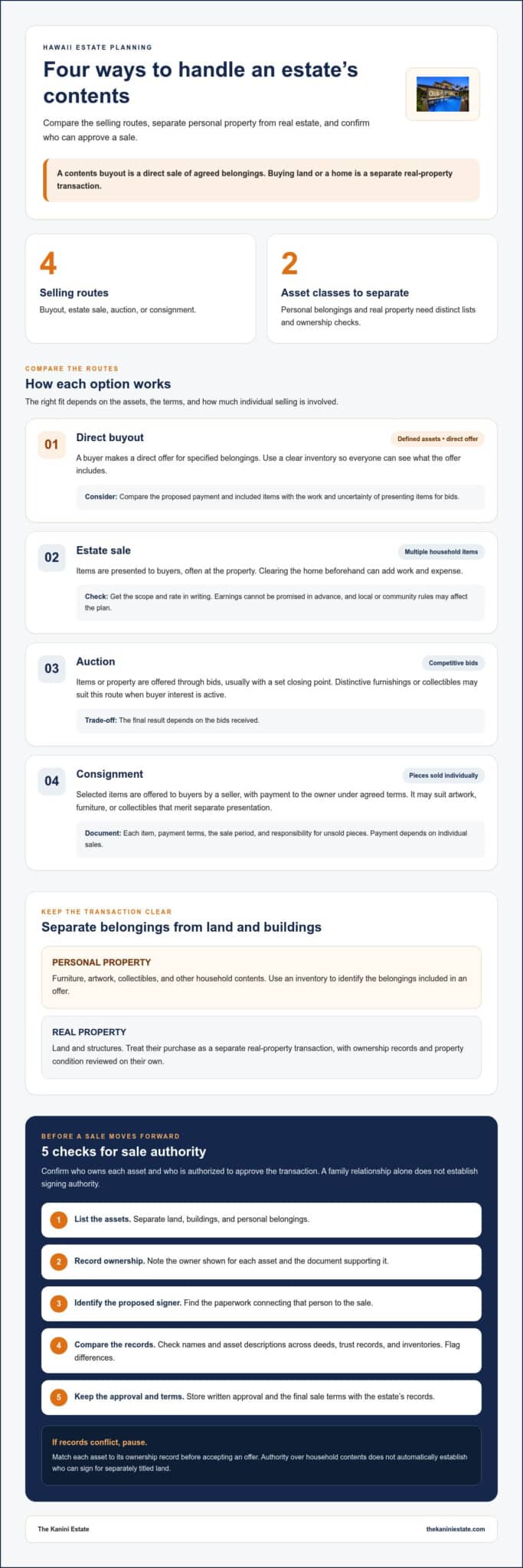
A private estate buyout can cover selected belongings sold directly to a buyer, while purchasing an estate’s land or home remains a separate real-property transaction. Start by listing the assets involved, such as furniture, artwork, buildings, or land. A clear inventory defines what each offer includes and keeps personal property distinct from real estate.
An estate sale presents multiple household items to buyers, often at the property. Clearing the home beforehand can add work and expense, and local or community rules may affect the plan. Before committing, get the scope and rate in writing. Because a sale company cannot promise the estate’s earnings in advance, compare the written terms rather than relying on projected proceeds.
An auction offers items or property through competitive bids, usually with a set closing point. It may suit assets that attract active buyer interest, such as distinctive furnishings or collectibles, but the final result depends on the bids. A buyout starts with a direct offer for defined assets. Compare the proposed payment and included items with the uncertainty and work of presenting them for bids.
Consignment gives selected pieces an individual selling path. The owner places items with a seller, who offers them to buyers and pays the owner under agreed terms. It may suit artwork, furniture, or collectibles that merit separate presentation. Before consigning, document each item, payment terms, the sale period, and responsibility for unsold pieces. Unlike a buyout, payment depends on individual sales.
How does buying a private estate compare with purchasing a large ranch or luxury home? A contents buyout concerns personal property, while a ranch or home purchase concerns land and structures. For example, a property may include several parcels or buildings, so its assessment goes far beyond a standard household inventory.
What due diligence is needed before acquiring a major estate property? Match the asset list to ownership records, inspect the physical condition, and thoroughly document included items. For waterfront or rural land, always assess regional environmental factors, terrain conditions, and local zoning considerations before making a final decision.
What risks come with buying private estate land, including access and utilities? Unclear access, limited utility connections, and environmental hazards can affect use and maintenance. As part of the site assessment, review the parcel’s access route, utility arrangements, and surrounding geography carefully.
Choose the method that fits the assets and your priorities. A buyout offers a direct transaction for specified items through trusted providers like The Kanini Estate; an estate sale puts household goods before shoppers; an auction invites bids; and consignment sells pieces individually. Assess land or buildings separately from the contents. A written list of assets and terms makes the options easier to compare.
Establishing who has authority to sell
Before discussing a buyout, identify the owner and the person authorized to sign. Start with the deed for real property or an inventory for household contents. Then compare the owner’s name with the documents that support the proposed seller’s authority. A family relationship alone does not establish signing authority.
If the owner is living, ask them to participate in the decision or identify the document authorizing someone else to act. A relative handling calls and sorting furniture, for example, may not have the same authority as the person named on ownership records. Keep relevant records together and note which assets each document covers.
If an owner has died, gather the will, any trust documents, and paperwork showing who is handling the estate. These records can identify the person responsible for decisions, though their roles and scope may differ. Authority over household furnishings, for example, may not automatically establish who can sign for land titled separately. Match each asset to its ownership record before accepting an offer.
For co-owned property, identify every person or entity named in the ownership records. Ask each listed owner to review the proposed sale and clarify who will sign. If a trust or company holds title, locate its governing documents and identify the person authorized to act. One relative’s agreement does not stand for approval from every listed owner.
Use a short document review before negotiations move forward:
- List the assets proposed for sale, separating land, buildings, and personal belongings.
- Record the owner shown for each asset and the document that supports that entry.
- Identify the proposed signer and the paperwork connecting that person to the sale.
- Compare names and asset descriptions across the records; flag differences for resolution.
- Keep written approval and the final sale terms with the estate’s records.
For example, a home deed might name two siblings, while a third sibling holds the furniture inventory. The inventory alone does not show that the third sibling can sign for the home. Keep the real estate and contents decisions separate until the records establish who may act for each.
Before accepting a private estate buyout in Hawaii, make sure the offer identifies the assets, authorized seller, and agreed terms. A mismatch between a deed, trust record, or inventory can delay signing or leave items outside the transaction. If documents conflict, pause the sale discussion until the authority and asset list align. This keeps the proposed sale tied to the right owner and property.
How much does it cost to buy out a private estate in Hawaii?
There’s no single amount for buying an estate. The cost depends on whether the transaction covers belongings, real property, or both. For belongings, value often depends on condition, maker, age, completeness, and buyer demand. A matched furniture set, for example, may be assessed differently from a mixed group of visibly worn pieces.
For land or a home, the agreed purchase amount reflects the specific property and its features. That figure illustrates one property listing, not a standard price for estates or a guide to another property’s value.
Separate the buyer’s total outlay from the seller’s net proceeds. The purchase amount may not capture every expense involved in taking ownership, while the estate’s proceeds depend on agreed deductions and responsibilities. Keep the calculations distinct to compare an offer for contents with a proposal involving land or buildings.
Before reviewing an offer, create an item-level record. Note each item’s condition, maker or identifying marks, completeness, and whether it belongs to the estate. For property, record features relevant to the buyer’s intended use, such as buildings, parcel layout, and access. A precise record helps both sides understand what the proposed amount covers.
Use this worksheet to organize the comparison:
- Separate personal belongings from land and structures.
- Group similar belongings, but identify unusual or distinctive pieces individually.
- Record visible condition and any missing parts that may affect buyer interest.
- For real property, list buildings, parcel details, and features relevant to intended use.
- Compare the offer with the exact assets and responsibilities named in the proposed terms.
For example, an estate may contain a complete dining set, separate chairs, and artwork. The offer should state whether it covers each group or only selected pieces. If the transaction also includes a home, identify it separately. This prevents a single total from obscuring which assets determine the amount.
When comparing offers, focus on the assets included and the obligations attached to the transaction. A private purchase offer and an auction result may cover different items or responsibilities. Compare like with like, then assess whether the arrangement fits the estate’s priorities. For a Hawaii estate involving real property, review property taxes and closing costs separately from the purchase amount, since they affect the final financial picture.
Consider costs and preparation needs alongside the proposed amount. Preparing a home for a Hawaii estate sale can cost money. Include that work when calculating what the estate must pay before the transaction, and clarify whether the buyer or seller is responsible for arranging it. Keep the property amount separate from preparation expenses. Ask the offer to identify what is included and what remains the estate’s responsibility. This gives you a more useful comparison than the purchase amount alone.
How do Hawaii property taxes and closing costs affect an estate buyout?
First, distinguish a buyout of household belongings from a real-property purchase. If a buyer takes furniture only, the home’s property tax account is not part of that contents transaction. If the estate sells land or a home, review property taxes and closing costs alongside the agreed purchase terms.
For real property, request the parcel details and the latest available tax statement. Compare the property description with the sale documents, then identify any unpaid balance or payment due. This helps the estate and buyer account for tax obligations in the settlement instead of overlooking them during negotiations.
Property taxes also affect the estate’s net proceeds after the transfer. The amount depends on the property’s tax account and the period covered by the bill. The agreement can explain how the parties will handle any amount covering time before and after closing. Put that allocation in writing rather than relying on an informal estimate.
Closing costs are separate from the purchase amount. They may include charges for preparing, reviewing, and recording the transfer, as well as services needed to complete the transaction. The agreement should identify which party pays each item and how the charges appear in the final settlement statement. This breakdown clarifies the estate’s expected net amount.
Use this review before signing:
- Match the parcel description in the sale papers to the property records.
- Review the latest tax statement and note balances or payment periods shown.
- Ask for a written estimate of transaction charges and who will pay them.
- Read the settlement statement and compare each tax or cost entry with the agreement.
- Keep the final documents with the estate’s records after closing.
For example, if an estate sells a home while a tax bill covers a period that crosses the closing date, the written agreement can state how the parties will allocate that amount. A separate sale of household contents should list those items and terms independently. Keeping the transactions distinct prevents a furniture offer from being confused with property taxes or real-estate closing expenses.
When reviewing an estate buyout, focus on what the estate receives after agreed charges, not just the headline purchase figure. Ask for each tax balance, closing expense, and responsibility to appear as a separate line. If a document uses a broad label such as “closing costs,” request an itemized explanation in the transaction paperwork. A clear ledger helps the authorized seller compare terms and understand the proceeds before signing.
paperwork. Separately, the owner of Hawaiʻi Island Retreat received planning-authority approval to expand the property to a total of up to 36 rooms. Keep that planning approval distinct from the records used to assess an estate buyout: the tax statement, written allocation of any tax balance, itemized closing charges, and final settlement statement remain the documents to review for the transfer. The approval describes an expansion allowance, while the buyout accounting should continue to identify the transaction’s tax and cost entries individually, so the estate can see how each agreed amount affects its proceeds.
What are the steps to purchase a private estate in Hawaii?
Buying an estate takes careful review before an offer becomes a completed purchase. Begin by defining the assets, then assess ownership, condition, and practical use. Keep land, buildings, and belongings distinct in your notes. If furnishings are part of the proposed deal, for example, list them separately from the home and parcel.
- Define what you intend to purchase. Decide whether the offer covers land, a home, personal belongings, or a combination. Record included structures and items, plus any exclusions. This gives both sides a shared description of the transaction.
- Review ownership information. Compare the seller’s name with records for the property and its parcel description. If records show multiple owners or a trust, identify who can sign. Keep the relevant documents together.
- Inspect the site and buildings. Walk the property where possible and note visible condition, boundaries, access routes, and utility connections. Record questions about repairs or maintenance so they can inform the offer terms.
- Consider how the property will function. Assess access, utilities, parcel layout, and upkeep against your intended use. A large acreage figure alone won’t show the practical work of managing the property.
- Prepare written purchase terms. State the proposed amount, included assets, exclusions, responsibilities, and important dates. If belongings are included, attach a clear inventory rather than relying on a general description.
- Account for transaction expenses. Review property-related taxes and closing charges separately from the purchase amount. Make sure the agreement explains which party is responsible for each listed expense.
- Review final documents. Before completing the transfer, compare the final paperwork with the agreed asset list and terms. Keep signed documents and payment records together for future reference.
If a property includes several structures and a separate group of furnishings, assess each part on its own. Note which buildings and items are included, and ensure the final terms reflect that list. This prevents an informal discussion from becoming the only record of what the buyer expects to receive.
If you’re considering a visit as you explore your plans, you can experience a private vacation stay and reflect on what setting feels right for you. A stay can help clarify lifestyle preferences, while property-specific due diligence remains essential to a purchase decision.
The Kanini Estate: Luxury vacation rental on the big island of Hawaii
The Kanini Estate offers a different way to experience Hawaii: a luxury vacation rental for time with friends and family, an escape to paradise, or a corporate retreat with space for focused thinking. After weighing an estate purchase, a stay lets you enjoy Hawaii without committing to a property-buying decision.
For a gathering with loved ones, enjoy unhurried island days together. For a work retreat, choose a setting designed to support distraction-free thinking. The right fit depends on whether you want a place to stay or are ready to pursue property ownership. These are distinct paths, each serving a different purpose.
If a restorative stay on the Big Island suits your plans, visit thekaniniestate.com to learn more.
Choose the next step that fits your plans
A property decision can take time, especially when it involves family history, shared ownership, or a future move. Give yourself room to separate the practical decision from the life you hope to build in Hawaii. If you’re considering a private estate buyout in Hawaii, start with the assets and the outcome you want, then move forward deliberately.
Ownership is only one way to experience the islands. A visit can offer space to reconnect with loved ones and enjoy the landscape while you consider what comes next. The Kanini Estate welcomes guests seeking time together and an island escape, with a setting shaped by the ocean, sunrise, and sunset.
If a stay on the Big Island feels like the right next chapter, explore a stay at The Kanini Estate. Let your next step begin with a little room to breathe.
Frequently Asked Questions
What does a private estate buyout in Hawaii mean?
It usually means a buyer offers to purchase a defined group of estate assets in one transaction. The written agreement should clarify whether it covers household belongings, real property, or both. An offer for furniture and artwork, for example, does not automatically include the home or land. Treat “buyout” as a description of the proposed sale, then use the asset list and signed terms to establish exactly what changes hands.