


The lowest rate on the screen may not lead to the stay that feels right. The pros and cons of VRBO vs direct booking go beyond price: payment steps, cancellation terms, and support if plans change can shape your experience just as much.
VRBO offers a familiar marketplace for browsing vacation rentals. Direct booking means reserving through the property’s own channel. Neither route guarantees a lower total or better terms, so compare the full reservation details, not just the headline rate.
This guide explains how the two booking paths can differ, what to compare before paying, and how to choose the option that fits your group and plans. Whether you’re gathering family and friends or planning a focused retreat, checking the details up front can help you feel confident about the stay you’re reserving.
Key Takeaways
- Understand how a VRBO reservation differs from booking through a property’s own channel.
- Compare the full reservation, not just the first price you see.
- Review the property details, payment steps, communication process, and cancellation terms side by side.
- Use a simple checklist to match the booking path with your priorities and travel plans.
- See how a full-property stay at The Kanini Estate can suit groups and professional retreats.
VRBO vs. Direct Booking: What Each Option Means for Vacation Guests
A vacation rental may look much the same whether you find it on a marketplace or on the property’s own website. What changes is where you review the listing and whose reservation process you use. The channel alone doesn’t tell you what the stay includes or what happens if your plans change.
In brief: A VRBO reservation is made through a vacation-rental marketplace. A direct booking is made through the property’s own booking channel. Either way, read the property details and the terms shown for your specific reservation before paying.
What happens when you book through VRBO?
You search for a rental on VRBO, compare listings, and follow the platform’s reservation steps. Depending on the listing, you may submit a booking request or reserve the stay. The marketplace brings rental discovery and booking together in one place. For background on the marketplace, its history, and its business model, see the Vrbo Wikipedia page.
Before you proceed, check the listing description, dates, total shown at checkout, payment steps, and cancellation conditions. These details can vary by property. Don’t assume all listings use the same rules or offer the same support.
What happens when you book directly?
With direct booking, you reserve through the property’s own channel, such as its booking website. You select the stay and follow the payment and confirmation steps shown there. Since the process may differ from a marketplace, read the information on the property’s channel before submitting your reservation.
Review the property’s terms, payment instructions, cancellation conditions, and confirmation details. Direct booking describes where you reserve. It does not guarantee a lower total or more flexible terms. Those depend on the property and the conditions shown for your stay.
For a fair comparison, treat the channel as the route to the reservation and the property’s stated terms as the guide to the stay. Check the same details in each place:
- The property description and what the stay includes.
- The complete amount shown before booking, including any listed charges.
- Payment steps, cancellation terms, and the reservation confirmation.
A full-property estate stay, for example, is more than a set of appealing photos. The setting, included amenities, and conditions attached to your dates all shape the experience. When weighing the pros and cons of VRBO vs direct booking, separate what appeals to you about the property from how you reserve it. This makes the decision clearer, whether you prefer browsing a marketplace or booking through the property itself.
How the VRBO and Direct-Booking Guest Experience Can Differ
The differences become clearer as you move from browsing to confirmation. A marketplace brings listings together, while a property’s own website focuses on that property and its booking process. Neither path guarantees a particular level of service. The experience depends on the property’s stated process and the terms for your reservation.
Discovery, property details, and communication
A marketplace such as VRBO lets you browse multiple rentals in one place, compare photos, and narrow your search using the information in each listing. A property’s own website presents its rental through its own channel. Page layouts and detail can vary, so compare the information itself, not just how polished a page looks.
Review the same points on each channel: the property description, amenities, house rules, dates, and stay terms. If you have a question before booking, note how the channel says to send it and whether it explains how communication works. Don’t assume every host or property follows the same process.
Payment, confirmation, and support expectations
Most reservation journeys involve choosing dates, entering guest details, reviewing terms, submitting the booking, and receiving confirmation. The exact steps vary. Before committing, read the payment instructions and cancellation conditions shown for that reservation. Keep the confirmation and relevant messages together so you can refer to the terms you accepted.
Support also depends on the channel’s stated process and the property’s terms. Check where reservation questions should go and what information is provided if plans change. Don’t rely on general assumptions about payment handling, cancellation support, or platform policies. Read the current terms displayed for the specific booking. If you need information about local rental rules, use official guidance relevant to the destination.
| Reservation detail | On VRBO | On the property’s site |
|---|---|---|
| Discovery | Compare listings within the marketplace. | Review the property’s own presentation. |
| Property details | Read the listing description, amenities, and rules. | Review the property details and displayed stay terms. |
| Questions | Use the communication path shown for the listing. | Follow the contact process provided on the booking channel. |
| Payment and confirmation | Follow the steps and terms shown during reservation. | Follow the property channel’s payment and confirmation instructions. |
When comparing the pros and cons of VRBO vs direct booking, look at the full journey from first details to confirmation. Don’t expect every property to follow the same process. If a complete private-property experience is part of your decision, you can explore The Kanini Estate’s full-property stay alongside the reservation details.
VRBO vs. Direct Booking Pros and Cons: A Side-by-Side Comparison
Each route offers a different kind of convenience. A marketplace makes it easy to scan several stays together, while a property’s own booking channel keeps the details focused on one place. Neither route is automatically the better value or safer choice. The right fit depends on the property, its terms, and what matters most to you.
Potential advantages and drawbacks of booking through VRBO
VRBO’s marketplace can help you compare properties without moving between separate websites. That’s useful when you’re choosing a setting or narrowing down options. The trade-off is that you still need to understand the terms and steps for the specific listing. Before paying, read the full reservation information rather than assuming every stay follows the same process.
Potential advantages and drawbacks of booking directly
A direct reservation puts the property’s own information and booking steps at the center of your decision. This can be helpful when you’re assessing whether a particular stay fits your plans. Still, direct booking doesn’t guarantee a lower total or more flexible terms. The property’s stated conditions determine what applies, so review them closely.
| What to compare | VRBO: potential advantage and consideration | Direct: potential advantage and consideration |
|---|---|---|
| Discovery | Browse multiple rentals in one marketplace. Compare each listing carefully, since options and details vary. | Focus on one property’s own presentation. You may need to visit separate sites to compare other stays. |
| Property information | Review the listing’s description, amenities, and rules. Confirm the details that matter for your group. | Read the property’s own description and stay information. Check that key details are clear for your plans. |
| Communication | Use the communication process shown for the listing. Note where questions and reservation messages go. | Follow the property’s stated contact process. Don’t assume response methods or timing are the same everywhere. |
| Booking terms | Review the platform and listing terms shown before payment, including cancellation conditions. | Read the property’s own payment and cancellation terms before submitting the reservation. |
Use the table as a comparison guide, not a guarantee about every booking. The pros and cons of VRBO vs direct booking depend on the property and the terms attached to your dates. If convenient browsing matters most, a marketplace may suit your search. If you want to understand one property as a whole, its own booking channel may feel more direct. Compare the complete reservation details, then choose the path that gives you the clearest picture of the stay.
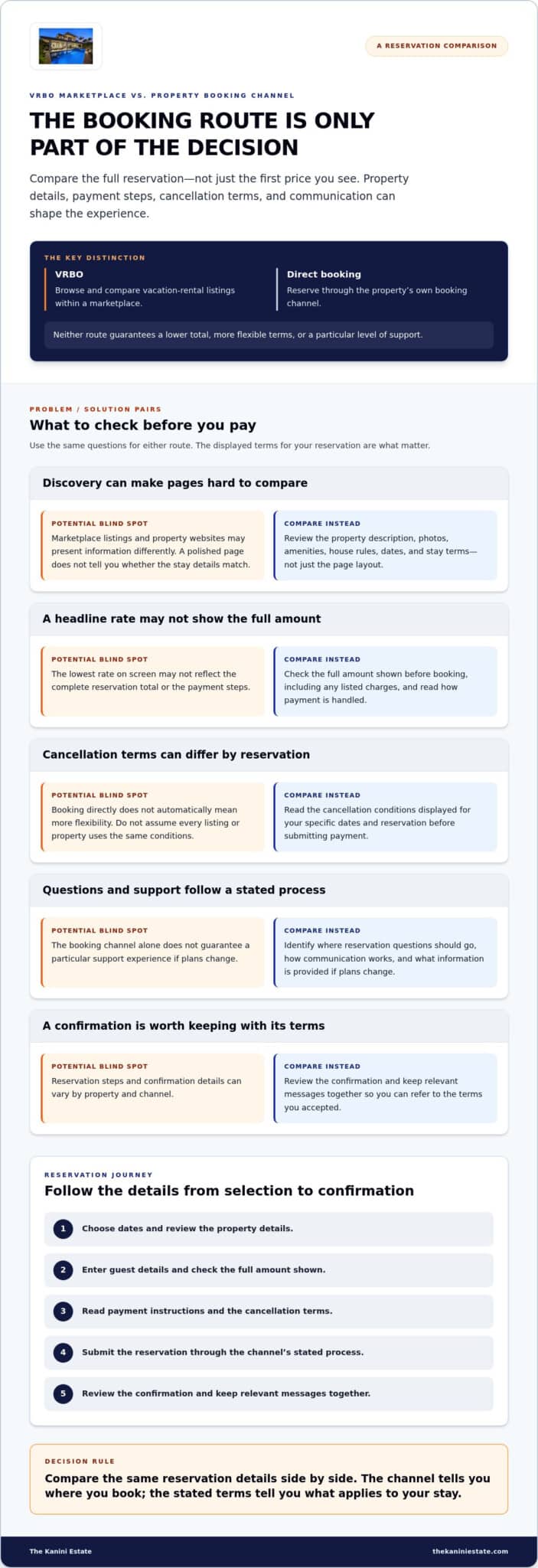
How to Decide Between VRBO and Direct Booking for Your Stay
Start with the stay, not the channel logo or the first price you see. Identify what your group needs, then compare the same reservation details wherever the property appears. A useful rule is simple: choose the channel whose terms and reservation steps you understand.
This approach also helps you find a property that suits the way you want to spend your time. For a broader look at selecting a private retreat, see Luxury Vacation Homes: The 2026 Guide to Selecting a Private Sanctuary.
A five-step booking-channel checklist
- Start with the property. Make sure the listing describes the kind of stay your group needs, including the amenities and setting that matter most.
- Compare the complete reservation details. Use the same dates and guest details on each channel. Compare the total shown before payment, any listed fees, and the cancellation terms.
- Review the payment steps. Read how the reservation asks you to pay and when payment is due. Follow the instructions shown for that specific booking.
- Understand communication and confirmation. Note where questions go and how the reservation confirmation is provided. Keep the process clear for everyone helping plan the trip.
- Choose the path that feels clear. Consider your priorities, the property’s stated terms, and how comfortable you are with the steps required to reserve.
For example, a group planning a shared stay may care most about whether the property description explains how the whole space and its amenities fit their plans. A traveler focused on quick comparison may prefer browsing several listings together. Let those priorities guide your decision instead of assuming one channel is always better.
Questions to resolve before you reserve
Before submitting payment, make sure the essentials are clear. If a displayed term is unclear, use the communication process shown for the reservation to resolve that point before you commit.
- What does the displayed total include, and are any charges shown separately?
- What conditions apply to payment, cancellation, or changes to the reservation?
- Where should you direct questions about the booking or the property?
- How will you receive confirmation, and what details should it contain?
Save a copy of the listing or property details, the reservation confirmation, and relevant communication. This gives your group a shared reference if plans need to be revisited and helps everyone stay aligned on what was reserved.
Use the same careful approach to explore a full-property stay at view The Kanini Estate for your group’s stay, with its private pool, hot tub, full gym, game room, ocean views, and direct beach access.
A Direct Estate Stay: Applying the Comparison to The Kanini Estate
Booking-channel comparisons are easier to apply when you picture the stay itself. The Kanini Estate is a privately owned, full-property rental for groups and professional retreats. Instead of booking separate rooms, your group stays in one estate. Consider how its spaces and setting fit your plans, then review the terms for the reservation channel you use.
What a full-estate stay makes possible
Time together can unfold at an unhurried pace, with space to gather, relax, or step away for a quieter moment. The estate features a private pool, hot tub, full gym, and game room, along with ocean views and direct beach access. These property features are separate from the payment, booking-support, and reservation terms shown for a particular stay.
For a professional retreat, the estate offers a shared setting for time together and a distraction-free environment for focused work. For family and friends, the appeal may be having a private place to return to between outings and quiet moments. The right fit depends on your group’s needs and how you plan to use the property.
Review the stay details, then choose your booking path
Consider the experience and reservation terms together. Check that the property details match your group’s plans, then read the terms shown for the channel you’re using. Compare the payment steps, cancellation conditions, and confirmation details. Don’t assume the terms are identical across channels.
The pros and cons of VRBO vs direct booking matter less than understanding the specific stay you’re reserving. As you weigh the options, consider:
- Whether a full-property stay fits your group and the way you want to spend time together.
- Which features matter most, from the pool and hot tub to the gym, game room, and beach access.
- Whether the displayed reservation terms explain payment, cancellation, and how confirmation is provided.
For more ideas on choosing a private stay, the guide Planning Your 2026 Rental Vacation: The Private Estate Guide offers a related perspective. Then explore the estate details and the reservation terms shown for your dates.
View The Kanini Estate listing to see whether this private-property stay feels right for your group.
Choose the Stay That Feels Right for Your Plans
Your reservation is the first part of the time away you’re creating. Let the details guide you, then choose the booking path that leaves you clear and comfortable about what comes next. The pros and cons of VRBO vs direct booking matter most when they help you choose a stay that fits your group, priorities, and hopes for the trip.
If a private estate feels like the right setting, take a moment to explore the stay and see how it fits your plans. A thoughtful choice can make it easier for everyone to look forward to time together, whether the days ahead are for reconnecting or stepping away to think.
Explore a private estate stay at The Kanini Estate and begin imagining the time away that feels right for you.
Frequently Asked Questions
Is booking directly with a vacation rental owner safe?
It can be, but the booking channel alone can’t prove a reservation is safe. Check that the website represents the property you intend to book and that the reservation details stay consistent from listing to payment page. Read the payment instructions and terms before submitting information. If the property name, dates, or payment recipient changes unexpectedly during the process, pause and resolve the mismatch before proceeding.
Can you find the same vacation rental on VRBO and the owner’s website?
Yes, a property may appear on both VRBO and its own website, though not every rental is listed in both places. Compare the property name, photos, description, and dates rather than relying on a similar-looking listing. Availability and displayed details may differ by channel, so confirm you’re comparing the same stay and guest details before drawing conclusions.
Does VRBO offer more protection than booking directly?
VRBO bookings include VrboCare, which covers certain issues such as host-initiated cancellations, fraudulent listings, significant property misrepresentation, and check-in problems. Rebooking assistance for qualifying host cancellations may apply to stays within 90 days. This isn’t a guarantee against every problem. With direct booking, protections depend on the property’s policies and the terms presented for that reservation.
Is direct booking always less expensive than booking through VRBO?
No. A direct reservation isn’t automatically cheaper. The displayed total can depend on the dates, property charges, and channel fees. For a useful comparison, enter the same dates and guest count, then compare the final amount shown before payment, including taxes and listed charges. The pros and cons of VRBO vs direct booking are easier to weigh when you compare totals and terms together.
What should I check before paying for a vacation rental reservation?
Confirm the dates and guest details, then review the amount due and payment schedule shown for that booking. Check what the stated total includes, along with cancellation and change conditions. Make sure the property description matches the features your group expects. Save the final terms and payment confirmation so you have a record of the reservation you submitted.
Can cancellation terms differ between VRBO and direct booking?
Yes. A property may display different cancellation conditions across booking channels, and terms can also depend on the selected dates or rate. Look for the cancellation deadline, any stated refund conditions, and how a change or cancellation must be submitted. Compare the terms attached to the exact reservation you’re considering, not a general policy or a description from another listing.
How do I know whether a vacation rental listing is legitimate?
Look for details that fit together: the property name, photos, description, dates, and reservation terms should tell a consistent story. Compare the listing with the property’s own website if one is available, and check that the payment instructions match the booking channel you’re using. Treat unexplained changes in the payment recipient or reservation details as a reason to pause and clarify before paying.