
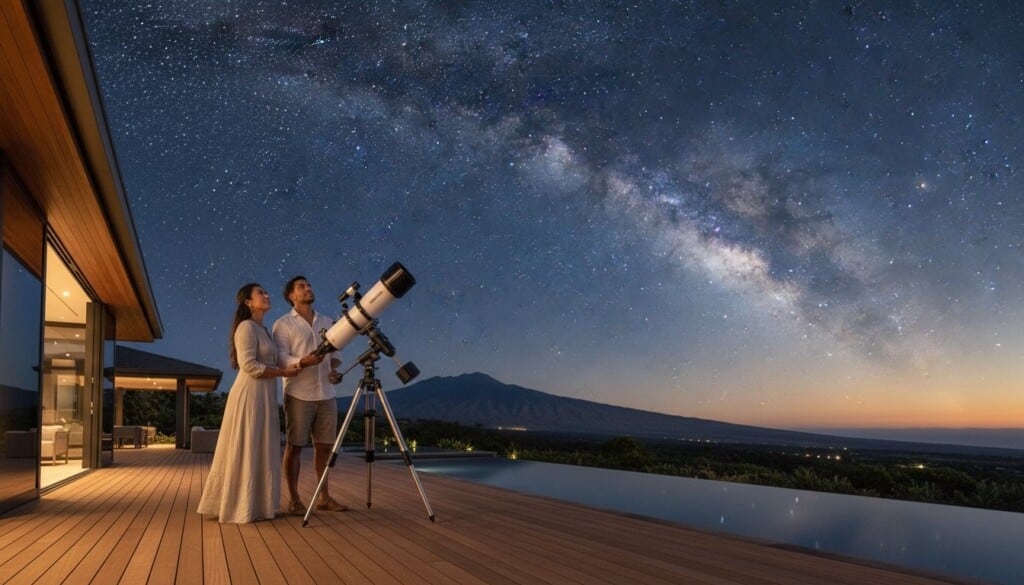

What if the most profound moment of your 2026 journey isn’t found at sea level, but at 13,803 feet above the Pacific? You likely crave a connection that transcends the typical tourist path, seeking the silence only a sacred summit provides. Visiting big island hawaii mauna kea offers a rare blend of ancient Hawaiian heritage and cutting-edge scientific discovery.
You might worry that the logistics of such a trek, from altitude safety to summit access, feel cluttered and confusing. We promise to transform that uncertainty into a bespoke plan defined by grace and exclusivity. Our goal is to ensure your experience remains as serene as the stars above.
This guide reveals the secrets to private stargazing and the best seasonal windows for peak visibility. You’ll learn how to prepare for the unique climate while ensuring you return to the warmth of a refined estate. We’ve curated everything you need for a soulful and seamless mountain ascent.
Key Takeaways
- Discover the profound spiritual heritage and geological majesty of the “White Mountain,” the highest peak in the Pacific Basin.
- Uncover why the world’s most powerful telescopes call this summit home and how to witness the universe’s most brilliant celestial displays.
- Master the logistics of your journey to big island hawaii mauna kea, including the choice between curated private tours and the scenic drive from the Kona coast.
- Learn essential safety protocols to ensure your comfort, including the vital “24-hour rule” for those exploring the depths of the ocean before ascending the heights.
- Find out how to transition from the alpine chill to a sun-drenched sanctuary where a private heated pool and hot tub await to soothe your senses.
The Spiritual Heart of Big Island Hawaii: Why Mauna Kea is a Must-Visit
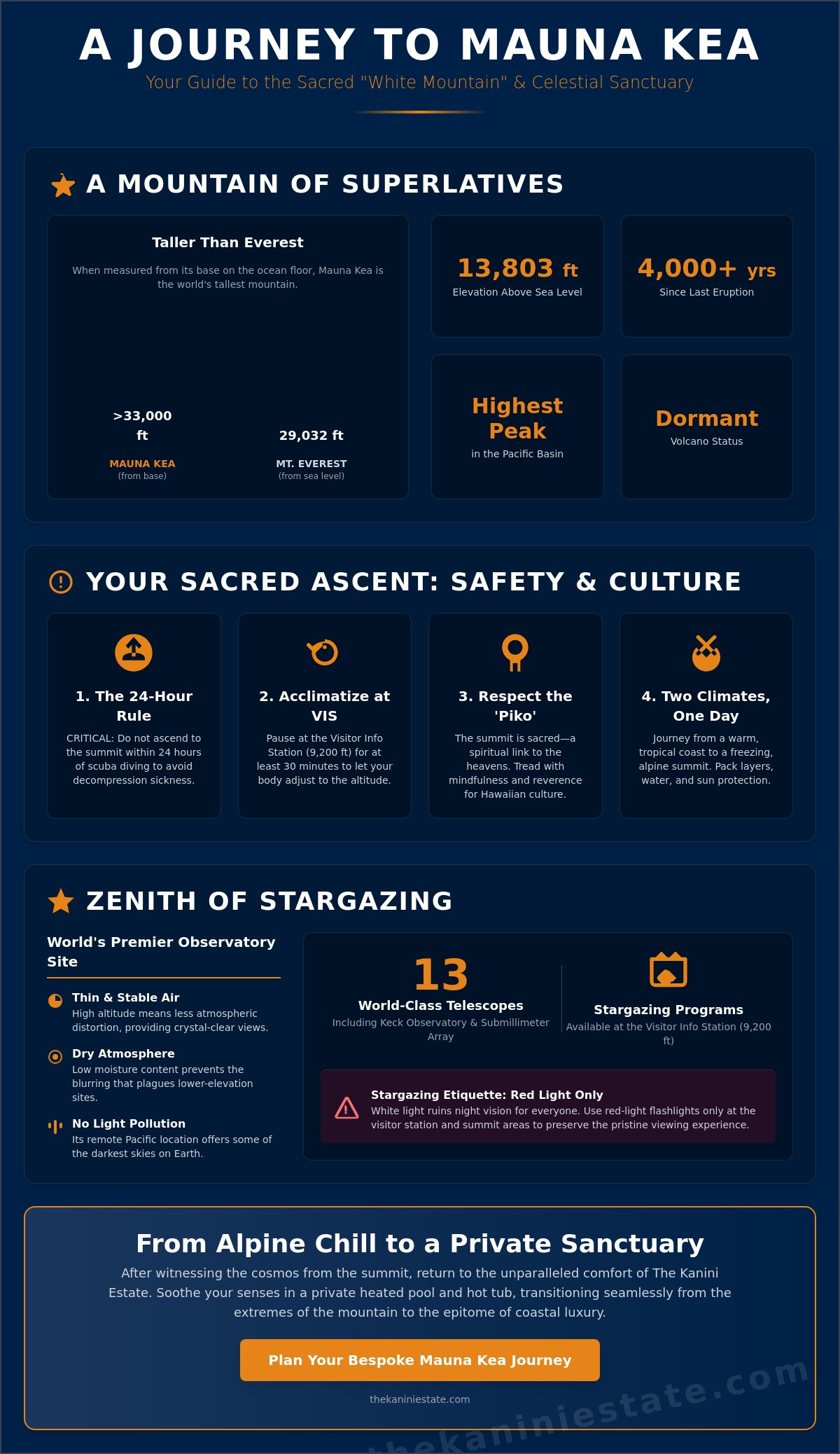
Rising from the depths of the Pacific, big island hawaii mauna kea stands as a silent sentinel of stone and spirit. Known as the “White Mountain,” this majestic peak reaches 13,803 feet above sea level. It’s the highest point in the entire Pacific Basin. While the summit often glitters with snow, it’s actually a dormant volcano. Its last eruption occurred over 4,000 years ago, specifically dated back to approximately 2,500 BCE. This long slumber has allowed a unique landscape to form, one that feels like a private sanctuary for the soul.
The mountain offers a sensory contrast that’s difficult to find elsewhere. You can start your morning on a sun-drenched coast, surrounded by verdant tropical gardens. By afternoon, you’ll stand atop a snow-capped peak, feeling the bite of the alpine wind. This transition is seamless yet profound, moving you from the warmth of the islands to the cold clarity of the heavens. It’s a curated experience of nature’s extremes, all within a single afternoon’s drive.
A Sacred Connection to the Heavens
In Hawaiian tradition, this peak is more than a mountain. It’s the “region of the gods,” where the sky meets the earth. Native Hawaiians view the summit as a piko, or umbilical cord. This sacred link connects the physical world to the heavens above. Mauna Kea is the most sacred of all Hawaiian volcanoes.
To respect this heritage, stop at the Visitor Information Station (VIS) at 9,200 feet. This pause allows your body to adjust to the altitude. It also gives you time to reflect on the cultural weight of the land you’re about to enter. Many visitors find that this quiet moment of preparation enhances their entire journey to the summit. It transforms a simple trip into a mindful pilgrimage.
The Geologic Majesty of the Pacific Basin
When measured from its base on the ocean floor, Mauna Kea exceeds 33,000 feet in height. This makes it taller than Mount Everest by over 4,000 feet. Such immense scale creates rare sub-alpine and alpine ecosystems. These environments host species found nowhere else on the planet, such as the resilient silversword. The mountain acts as a living museum of evolutionary biology and volcanic history.
Exploring this peak is a core part of understanding the big island hawaii as a land of extremes. The geology here tells a story of meticulous growth over millions of years. It’s a place where the earth’s heritage is visible in every volcanic cinder. From the fiery depths of the earth to the frozen reaches of the stars, the mountain offers a sense of perspective that few places can match. It’s a destination that invites you to linger, breathe, and witness the sublime beauty of the Pacific.
The Zenith of Stargazing: Experiencing the World’s Premier Observatory
Mauna Kea is a celestial sanctuary where the atmosphere is so thin and dry that it feels like you’ve left the earth behind. At 13,803 feet, the air remains remarkably stable. It’s free from the turbulent moisture that blurs the vision of most other observatories.
This clarity is why the summit hosts 13 of the world’s most powerful telescopes. These include the twin 10-meter mirrors of the W. M. Keck Observatory and the eight antennas of the Submillimeter Array. These massive structures serve global research teams nightly.
The true big island hawaii mauna kea experience for guests is the raw, unfiltered beauty of the heavens. As the sun dips below the clouds, the horizon bleeds into deep indigo. This transition reveals the first faint glimmers of the Milky Way as it stretches across the sky.
The Onizuka Center for International Astronomy
The journey to the stars begins at the Visitor Information Station (VIS). This facility sits at the 9,200-foot level. It serves as a vital transition point for acclimatization and education.
Guests often gather here to participate in public stargazing programs. You can use high-quality portable telescopes to view planetary rings and distant nebulae. Safety is paramount at this altitude.
Visitors must use red-light torches to navigate the area. White light disrupts the delicate night vision required for deep-sky observation. For the latest safety updates and road conditions, travelers should consult the Center for Maunakea Stewardship before starting their ascent.
A Window into the Farthest Edges of the Universe
The absence of light pollution on this remote island creates a window into the deep past. From this vantage point, the Andromeda Galaxy appears as a luminous smudge. It sits 2.5 million light-years away from your eyes.
The unique latitude of a big island hawaii mauna kea excursion allows observers to see the Southern Cross and the North Star simultaneously. This rare celestial alignment grounds you in the vastness of the Pacific.
The silence at 14,000 feet is absolute and heavy with a sense of ancient peace. The stars do not twinkle here; they glow with a steady, piercing brilliance that defies description.
After such a profound encounter with the infinite, you might seek the warmth of a private sanctuary to reflect on the night’s discoveries. The crisp mountain air and the velvet sky create memories that linger long after you descend.
Planning Your Ascent: Private Tours vs. Shoreline Stargazing
The journey to the summit of big island hawaii mauna kea begins with a transition through diverse microclimates. Starting from the sun-drenched location kona hawaii, the drive takes approximately 90 minutes. It’s a path that demands respect and meticulous preparation.
Most standard rental agreements strictly prohibit driving beyond the Visitor Information Station at 9,200 feet. The final stretch to the peak requires a true 4WD vehicle with low-range gearing. This ensures safety on the steep, unpaved gravel sections. Choosing a private ascent allows you to bypass these technical hurdles entirely.
The Case for Permitted Private Guides
Permitted guides provide a bridge between modern science and ancient heritage. They transform a simple excursion into a soulful exploration for corporate retreats and large families. These professionals manage every detail with quiet confidence. They provide heavy parkas to combat sub-freezing temperatures.
They also serve warm, gourmet meals as the sun dips below the clouds. With oxygen levels 40% lower than at sea level, having an expert monitor your well-being is essential. Booking an exclusive tour ensures your group moves at its own pace. It creates a bespoke atmosphere away from the standard tourist influx.
Shoreline Stargazing: A Gentle Alternative
The Kohala Coast offers a serene alternative to the high-altitude climb. Many guests prefer the warmth of the shoreline for their celestial observations. You can invite a private astronomer to your estate for an evening of discovery. They arrive with high-end portable telescopes to set up on your private lanai.
This intimate setting allows for deep conversation and personalized learning. It’s a seamless way to experience the universe while remaining grounded in comfort. You’ll see the same constellations that guided Polynesian navigators centuries ago. It’s a lifestyle experience that values both luxury and connection.
- Enjoy the night sky without the physical strain of altitude.
- Personalized attention from professional astronomers in your private haven.
- Perfect for groups with children or those with health sensitivities.
- Seamless integration with your evening dining plans.
Essential Preparation for the High-Altitude Alpine Environment
Ascending the summit of the big island hawaii mauna kea requires more than just a sense of wonder. You’re traveling from a lush coastal paradise to a sub-arctic environment in under two hours. At 13,803 feet, the air contains 40% less oxygen than at sea level. This thin atmosphere demands respect and careful planning to ensure your journey remains a serene memory rather than a physical struggle.
Acclimatization and Safety Protocols
Safety begins with a mandatory 30-minute pause at the Visitor Information Station (VIS). This stop allows your body to begin adjusting to the elevation of 9,200 feet before you push toward the peak. Sip water constantly throughout the day. Hydration is your primary defense against altitude sickness, helping your blood transport oxygen more efficiently.
Watch for a dull headache, slight nausea, or dizziness. These signals tell you it’s time to descend immediately. Health constraints are vital for a safe experience on the big island hawaii mauna kea:
- The 24-Hour Rule: Don’t ascend the peak if you’ve been scuba diving within the last 24 hours to avoid decompression sickness.
- Age Limits: Children under 16 shouldn’t travel above the VIS because their bodies don’t adapt as quickly to rapid pressure changes.
- Chronic Conditions: Those with heart or respiratory issues should consult a physician before attempting the climb.
The Mauna Kea Packing List for 2026
Preparation means dressing for a different world. Temperatures at the summit often hover around 30°F, even when the coast enjoys 80°F heat. Layering is essential for comfort. Pack a heavy winter jacket, thermal gloves, and sturdy closed-toe shoes. UV radiation increases by 10% for every 1,000 feet of elevation. Wear high-SPF sunscreen and polarized glasses to protect your eyes from the intense high-altitude glare.
Your vehicle must be as prepared as your body. Only true 4-wheel drive vehicles with low-range gearing are permitted past the VIS. This specialized transmission allows you to descend safely without overheating your brakes on the steep 15% grades. Ensure your fuel tank is full before leaving Hilo or Kona. There are no gas stations on the mountain to assist if you run low.
After a day of exploring the rugged heights, return to the warmth of your private sanctuary. Discover how The Kanini Estate offers the perfect balance of luxury and comfort for your Hawaiian adventure.
Returning to the Sanctuary: Making The Kanini Estate Your Home Base
Descending from the 13,803-foot summit of Mauna Kea feels like returning from another world. Your journey to the peak of the big island hawaii mauna kea exposes you to temperatures that frequently dip below 30 degrees Fahrenheit. After such a profound, chilly adventure, The Kanini Estate welcomes you back to a sea-level haven of warmth and light. Our gated sanctuary provides the perfect contrast to the rugged, high-altitude terrain you just conquered.
The estate acts as a warm anchor for your spirit. We designed every corner of this property to facilitate a seamless transition from the “White Mountain” to our sun-drenched coast. You leave behind the thin air and volcanic silence for the rhythmic pulse of the Pacific. It is a return to comfort.
Privacy is the ultimate luxury after a public excursion. Your group needs space to process the spiritual and celestial weight of the summit. Within our walls, you find the silence necessary to integrate those memories. The estate is not just a place to sleep; it is a curated lifestyle experience.
Luxury Amenities for Post-Summit Recovery
Rejuvenation is essential after a day at high altitude. You can shed the mountain’s lingering chill in our private sauna or restore your circulation in the custom gym. These bespoke wellness spaces ensure your body recovers as quickly as your mind. We prioritize your physical well-being so you can enjoy every moment of your 2026 Hawaiian retreat.
- Private Heated Pool and Hot Tub: Soak away the fatigue of the climb under the tropical stars.
- Media Room: Gather your loved ones to project and share the high-resolution photos of the galactic core.
- Outdoor Fire Pit: Settle in for a nightcap while discussing the ancient legends of the stars.
Our estate comfortably sleeps 16 guests with expansive layouts that never feel crowded. This capacity makes us the premier choice for multi-family groups or corporate retreats seeking a unified experience. You share the adventure together, then retire to individual spaces of meticulous craftmanship and quietude.
A Private Escape to the Big Big Island
Mauna Kea is a vital chapter in the larger narrative of the big big island. The scale of the mountain reminds us of our place in the universe, while the estate reminds us of the beauty of home. Returning to our gated sanctuary allows you to explore the vast majesty of Hawaii from a position of absolute security.
Direct beach access means you can move from the clouds to the coral reefs in a single afternoon. This duality defines the big island hawaii mauna kea experience. You witness the birth of stars at the summit and the gentle lap of the tide at our shore. Both are essential to the island’s heritage.
Mauna Kea provides the perspective; The Kanini Estate provides the peace. We invite you to linger in the transition and savor the stillness of our verdant grounds. Your journey to the stars deserves a landing this graceful.
Begin Your Sacred Journey to the Summit
Standing atop the 13,803-foot summit, you’ll feel the profound stillness of a landscape that transcends time. This sacred peak offers more than just a view; it provides a direct connection to the cosmos through the world’s most advanced telescopes. Your exploration of big island hawaii mauna kea requires careful planning for the alpine environment, but the reward is a memory that lingers long after you descend.
After a day spent in the thin, cold air of the summit, your recovery deserves a sanctuary of equal stature. Retreat to a home where the rhythm of the Pacific replaces the silence of the stars. Our estate provides a seamless transition from the rugged heights to refined coastal living. You can soak in the private hot tub, rejuvenate in the full gym, or find peace by the private pool. Every detail, from the direct beach access to the exclusive gated security, ensures your tranquility remains undisturbed.
Watch the sky transform from your lanai as the sun paints the horizon during a private Hawaiian sunset. It’s time to ground your celestial adventure in absolute comfort. Experience the ultimate Big Island retreat at The Kanini Estate. We look forward to welcoming you home to the sanctuary you deserve.
Frequently Asked Questions
Do I need a 4WD vehicle to visit Big Island Hawaii Mauna Kea?
A true 4-wheel drive vehicle with a low-range gear system is essential for your journey to the summit. Most rental agencies require this specific capability to navigate the 4.5-mile stretch of unpaved, steep gravel road. This mechanical precision ensures your safety during the descent. It protects your brakes from the strain of the 13,803-foot elevation drop back toward the island’s verdant base.
Can children go to the summit of Mauna Kea?
Children under 13 years old shouldn’t travel to the summit due to the significant risks of altitude sickness. The peak reaches an elevation where oxygen levels are 40 percent lower than at sea level, which is particularly taxing on developing respiratory systems. Families often choose to linger at the Visitor Information Station at 9,200 feet. This height offers a safer, yet still breathtaking, celestial experience for younger explorers.
Is it free to visit the Mauna Kea Visitor Information Station?
Entry to the Visitor Information Station remains free for all who seek to understand this sacred mountain. You can explore interpretive exhibits and heritage displays without any admission cost. However, the University of Hawaii at Hilo requires a paid reservation for the 115 available parking stalls if you plan to stay for evening stargazing. This system preserves the tranquility of the site and manages the flow of visitors.
What is the best time of year for stargazing on Mauna Kea?
The most enchanting time for stargazing on the big island hawaii mauna kea occurs during the dry summer months from April through September. You should aim for the 10-day window surrounding the new moon when the velvet sky is at its darkest. This seasonal clarity allows the 13 world-class telescopes to peer into the deepest reaches of the cosmos with unparalleled precision and grace.
How long does it take to drive from Kona to Mauna Kea?
It takes approximately 2 hours to drive the 65-mile route from Kailua-Kona to the Visitor Information Station. Your journey follows the Daniel K. Inouye Highway through evocative lava landscapes and high-altitude plains. You must stop at the 9,200-foot level for at least 30 minutes to acclimate. This pause is vital for your well-being, allowing your body to adjust before you ascend to the thin air of the summit.
Why are the observatories on Mauna Kea not open to the public?
The 13 observatories are dedicated research facilities that house delicate instruments requiring a pristine, controlled environment. These telescopes, including the W. M. Keck Observatory, don’t offer public tours to prevent dust and heat from interfering with sensitive data collection. While the interiors remain private sanctuaries for science, the exterior architecture creates a striking silhouette against the horizon. Most astronomical work happens remotely or during the silent hours of the night.
Is Mauna Kea an active volcano?
Mauna Kea is currently classified as a dormant volcano, having last erupted approximately 4,500 years ago. Geologists from the U.S. Geological Survey monitor the peak closely, though it shows no signs of the restlessness seen in its neighbor, Mauna Loa. This long period of slumber has allowed for the meticulous construction of the world’s premier astronomical site. It remains a place of stability and ancient history, standing as the tallest sea-mountain on Earth.
What should I wear for a sunset trip to the summit?
You must dress in heavy winter layers, including a thermal parka, long trousers, and sturdy closed-toe shoes. Temperatures at the summit frequently plummet below 30 degrees Fahrenheit as soon as the sun dips below the clouds. Wind speeds often reach 20 miles per hour, stripping away body heat rapidly. Bringing a warm hat and gloves ensures you can focus on the ethereal beauty of the stars rather than the biting cold.