
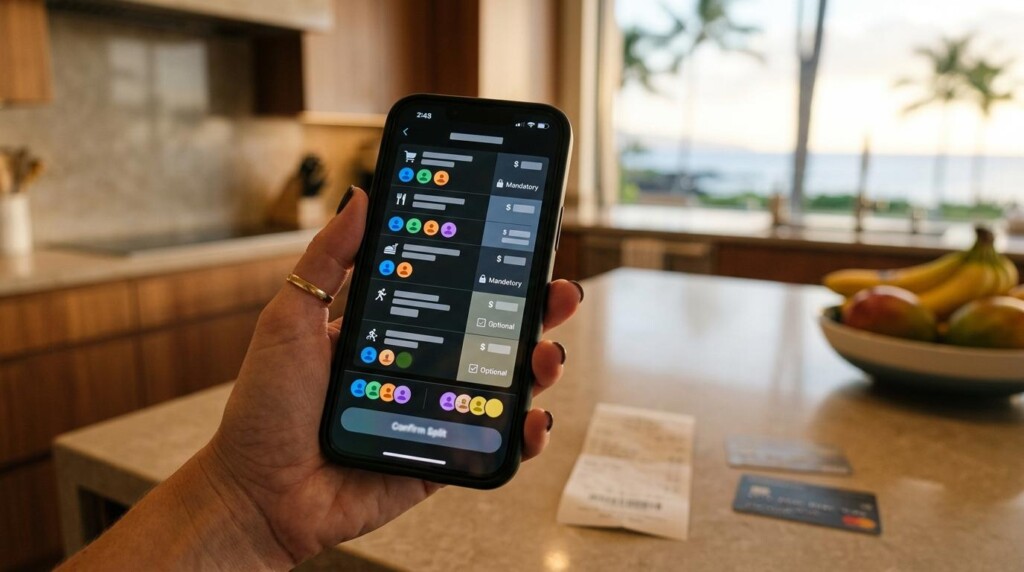

When you book a villa with family, friends, or coworkers, the property itself is often the easy part. The harder part is deciding who owes what without turning the group chat into a negotiation thread.
You can avoid most of that friction with one rule: pick your cost-sharing method before anyone pays the booking deposit. Once money goes out, people stop talking about fairness in theory and start talking about their room, their kids, their shorter stay, or their nicer view.
Why group villa cost splitting gets complicated fast
A group villa is not a hotel block. Everyone shares the kitchen, pool, living spaces, and outdoor areas, yet not everyone gets the same bedroom, the same number of nights, or the same amount of privacy.
That is why a simple equal split works beautifully in some groups and feels completely wrong in others.
If every guest stays the same dates and the rooms are nearly identical, an equal split is clean and efficient. If one couple takes the primary suite with an ocean view and en suite bath while someone else gets a smaller room or a sofa bed, equal math can feel unfair even when the numbers are easy.
You also need to think beyond rent. Taxes, cleaning fees, deposits, occupancy surcharges, groceries, and optional activities all need a clear rule. If you leave those pieces vague, the villa cost will seem settled until the extra charges start showing up.
The main ways to split a group villa fairly
There is no single perfect formula. There is only the formula that fits your group, your room setup, and your stay pattern.
The good news is that most groups end up choosing from the same small set of models.
| Cost-sharing method | Best when | Main strength | Main drawback |
|---|---|---|---|
| Equal per person | Same stay length, similar rooms | Very simple | Ignores room quality and staggered stays |
| Room-based split | Rooms vary a lot in size or privacy | Matches cost to room value | Requires agreement on room pricing |
| Per-person weighted split | Families, couples, kids | Reflects group size more naturally | Singles may feel they subsidize bigger rooms |
| Per-night split | Guests arrive or leave on different days | Charges by actual use | More tracking |
| Hybrid split | Large or mixed groups | More balanced | Most math and most discussion |
A quick guide helps:
- Equal split
- Room-based split
- Per-night split
- Hybrid weighted split
When an equal split makes the most sense
An equal split is the default for a reason. It is fast, transparent, and easy to explain. If you have eight adults, everyone stays five nights, and the bedrooms are close enough in quality, dividing the full amount by eight is hard to argue with.
This method also works well for close-knit groups that value simplicity over precision. You do not need to price every room or debate whether a private lanai is worth an extra $75 a night.
Still, you should only use this model if the group truly accepts the tradeoff. Equal is not automatically fair. It is only fair when the experience is close enough to equal.
A good rule of thumb is this: if anyone would feel awkward swapping rooms at random, the rooms are probably too different for a pure equal split.
When a room-based split is better for your villa
A room-based split is often the strongest option for upscale villas, where bedrooms can vary a lot. One room may have a better view, a larger footprint, direct outdoor access, or a spa-style bathroom. Another may be smaller, darker, or closer to common noise.
In that case, price the rooms first, then let guests choose based on what they are willing to pay.
You do not need a complicated formula. You just need percentages or dollar amounts that add up to the full lodging cost. If the villa total is $12,000, you might assign the largest suite 18 percent, strong secondary rooms 14 percent each, and modest rooms less. Couples sharing one room then split that room cost between themselves.
This method works because it ties price to private benefit. People who want the premium room can have it, and the rest of the group does not feel like they are subsidizing that choice.
Here is what to settle before assigning rooms:
- Room value: size, bathroom setup, view, privacy, outdoor access
- Occupancy rule: whether couples split one room share or pay by head
- Tie-breaker: first come first served, random draw, or group agreement
How to handle different arrival and departure dates
If guests are not staying the same number of nights, your split should reflect that. Charging someone for a full week when they are only there for four nights is an easy way to create resentment.
The cleanest approach is to start with your base model, then prorate by nights stayed. You can do this with either an equal split or a room-based split.
Say a room costs $2,100 for a seven-night stay. If one guest in that room only stays four nights, their share should be based on four-sevenths of the applicable amount, unless the group agrees that the room was held for them for the full stay. That distinction matters.
This is where many groups slip. A guest may say, “I only stayed four nights,” while the group may say, “Yes, but your room was reserved the whole time.” Both positions can be reasonable, so settle that point in advance.
A smart rule is to separate use from reservation. If a shorter-stay guest blocked a premium room that nobody else could use, they may still owe more than a strict per-night share.
A hybrid cost-sharing method often works best
Many groups do best with a hybrid model because it reflects how villas actually work. Some value comes from private bedrooms. Some value comes from shared spaces everyone uses, like the kitchen, pool, gym, dining area, or outdoor lounge.
A practical hybrid model looks like this:
- Common-space portion: split equally per adult or per weighted share
- Bedroom portion: split by room value
- Stay adjustment: prorate for guests who stay fewer nights
This method takes a little more setup, yet it tends to feel balanced. You are not pretending that all rooms are the same, and you are not ignoring the fact that everyone benefits from the full property.
Weighted shares can also help when children are part of the trip. Many groups count adults as 1 share, older children as 0.5 share, and infants as free or a smaller fraction. That approach is not universal, but it is often easier for families to accept than charging every child exactly like an adult.
Which villa expenses should be split separately
The villa rate is only one line item. Your group should decide what belongs in the main housing split and what should be paid only by the people who used it.
That decision should be written down in one message or one shared sheet. If it lives only in memory, you will revisit it later at the worst possible time.
Use this framework:
- Mandatory costs: rent, taxes, cleaning, required service fees
- Conditional costs: extra guest fees, pool heat, parking fees, incidentals hold
- Optional costs: groceries, chef dinners, excursions, rental cars, alcohol
In most groups, mandatory costs follow the same formula as the villa split. Optional costs should be paid only by participants. Shared groceries often sit in the middle, so pick a rule before the trip starts. Many groups split staples equally and keep alcohol separate.
Policies that can change your math
Before you finalize any formula, check the property’s terms. A cost-sharing plan is only useful if it matches the booking reality.
This matters a lot for large luxury homes. Some villas have a base rate for a certain number of guests, then add a nightly charge above that number. At The Kanini Estate, published rates cover up to 12 guests, and guests above 12 add $100 per person per night plus taxes. If your group grows from 12 to 14, that is not a minor detail. It needs to be built into the split from the start.
The same applies to security deposits, incidentals holds, and cancellation terms. If one person books the villa on their card, that person is carrying real risk for the group.
You should confirm these items before collecting money:
- Base occupancy: how many guests the rate includes
- Extra guest charges: nightly surcharges and taxes
- Cancellation policy: what happens if someone drops out late
- Damage responsibility: whether the group splits losses or assigns them directly
A strict cancellation window changes group behavior. If refunds are limited inside a certain period, each guest should know whether their payment is refundable by the group, only refundable if a replacement is found, or nonrefundable after a deadline. That one conversation prevents a lot of tension.
The best process for collecting money from a group
Even a fair formula can fail if your collection process is loose.
Do not let one person pay the full booking and hope reimbursement sorts itself out later. Set deadlines. Put amounts in writing. Use one shared document or app so nobody has to search old texts for numbers.
A solid process looks like this:
- Estimate the total with all likely fees.
- Agree on the split method before booking.
- Assign rooms before or right after booking.
- Collect deposits from everyone before the final payment date.
- Reconcile extras after checkout.
If you are the organizer, give people an amount, a due date, and a payment method in one message. Clarity is not pushy. It is respectful.
A simple example of a fair villa split
Picture a seven-night villa stay for 10 adults and 2 children. The lodging total, including taxes and cleaning, is $14,000. The rooms are not equal, and two guests are arriving two nights late.
A strong setup could be:
- Forty percent of the cost assigned to common spaces and split by weighted shares
- Sixty percent assigned across bedrooms based on room quality
- Adults counted as 1 share, children counted as 0.5 share
- Late arrivals pay prorated common-space and room shares for the nights they actually stay, unless they reserved a room nobody else could use
That model is not perfect in a mathematical sense. It is practical, transparent, and easy to defend. That is what you want.
The best way to keep everyone happy before the trip
Most group money issues are not caused by greed. They are caused by unspoken assumptions.
One person assumes couples should pay double. Another assumes room quality matters more than headcount. A parent assumes kids should count as half. A short-stay guest assumes they should pay less. None of those views are unreasonable. They just need to be stated early.
Your goal is not to find a magical formula nobody can question. Your goal is to choose a method the group can accept, write it down, and stick to it.
If you do that before the booking is locked in, the villa stays what it should be: the setting for a great trip, not the source of an ongoing invoice debate.